Staking your brand's reputation on an overseas supplier can feel like a gamble. You worry about product safety, navigating complex import regulations, and the catastrophic business risk of a recall. How can you be sure the mugs you import are consistently safe and compliant? The answer lies in the people and processes that safeguard your product, starting long before production even begins with our ceramic mug production team.
At our factory, the ceramic mug production team is a specialized group of quality control experts, personally trained by me, the founder. Their primary function is to de-risk your supply chain by implementing a rigorous, multi-stage quality control system. This process begins with the meticulous inspection and testing of all raw materials—clay and glazes—before they are ever approved for production, ensuring a foundation of safety and compliance from the very start.
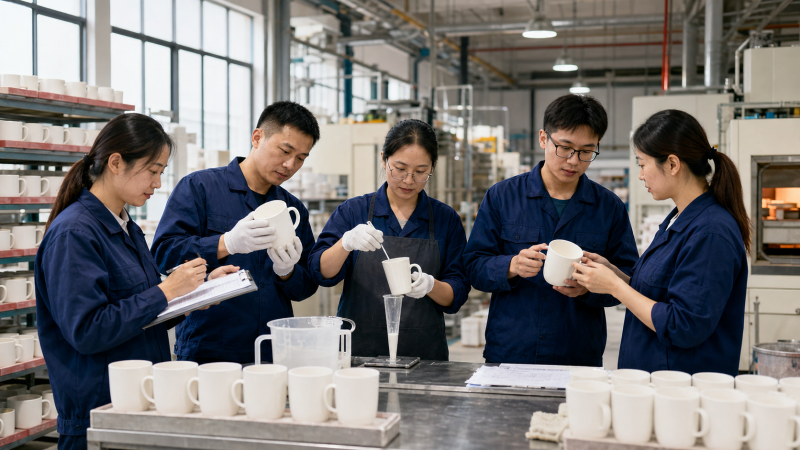
Now that you've been introduced to the "who," let's dive into the "how." I want to show you exactly how my team's work at the earliest stage—raw material inspection—is the single most important factor in protecting your business and delivering a product your customers can trust.
Why Does Our Ceramic Mug Production Team Start with Raw Material Inspection?
Many factories concentrate their quality control efforts on the finished product, pulling items from the end of the line for a final check. But if a safety issue like lead contamination is found then, it's already too late. An entire production run could be compromised, leading to costly delays and significant supply chain risks. We believe true ceramic mug quality control must be preventative, not just detective.
Our ceramic mug production team starts with ceramic raw material inspection because it is the most effective way to eliminate safety and quality problems at the source. By analyzing and verifying every batch of clay and glaze for impurities before it enters our warehouse, we build compliance and stability into the very foundation of your product.
Dive Deeper: The First Line of Defense
When I founded this factory 15 years ago, I made a strategic decision. I would personally oversee the development of our quality standards. Having worked with clients across the US, EU, and South America, I’ve seen firsthand how a compliance failure can damage a brand's reputation overnight. My direct involvement isn't just about technical specifications; it's a commitment to protecting your business. This philosophy is the core of our approach to ceramic mug supplier quality control.
H3: Translating Regulations into Actionable Standards
As an ISO 9001 certified manufacturer, our processes are documented, but documents alone don't create safe products. People do. I personally train my raw material inspection team to translate complex international regulations into simple, actionable, pass/fail tests. We don't just read the standards for EU ceramic food contact regulations or FDA ceramicware requirements; we operationalize them.
The primary concern for any ceramics importer is heavy metal contamination. Therefore, our internal protocols are laser-focused on lead and cadmium testing for ceramics from the very first step. We set our internal thresholds stricter than the regulatory requirements, creating a buffer that ensures consistent compliance.
H3: A Glimpse into Our Inspection Process
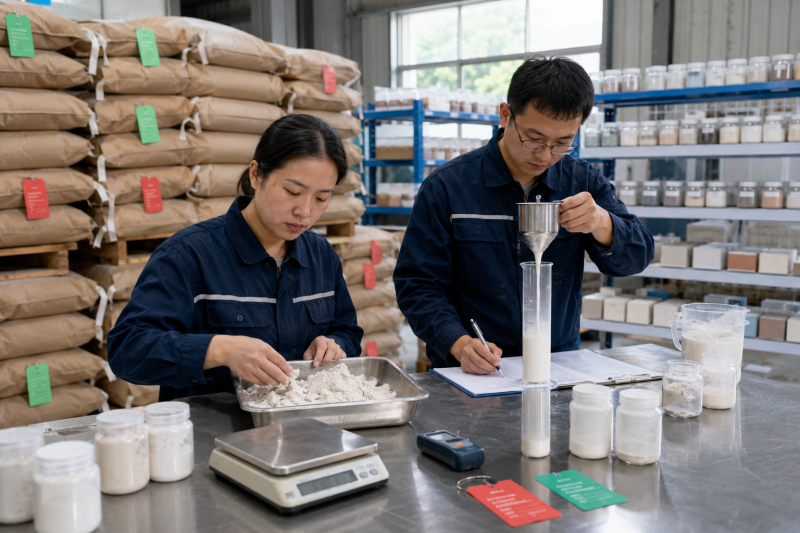
Imagine a new shipment of kaolin clay arriving at our facility in Liling. Before a single bag is unloaded, my inspection team is there. Here is what they do:
- Sampling: They take samples from multiple bags throughout the shipment, not just one from the front. This ensures the entire batch is homogenous and consistent.
- Physical & Chemical Checks:
- Purity Screening: Under bright, controlled lighting, they perform a visual check for dark specks (iron oxide) that can cause pinholes or blemishes in the final fired product.
- Moisture Content: Using a digital moisture meter, they verify the clay's water content. Too much or too little can lead to cracking or warping during the ceramic mug manufacturing process.
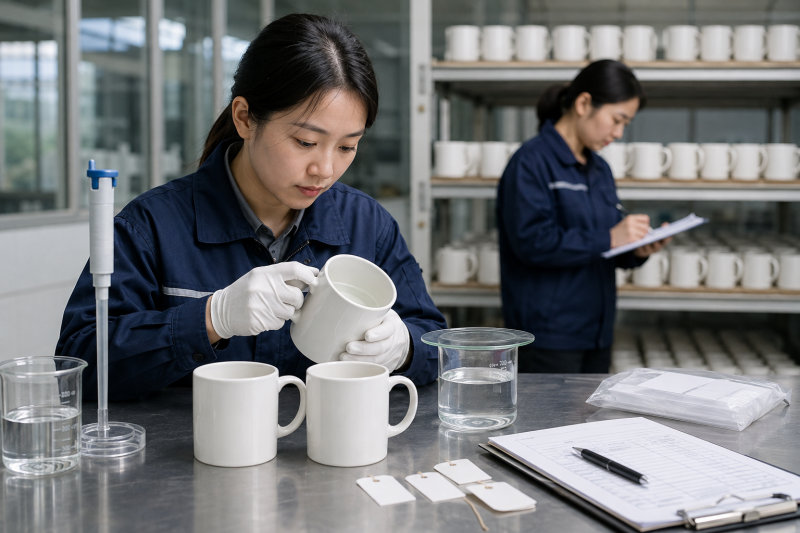
- Initial Heavy Metal Test: We use screening kits for a rapid preliminary check for lead and cadmium. Any batch that raises even a slight concern is immediately quarantined for further lab analysis or outright rejection.
- Glaze Verification: Our ceramic glaze quality control is just as rigorous. Each batch of glaze is tested for particle size (fineness), which affects the smoothness of the final finish, and undergoes the same stringent screening for heavy metals.
This tangible, hands-on process is our first and most important line of defense. It's how we move from simply claiming high standards to proving them with every batch.
How Does This Process Directly Ensure Food-Safe Ceramic Mugs?
The term "food-safe" is used frequently in our industry, but what does it really guarantee? For many, it's just a label. This ambiguity can leave you exposed to demanding regulations, such as California Proposition 65. For our ceramic mug production team, creating food-safe ceramic mugs isn't a final goal; it's the direct, measurable outcome of a preventative and documented system.
Our meticulous raw material inspection directly ensures food-safe ceramic mugs by identifying and eliminating the primary sources of contamination—specifically lead and cadmium—from our clays and glazes before they are ever used. This preventative approach is the bedrock of our compliance with all major international standards, including the strict FDA ceramicware requirements for the US market.
Dive Deeper: Connecting Process to Compliance
Building trust as a custom ceramic mug manufacturer comes from showing our work. The link between our raw material inspection and the final, safe-to-use product is direct and undeniable. Here’s how the steps we take protect your business and your customers.
H3: Mitigating Heavy Metal Risks Proactively
The single greatest risk in ceramic manufacturing is the potential for heavy metals, particularly lead and cadmium, to leach from the glaze into food or beverages. Many factories rely solely on testing the finished product. The problem with this method is that it's reactive. A failed test on a finished batch means you have a significant problem and a compromised shipment.
Our approach is proactive. By implementing rigorous lead and cadmium testing for ceramics on the raw glazes, we prevent these contaminants from ever entering the production cycle. This is the most critical step in ensuring compliance with a wide range of regulations, from basic FDA requirements for ceramic drinkware to the much more stringent limits required for California Proposition 65 compliance for mugs. It is far more effective to build safety in from the start than to try and inspect it in at the end.
H3: The Importance of Third-Party Verification
Our internal ceramic mug factory quality control is thorough, but we don't ask our clients to simply take our word for it. We believe in verification. We regularly send samples of our finished products to globally recognized, independent testing laboratories.
These third-party reports provide objective validation that our internal processes are working effectively. For instance, undergoing regular SGS testing for ceramic mugs confirms that our products meet the specific heavy metal migration limits for your target market, whether it's the EU, US, or South America. As a client, you should always request these certificates as part of your due diligence. It's a key piece of documentation for ensuring ceramic mug import compliance.
Is Finished Ceramic Mug Inspection Still Necessary?
If our upfront material checks are so robust, you might wonder if a final inspection is just a formality. After all, if the core materials are safe and pure, what could go wrong? Skipping this final quality gate would be a mistake, as it can mean missing subtle defects that arise during the firing and handling stages.
Yes, finished ceramic mug inspection is absolutely essential. While raw material inspection prevents systemic safety failures, the final inspection by our ceramic mug production team catches process-related defects like glaze imperfections, hairline cracks, or printing errors. It is the final quality checkpoint that ensures the product meets all functional and aesthetic specifications before shipment.
Dive Deeper: The Final Quality Gate
The final inspection stage is where we confirm that the entire production process has performed as designed. The criteria here are very different from the chemical and physical tests we run on raw materials. This is where we answer the question: "Does this mug meet the customer's expectations for a finished product?"
H3: Raw Material vs. Finished Product Inspection
These two stages of quality control serve different but complementary purposes. Understanding the distinction highlights the comprehensive nature of our system.
| Inspection Stage | Raw Material Inspection | Finished Product Inspection |
|---|---|---|
| Primary Goal | Prevent systemic safety & quality issues | Catch process-induced & aesthetic defects |
| Timing | Before production begins | After firing, decoration, and cooling |
| Key Checks | Chemical composition, purity, moisture | Cracks, pinholes, color accuracy, print quality |
| Focus | Foundational material stability | Visual perfection, dimensional accuracy |
H3: Our Final Inspection Checklist in Action
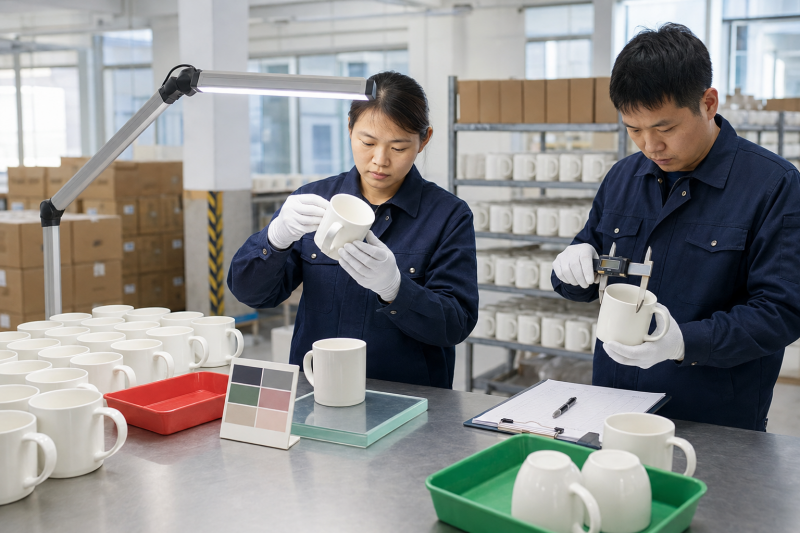
Every mug that comes off our production line must pass through a final quality gate manned by a dedicated team. For every order, they take a statistically significant sample of mugs and evaluate them against a detailed checklist. Here’s a look at what they check for:
- Visual Defects: Using a master sample for comparison, they check for any of the common ceramic mug defects, such as pinholes, glaze drips, color inconsistencies, or smudges in the printed logo.
- Structural Integrity: They run their fingers along the rim and handle to check for any sharpness. They perform a stability test on a perfectly flat surface and a water-fill test to ensure there are no hidden leaks.
- Dimensional Accuracy: They use calipers to measure the height, diameter, and handle placement to ensure they conform to the technical specifications agreed upon in the order.
This detailed, hands-on process, guided by a comprehensive ceramic mug inspection checklist, is our final promise to you. It guarantees that the product you receive is not only safe but also visually perfect and ready for your customers.
Frequently Asked Questions
How do you ensure consistency across different production batches?
We ensure consistency through three key practices. First, we use approved master samples for color, glaze finish, and print quality for every order. Second, we maintain detailed process documentation for every step. Finally, we retain labeled samples of raw materials from each batch, allowing for complete traceability if any issues arise.
What happens if a raw material batch fails inspection?
If a raw material shipment fails any of our initial tests, it is immediately rejected and returned to the supplier. That material is never allowed to enter our main warehouse. This strict receiving policy is a non-negotiable part of our ceramic raw material inspection process and is fundamental to protecting the integrity of our entire production line.
Besides your internal tests, do you use third-party labs?
Yes, absolutely. We regularly send finished mugs to accredited third-party laboratories like SGS, Intertek, or TUV for independent verification. This confirms our internal processes are effective and provides you with the formal documentation needed for ceramic mug import compliance. We encourage all our clients to request these reports.
What is the difference between FDA and EU ceramic regulations?
Both the FDA and EU regulate the amount of leachable lead and cadmium from ceramicware that comes into contact with food. However, they specify different maximum permissible limits and use different testing protocols (e.g., acid solution, temperature, and duration). Our ceramic mug production team is trained on the requirements for both markets and we produce according to the specific standards of your import destination.
Conclusion
Our ceramic mug production team is far more than a group of employees; they are the guardians of your brand's reputation and the foundation of a resilient supply chain. By prioritizing a preventative approach that begins with meticulous ceramic raw material inspection, we move beyond simple defect detection. We actively engineer safety, compliance, and quality into every single mug we produce. This founder-led commitment to process-driven quality control is how we de-risk your business, ensure food-safe ceramic mugs, and build the lasting trust required for a successful partnership.
If you are looking for a transparent, reliable manufacturing partner who understands that your success is our success, please contact us. Let's discuss how our team can support your next project.