Are you worried that a single bad batch of ceramic mugs could tarnish your brand's reputation and lead to a flood of negative reviews? The fear is real. Inconsistent colors, sloppy printing, or hidden defects can quickly turn a promising investment into a customer service nightmare, especially for online sellers. This is why our approach to production batch quality control is a complete system, built to protect your business from the very beginning.
Our comprehensive production batch quality control is a proactive system, not a reactive final check. It begins with rigorous testing of raw materials like clay and glaze to prevent systemic flaws, continues with multiple in-process inspections at critical manufacturing stages, and concludes with a final AQL-based inspection that feeds back into our process for continuous improvement, ensuring reliability and brand consistency.
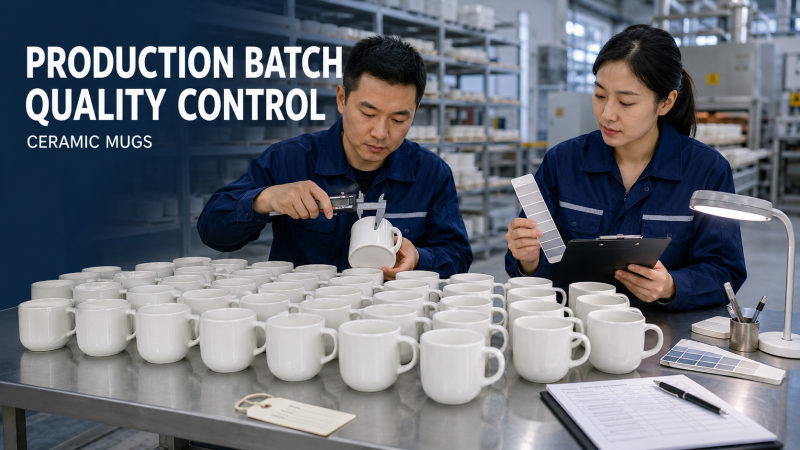
This "built-in" approach to quality is fundamentally different from simply trying to "inspect-in" quality at the end. It’s a philosophy that has been shaped by 15 years of experience. Let's explore what this systematic control looks like at each stage and how it directly mitigates your business risks.
Why Does Our Quality Control Start Before Production Even Begins?
Thinking that quality control is just about checking the final product? That’s a common and potentially costly misunderstanding. If a flaw is baked into the very clay or glaze used for thousands of mugs, no amount of final inspection can truly fix the problem.
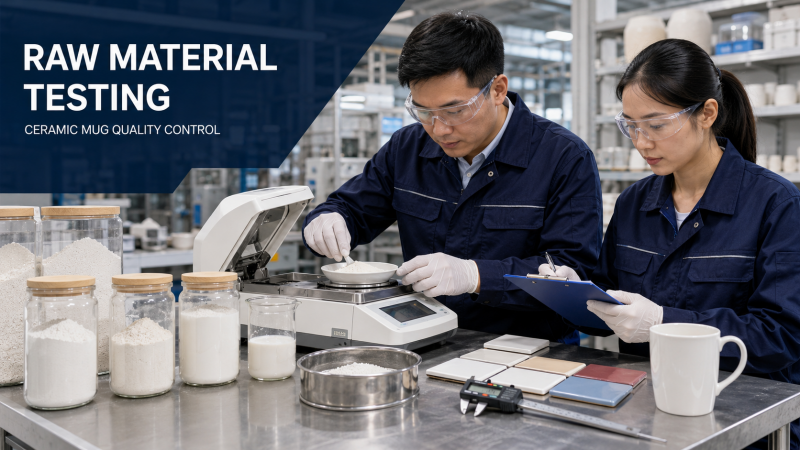
Our quality assurance process begins with the rigorous inspection and testing of all incoming raw materials, especially the clay body and glazes. This foundational step is the single most important part of preventing widespread, systemic defects before a single mug is ever formed.
Dive Deeper: The Foundational Importance of Raw Materials
As a salesperson who has handled after-sales issues, I can tell you that some of the most frustrating defects are those that appear weeks or months after the customer receives the product. These are often rooted in substandard raw materials.
Our approach to production batch quality control is built on a principle of prevention, and that starts here.
- Clay Body Consistency: The clay is the literal foundation of the mug. We source our clay from trusted long-term partners, but we still test every new shipment. We check for proper moisture content, shrinkage rates, and the absence of impurities. Using inconsistent clay can lead to problems like warping during firing or, even worse, crazing (fine cracks in the glaze) that appears after a few cycles in a customer's dishwasher. This is a brand-killer.
- Glaze Safety and Stability: The glaze is what your customer's lips touch. We are uncompromising on safety. Every batch of glaze is tested to ensure it is free from harmful levels of lead and cadmium, in line with FDA requirements for ceramic drinkware and EU standards. We frequently work with labs for SGS testing for ceramic mugs to provide formal reports for our clients.
- Color and Texture Foundation: A key concern for any brand is
ceramic mug color consistency. This consistency begins with the glaze formulation. Before we approve a glaze for mass production, we create test tiles and fire them in our production kiln. We compare the fired tile against the master Pantone color standard under controlled lighting to ensure a match. This prevents a whole batch from coming out as the wrong shade of your brand color.
Our ISO9001 certification isn't just a plaque on the wall; it means this entire raw material verification process is documented and traceable. If an issue ever arises, we can trace it back to the exact material batch and prevent it from happening again. This is the first, and most critical, step in the ceramic mug manufacturing process.
How Do We Maintain Quality Control During Manufacturing?
A perfect pre-production sample is great, but it means nothing if the 10,000 pieces that follow don't match. How do you ensure that the first mug and the last mug in a large order are visually and functionally identical? This is where in-process controls become essential.
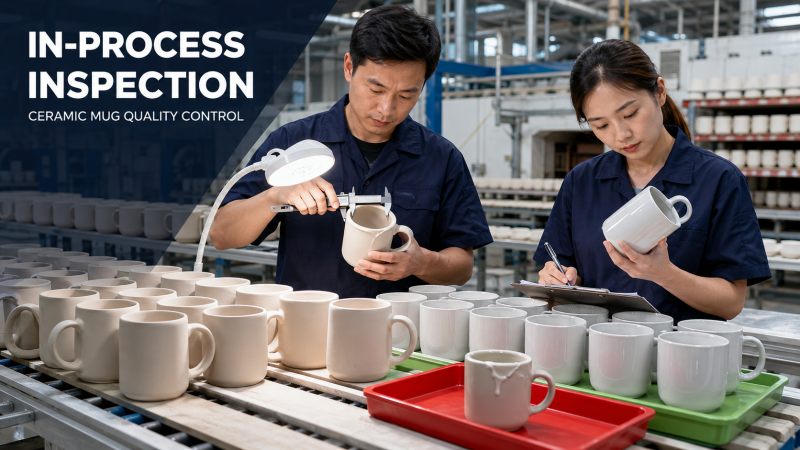
We build checkpoints into the production line at every critical stage. This allows our teams to identify and correct deviations as they happen, rather than discovering thousands of ceramic mug defects at the very end when it's too late or too costly to fix.
Dive Deeper: Checkpoints for Building Consistency
For an e-commerce seller, consistency is everything. Your customers expect the product they receive to look exactly like your product photos. Our in-process ceramic mug manufacturing quality control is designed to deliver precisely that.
H3: From Forming to Firing: A Multi-Stage Review
We don't wait until the end. Quality is checked at each value-adding step:
- Greenware Forming: Immediately after a mug is shaped (whether by jiggering, pressing, or slip-casting), our line workers inspect it. They look for shape deformities, cracks, or uneven handle attachment. Catching a flaw here is simple; the clay can be immediately recycled with zero waste.
- Post-Bisque Firing: After the first firing, the mug (now called "bisque") is hard but still porous. It's inspected again for any cracks that may have developed due to stress during drying or firing. This is a critical
ceramic mug inspectionpoint before the costly glazing and decoration process begins. - Decoration and Glazing: This is where
custom mug printing qualityis made or broken. For decal application, our team uses alignment guides to ensure your logo is straight and centered every time. For custom colors, glaze thickness is monitored to maintain color uniformity. Any smudges or misalignments are corrected before the final, high-temperature firing that makes the design permanent.
H3: The Science of Precise Firing
The kiln is where a mug truly comes to life, but it's also a high-risk area. A few degrees of temperature variance can completely alter a glaze color. I once had a client whose signature blue color was extremely sensitive to heat. To ensure we got it right, we established a very specific kiln temperature curve.
This is what we do for all our orders. Our kilns are computer-controlled to manage the heating and cooling cycles with precision. This ensures that the color of the first mug loaded into the kiln is identical to the last one unloaded. This technical control directly translates into the brand consistency you need to build trust with your customers.
What Makes Our Final Inspection and Production Batch Quality Control Different?
Every factory has a final inspection. But a truly effective production batch quality control system isn't just about catching mistakes—it's about learning from them. What happens after a defect is found is what separates a reactive supplier from a proactive partner.
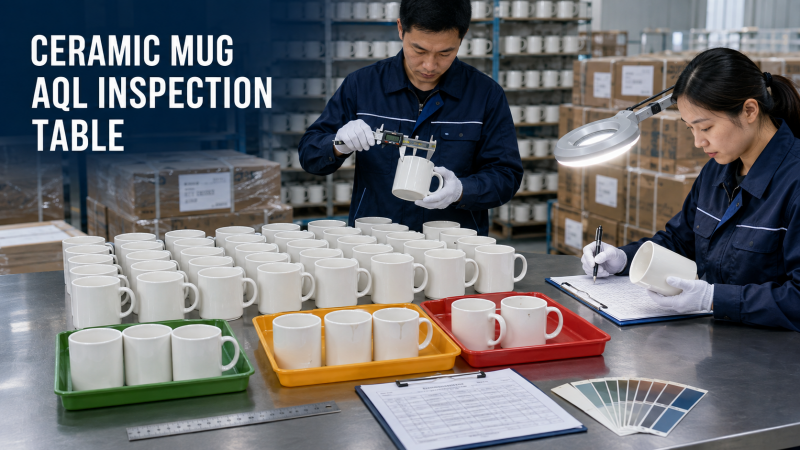
Our final inspection is guided by two things: internationally recognized AQL standards and our own internal "Problem Case Library." Crucially, every issue found during this inspection is documented, analyzed, and used to update our production protocols, turning today's problem into tomorrow's prevention.
Dive Deeper: A Learning System, Not Just a Final Check
A common fear I hear from Amazon sellers is receiving a shipment where 10% of the mugs have the same "minor" flaw—a flaw that, when seen by hundreds of customers, becomes a major reputation issue. Our system is designed to prevent this.
H3: The AQL Standard: Defining "Good Enough" Together
We don't promise impossible perfection; we promise defined, reliable quality. We use the Acceptable Quality Limit (AQL) standard, a statistical method used worldwide for inspections. We typically work with clients to agree on an AQL level, often AQL 2.5/4.0. This means we define what constitutes different levels of defects.
| Defect Type | Description | Example | Action |
|---|---|---|---|
| Critical | A defect that poses a safety hazard. | Sharp edges, cracks, lead/cadmium failure. | 0% tolerance; Reject Lot |
| Major | A defect likely to be noticed by the end-user. | Wrong color, crooked logo, visible chip. | Reject if % > AQL limit |
| Minor | A defect not likely to affect usability or be seen. | Tiny pinhole, slight speck under glaze. | Reject if % > AQL limit |
This framework provides an objective, transparent standard for what is acceptable and what is not. We use a detailed ceramic mug inspection checklist based on these principles for every order.
H3: Our "Problem Case Library": Turning Mistakes into Assets
This is our unique strength, born from 15 years of real-world experience. Every time there is a significant customer complaint or an internal quality issue, we don't just fix it. We create a detailed case file that includes:
- Photos of the defect.
- Analysis of the root cause.
- The corrective action taken (e.g., new training, a new jig, an updated checklist item).
- The preventative action to stop it from happening on other orders.
I remember a client from the US who ordered mugs with a complex, wrap-around design. The first small run had a 5% rate of decal misalignment. We documented this, created a custom-molded cradle to hold the mug perfectly still during application, and added a new specific checkpoint. Now, that technique is standard for all complex decal orders. One client's problem became a permanent process improvement for everyone, turning negative feedback into a proactive quality guarantee. This library is the brain of our ceramic mug supplier quality control system.
Frequently Asked Questions
How do you ensure my custom Pantone color will be accurate?
We create fired test tiles from the exact production glaze batch and compare them to your physical Pantone swatch or chip under D65 standard lighting. We do not proceed with mass production until you have approved this fired sample, ensuring ceramic mug color consistency.
Can I hire my own third-party inspector?
Absolutely. We welcome and encourage third-party inspections. As a BSCI-audited factory, we believe in transparency and are happy to facilitate access for your chosen inspection team at our facility in Liling. We see it as another layer of partnership.
What are the most common ceramic mug defects I should look for?
Based on our experience, the most common issues to watch for are printing defects (misalignment, color mismatch), glazing flaws (pinholes, crazing), and forming issues (warped rims, handle cracks). Our system is designed to catch these common ceramic mug defects early.
How do you guarantee the mugs are safe for use in the US or Europe?
All our ceramicware intended for food contact is made with lead-free and cadmium-free glazes. We regularly perform extraction tests in-house and can provide formal compliance reports from third-party labs like SGS or Intertek to meet FDA requirements for ceramic drinkware and other international standards.
Conclusion
Effective production batch quality control is not a final-gate inspection; it's a comprehensive philosophy built into every step of the manufacturing journey. From validating raw materials to learning from every final inspection, our goal is to move beyond simply catching defects to preventing them altogether. This systematic approach, refined over 15 years, is designed to protect your investment, safeguard your brand's reputation, and ensure the product your customers unbox is the reliable, high-quality product you promised them. It’s how we transform the inherent risks of manufacturing into a dependable supply chain for our wholesale and e-commerce partners.
If you're looking for a supplier who treats your business risks as their own, please reach out. Let's discuss how our quality system can support your next ceramic mug project.