Sourcing ceramic mugs from overseas can feel overwhelming, especially when faced with complex import regulations. Are you worried that a simple paperwork mistake could get your entire shipment detained by customs, tying up your capital and causing massive delays? Understanding the real FDA requirements for ceramic drinkware is the single most important step you can take to protect your business and ensure a smooth import process.
The U.S. Food and Drug Administration (FDA) does not issue certificates for ceramic factories. Instead, FDA compliance for ceramic drinkware is achieved by ensuring the finished products do not leach lead and cadmium above specified limits. This is verified through batch-specific, finished-product testing, not a one-time factory certification.
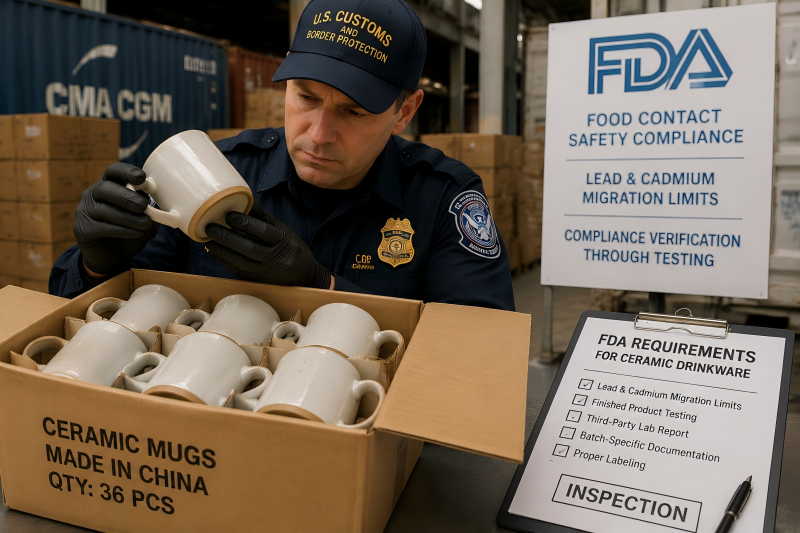
Now that you know the truth—it's about the product, not a factory certificate—let's explore the common myths that lead to costly mistakes. I'll walk you through how to shift your vetting process from asking for a meaningless document to verifying a process that ensures safety and compliance for every order.
Is There Such a Thing as an "FDA-Approved" Ceramic Mug Factory?
Many buyers begin their search by asking suppliers, "Are you an FDA-approved factory?" It seems like a logical question, but it’s based on a dangerous misunderstanding. A "yes" from a supplier can give you a false sense of security that could lead to major problems down the line.
No, there is no such thing as an "FDA-approved" or "FDA-certified" factory for producing ceramic drinkware. The FDA maintains a registration database for food facilities, but this registration is for traceability in case of a public health issue; it is not an endorsement or certification of a factory's products or quality systems.
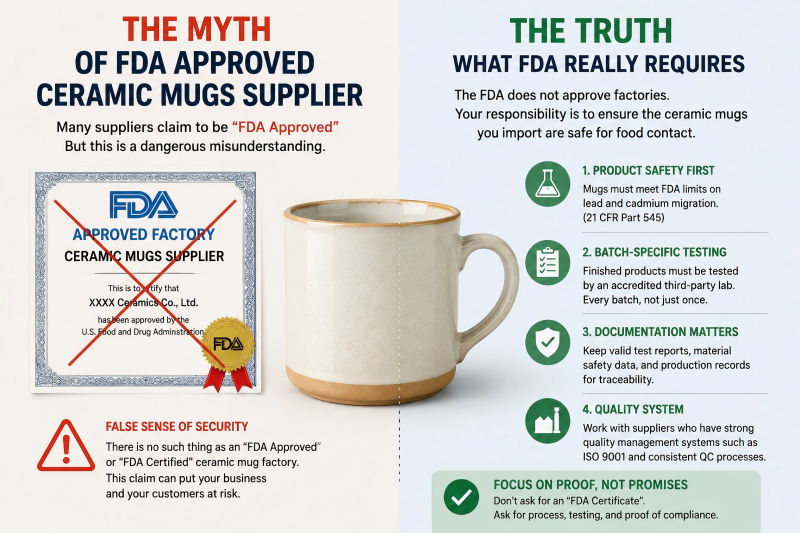
Dive Deeper: The Myth of "FDA Registration"
I once helped a new client whose shipment of mugs was detained at the Port of Los Angeles. Their previous supplier had provided them with an "FDA registration number" as proof of compliance. The client, an e-commerce seller new to importing, assumed this meant the factory and its products were approved by the FDA. They were wrong.
The shipment was held because the FDA's import inspection found the provided test report was for a different style of mug and was over two years old. The supplier's "FDA registration number" was irrelevant to the safety of the specific products being imported.
Here's the critical distinction you must understand:
- FDA Factory Registration: The FDA requires facilities that manufacture, process, pack, or hold food for consumption in the United States to register with them. This is primarily for traceability. If a contaminated food product is discovered, the FDA can use the registration system to quickly identify the source. For a
ceramic drinkware manufacturer in China, this registration is a basic administrative step, not a mark of quality. - Product Compliance: This refers to the actual product meeting specific safety standards. For ceramic mugs, the primary concern is the amount of lead and cadmium that can leach from the glaze into food or beverages. The FDA sets strict limits on this, detailed in their Compliance Policy Guides.
A supplier who promotes their FDA registration number as a sign of quality is either ignorant of the regulations or, more worryingly, intentionally misleading you. A professional partner will instead focus on explaining their ceramic mug manufacturing process and how they guarantee the safety of the final product. Their ISO9001 or BSCI certifications are far more indicative of a managed process than an FDA registration number.
Is an Old Test Report Enough to Prove FDA Compliance for My Order?
You've found a potential supplier. You ask for proof of compliance, and they promptly email you a PDF from a well-known lab like SGS or TÜV. It looks official, but it's dated ten months ago and is for a "12oz C-handle mug." Is this good enough for your order of 14oz barrel mugs?
Absolutely not. Relying on a generic or outdated test report is one of the most common and riskiest shortcuts a buyer can take. True FDA requirements for ceramic drinkware hinge on the compliance of your specific production batch, not a previous one.
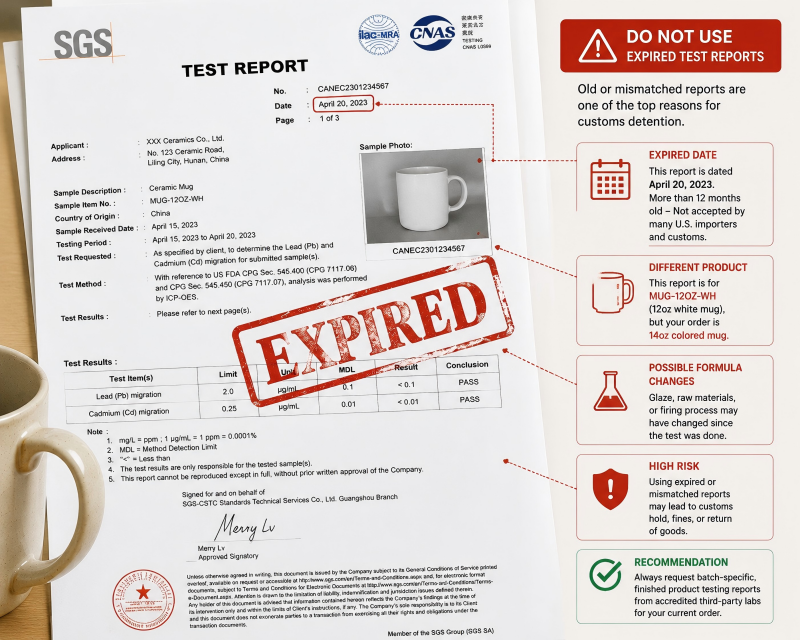
Dive Deeper: Why Batch-Specific Testing is Non-Negotiable
Ceramic manufacturing is a complex process involving natural raw materials and high-temperature chemical reactions. Even with a robust ceramic mug quality control process, slight variations can occur between production runs.
Here’s why an old report is insufficient:
- Glaze Composition: The supplier could have changed their glaze formula or supplier since the last test. A new batch of glaze might have different levels of impurities.
- Firing Variations: The temperature and duration of firing in the kiln have a massive impact on how the glaze matures and fuses to the ceramic body. An improperly fired mug is more likely to leach heavy metals, even if the glaze formula itself is safe.
- Different Products: A test report for a white mug doesn't guarantee the safety of a red mug from the same factory. Different colored glazes use different metal oxides as colorants, which can introduce new risk factors. For example, some red and orange glazes historically used cadmium compounds.
This is where paperwork mismatches cause customs holds. An inspector will compare the test report to your shipping documents and the physical product. If the report is for a different model, a different color, or is clearly expired, it will raise a red flag and trigger a physical inspection and possible detention.
Your goal should be to secure a test report that is:
- For your specific product SKU.
- From your specific production run (batch).
- Performed on finished products, not just raw materials.
This is the only way to have genuine confidence that your order meets the legal requirements for sale in the US.
What Questions Should I Ask a Ceramic Drinkware Manufacturer in China?
You're now aware of the pitfalls: no "FDA-approved" factories and the danger of old test reports. So how do you effectively vet a potential partner and ensure you receive FDA compliant ceramic mugs? It all comes down to asking the right questions.
Instead of the ineffective "Are you FDA certified?", you need to ask process-oriented questions. A professional supplier will welcome these questions, while an unprofessional one will be unable or unwilling to answer. This is your most powerful filter.
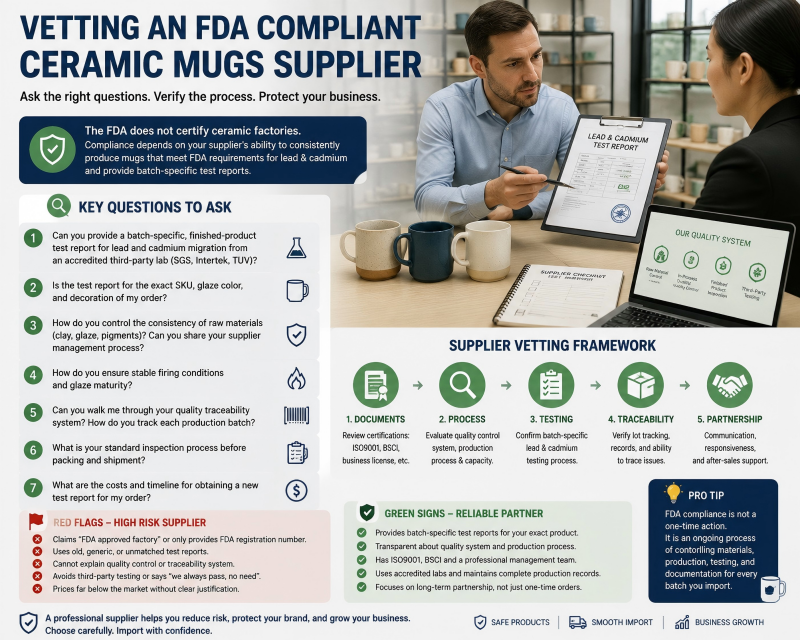
Dive Deeper: Your New Supplier Vetting Checklist
When I speak with prospective clients, I encourage them to move beyond surface-level questions. Shift your focus from a simple "yes/no" to "show me how." Here are the questions that will help you separate reliable partners from risky factories.
Key Questions to Ask a Potential Ceramic Supplier:
-
"Can you provide a batch-specific, finished-product test report for my order from an accredited third-party lab like SGS, Intertek, or TUV?"
- This is the most important question. The answer must be a clear "yes." A supplier who hesitates, offers an old report instead, or suggests you handle testing yourself is a major red flag. This demonstrates their commitment to proving the safety of the goods they produce for you.
-
"Can you walk me through your process for
ceramic mug lead cadmium testing?"- A good supplier will have an internal protocol. For example, at our factory, we conduct initial internal tests on new glaze formulas. For export orders, we then send samples from the actual production run to a certified lab for the official report that accompanies the shipment.
-
"What is your quality traceability system? Can you trace a finished mug back to the specific batches of clay and glaze used?"
- This question probes their management system. A factory with ISO9001 certification should be able to demonstrate this easily. This traceability is crucial for identifying the source of any problem and ensuring it doesn't happen again. It shows they have a true quality system, not just a quality "department."
-
"Can I review your standard ceramic mug inspection checklist?"
- This document reveals what the factory considers important. Does it only check for visual defects like chips and pinholes, or does it also include checkpoints related to material consistency and firing records? A comprehensive checklist is a sign of a mature production process.
-
"How do you ensure consistency in raw materials and firing to produce lead-safe ceramic mugs consistently?"
- This open-ended question invites them to talk about their expertise. They should mention stable raw material suppliers, testing of incoming materials, and computerized kiln controls that ensure consistent firing curves. Their answer will reveal their depth of knowledge and commitment to quality.
Asking these questions transforms the conversation. You are no longer a passive buyer hoping for the best; you are an informed partner actively managing your supply chain risk.
Frequently Asked Questions
What are the actual FDA limits for lead and cadmium in ceramic mugs?
The FDA specifies the maximum amount of leachable lead and cadmium. For mugs, which fall under the "small hollowware" category, the limits are generally 2.0 micrograms per milliliter (µg/mL) for lead and 0.25 µg/mL for cadmium, based on a specific testing protocol. Always refer to the latest FDA Compliance Policy Guides for the exact, up-to-date standards.
What happens if my ceramic mugs fail an FDA import check?
If your shipment is sampled and fails testing, the FDA will issue a "Notice of Detention and Hearing." You may have the option to submit evidence to contest the findings, but if the failure is confirmed, the goods will be refused entry. This typically means the shipment must be destroyed at your expense or exported back to the country of origin.
How much does ceramic mug lead and cadmium testing cost?
The cost can vary depending on the lab and the number of samples, but you can generally expect to pay between $150 and $400 for a standard lead and cadmium leach test on a set of samples from your production run. While some buyers may see this as an extra cost, it is a tiny, essential investment to protect a multi-thousand-dollar order.
Is California Proposition 65 the same as FDA compliance?
No, they are separate regulations. California's Proposition 65 has much stricter limits for lead and requires warning labels if a product might expose consumers to certain chemicals above its "safe harbor" levels. Many buyers aim for Prop 65 compliance as it represents a higher safety standard and allows for sales in California without issue. Meeting Prop 65 standards will almost always mean you also meet FDA standards.
Conclusion
Navigating the FDA requirements for ceramic drinkware is not about finding a supplier with a magic certificate. It's about finding a manufacturing partner with a transparent, verifiable process for ensuring product safety. The key takeaway is to shift your mindset from asking "Do you have a certificate?" to "Can you prove my order is compliant?" This means demanding batch-specific, finished-product testing for every order. By asking deeper, process-oriented questions, you can significantly reduce your risk of customs detentions, protect your customers, and build a more resilient and profitable business sourcing wholesale ceramic mugs FDA compliant.
As a ceramic drinkware manufacturer in China with over 15 years of export experience, we have built our business on this very principle of transparency and process control. If you're looking for a partner who understands and proactively manages these requirements, I invite you to contact us. Let's discuss how we build safety and compliance into every mug we create for our clients.