Importing ceramic mugs into the massive California market seems straightforward, but the shadow of Proposition 65 looms large. You're likely concerned about navigating complex regulations, facing potential lawsuits, and having your products tied up in legal battles. Is simply putting a warning label on your mugs the easy way out? The truth is, a proactive strategy for California Prop 65 compliance for mugs is not just about avoiding fines; it's about protecting your brand and ensuring long-term market success.
No, treating California Prop 65 compliance for mugs as only a labeling issue is a significant business risk. While labels can provide a legal safe harbor in some cases, they can damage brand reputation, reduce sales, and still leave importers vulnerable to costly private enforcement lawsuits. A comprehensive compliance strategy is a more secure and profitable approach.
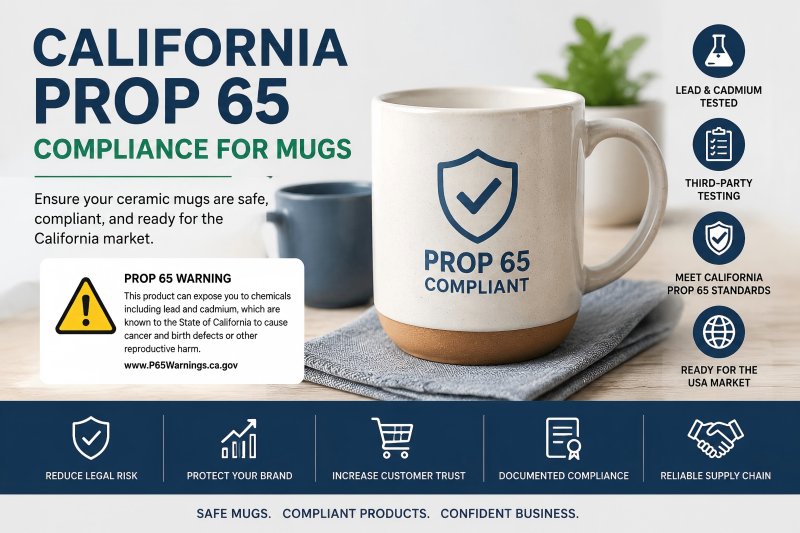
So, what does a smart compliance strategy look like? It goes far beyond the sticker on the bottom of the mug. To make the best business decision, we need to break down the real-world costs and benefits, moving from a reactive mindset to a proactive, protective one.
Why Is the 'Warning Label Shortcut' a Trap for Mug Importers?
Thinking of just adding a warning label to your ceramic mugs to sell in California? It seems like a quick, low-cost fix to a complicated problem. But in my 15 years of experience, I've seen this shortcut lead to unforeseen financial and reputational damage that far outweighs the initial convenience.
The warning label shortcut is a trap because it invites lawsuits from private enforcers ("bounty hunters"), hurts consumer trust and sales, and positions your brand as one that sells potentially hazardous products—even if the actual risk is negligible. This is a critical consideration for Prop 65 ceramic mugs.
Dive Deeper: The Real Business Cost of a Warning Label
When importers first learn about Prop 65, their first question is often, "Can't I just put the warning on everything and be done with it?" From a purely legal standpoint, this can offer a defense. From a business standpoint, it's often a disastrous choice.
H3: The Hidden Financial Risk of Private Enforcement
Proposition 65 has a unique feature that allows private parties—law firms, advocacy groups, and individuals—to sue companies on behalf of the public. These "bounty hunters" are financially motivated. They actively search for products on California shelves (and online stores that ship to California) that lack proper warnings.
If they find a non-compliant product, they issue a "60-Day Notice of Violation." This is the starting gun for a legal process that rarely ends well for the importer. Most of these cases are settled out of court to avoid even more expensive litigation. A typical settlement includes:
- Civil Penalties: A portion of which goes to the state.
- Attorney's Fees: This is the primary driver, often costing tens of thousands of dollars.
- Other Costs: Such as agreeing to recall products or implement a testing regime.
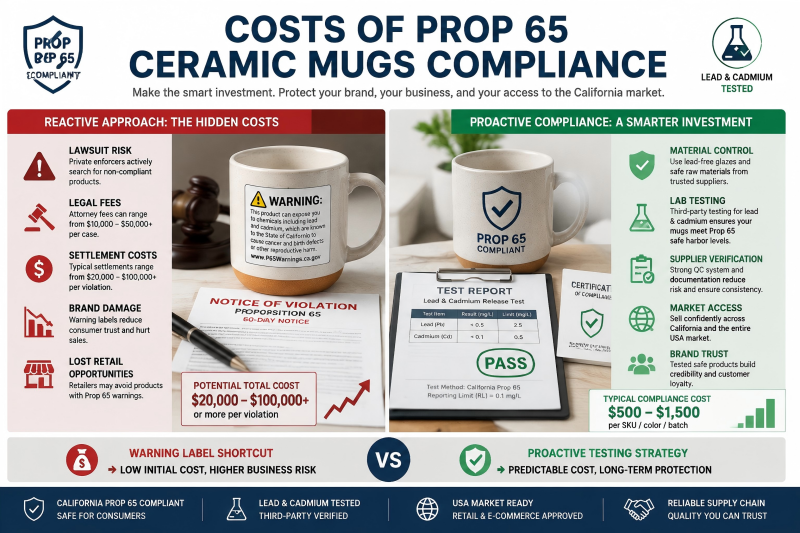
A single violation for a single product can easily result in a total cost of $20,000 to $100,000 or more. For a small to medium-sized wholesaler or e-commerce seller, this is a catastrophic, unbudgeted expense. The warning label doesn't prevent this if your product has exposures above the limit and the label isn't present or correct. Worse, it makes your brand a target for those who believe the label is being used to cover up a genuinely unsafe product.
H3: The Client Story: A Lesson in Proactive Investment
I remember working with a new e-commerce client who was launching a line of beautifully designed mugs. They were focused on keeping initial costs down and asked us to simply apply the standard Prop 65 warning label to their entire order. They believed the savings on lead and cadmium testing for mugs would help their launch budget.
I advised against it and instead walked them through a simple cost-benefit analysis. I laid out the two paths in a table, much like this one:
| Risk Factor | Path 1: "Label Shortcut" | Path 2: Proactive Compliance |
|---|---|---|
| Upfront Lab Testing | $0 | ~$500 - $1,500 per SKU/color |
| Potential Lawsuit Risk | High | Extremely Low |
| Estimated Lawsuit Cost | $25,000+ (settlement + fees) | $0 |
| Brand Impact | Negative (warning label deters buyers) | Positive (can be marketed as tested) |
| Market Access | High-Risk / Limited | Secure / Full USA Access |
Seeing the numbers, the client had a realization. The "savings" of a few hundred dollars on testing was a massive gamble. A single lawsuit would wipe out their entire profit margin for the year and potentially destroy their new brand before it even got started. Consumers, especially those buying premium, design-focused products, are very sensitive to warnings on items they use for food and drink. The label would directly harm sales.
They chose the proactive path. We tested their chosen glazes, confirmed they were well below the safe harbor limits, and provided them with the lab reports. They could now confidently sell their lead safe ceramic mugs across the United States, including California, without a warning label. Their investment wasn't a cost; it was insurance for their brand equity and market access.
How Does Proactive California Prop 65 Compliance for Mugs Protect Your Business?
Managing regulatory compliance can feel like a pure cost center, adding expenses without directly increasing revenue. You're trying to keep margins healthy, and more testing seems to work against that goal. But what if you reframe compliance as a strategic investment in your business's future?
Proactive compliance protects your business by minimizing legal risks, building invaluable brand trust, securing full access to the lucrative California market, and creating a more resilient supply chain through a robust ceramic mug supplier compliance program.
Dive Deeper: Turning Compliance into a Competitive Advantage
Instead of viewing compliance as a hurdle, successful importers see it as a moat that protects their business and strengthens their brand. A proactive approach moves you from a defensive position to an offensive one.
H3: Building a Defensible and Resilient Supply Chain
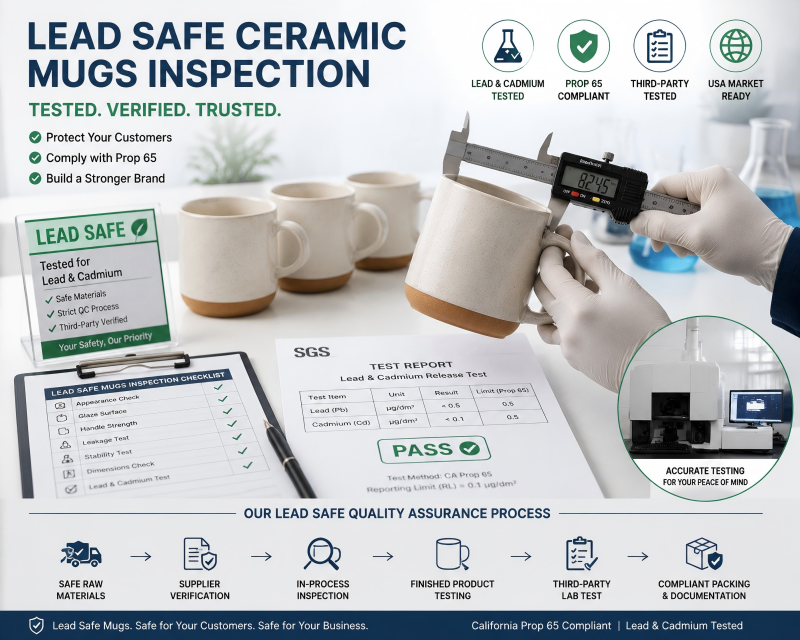
A proactive strategy is about more than a single lab test. It's about building a documented system of compliance. When you partner with a manufacturer like us, we help you establish this system. Our comprehensive Ceramic Mug Quality Control Process isn't just about catching defects; it's about ensuring consistency and safety from raw materials to final packaging.
This process includes:
- Material Vetting: We source glazes and clays from trusted suppliers who provide their own material safety data sheets.
- Controlled Production: Firing temperatures and times are strictly monitored, as this is critical for properly vitrifying glazes and minimizing leaching.
- Batch Testing: We facilitate periodic batch testing with accredited third-party labs for California Proposition 65 ceramic drinkware.
- Documentation: You receive the lab reports and compliance documentation, creating a paper trail that serves as your best defense.
Should a legal challenge ever arise, you aren't just saying your products are safe; you have the documentation from a qualified supplier and an independent lab to prove it. This systemic approach is what wholesale ceramic mugs USA compliance truly requires.
H3: Unlocking Market Access and Building Brand Equity
In today's market, consumers are more conscious than ever about product safety. A proactive compliance strategy allows you to turn a regulatory requirement into a powerful marketing tool. Instead of a scary warning label, you get to build your brand on a foundation of trust.
Consider the benefits of this approach:
- Reduced Legal Exposure: Drastically lowers the chance of ever receiving a 60-Day Notice.
- Enhanced Brand Reputation: You can confidently market your products as tested for consumer safety, which is a powerful differentiator for lead safe ceramic mugs.
- Simplified Logistics: You don't need to manage separate inventories for California vs. the rest of the US, which reduces complexity and cost.
- Higher Perceived Value: A brand that invests in safety is perceived as being higher quality, building the long-term trust that every e-commerce seller and wholesaler needs.
By working with a supplier who understands this, compliance becomes a key part of your brand's story, not just a line item in your budget.
What's the Difference Between FDA and Prop 65 Standards for Ceramic Mugs?
You've done your due diligence and ensured your mugs meet the FDA's requirements for leachable lead and cadmium in food-contact articles. Isn't that enough? This is a common point of confusion and can create a dangerous false sense of security for importers.
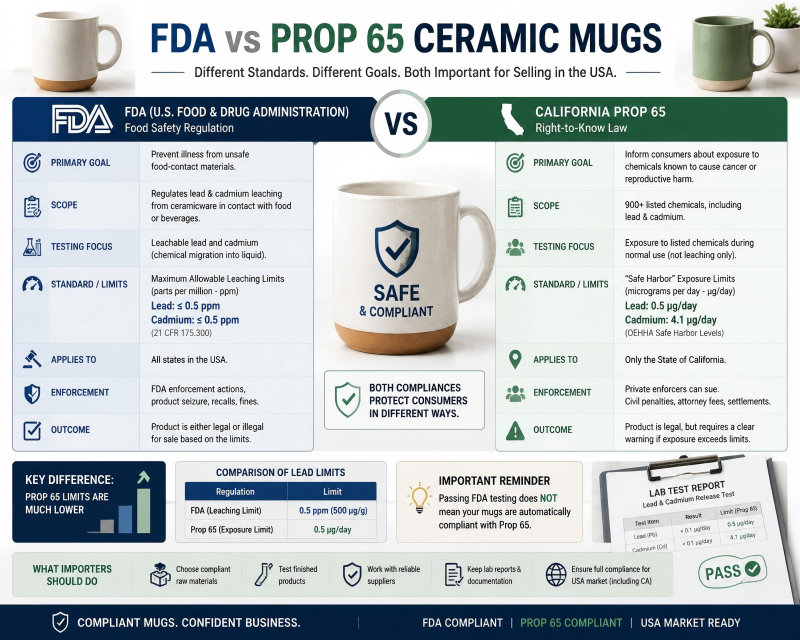
While both the FDA and Prop 65 regulate lead and cadmium, Prop 65's "safe harbor" limits for exposure are significantly stricter than the FDA's allowable leaching levels. A mug can be fully compliant with federal FDA regulations but still require a Prop 65 warning in California.
Dive Deeper: Two Different Goals, Two Different Standards
Understanding the difference between these two regulations is critical for any importer of ceramic drinkware. While they may seem to overlap, their fundamental purpose, scope, and enforcement mechanisms are worlds apart.
H3: A Tale of Two Regulations
The U.S. Food and Drug Administration (FDA) is a federal agency whose primary goal is to prevent acute toxicity and illness. For ceramicware, their regulations set a maximum limit on the amount of lead and cadmium that can leach from the mug into the liquid it holds. If a product leaches above this limit, it is considered "adulterated" and illegal for sale anywhere in the U.S. You can learn more about these federal rules in our guide to FDA Requirements for Ceramic Drinkware.
California's Proposition 65, on the other hand, is a "right-to-know" law. Its goal is to inform citizens about exposure to any of the 900+ chemicals on its list that are known to cause cancer or reproductive toxicity. It doesn't ban products. Instead, it requires a "clear and reasonable warning" if a product could expose a person to a chemical above its specified "safe harbor" level.
H3: Why FDA Compliance Isn't Enough
The critical takeaway here is the difference in strictness. The "safe harbor" exposure levels set by Prop 65 for lead are orders of magnitude lower than the levels the FDA permits for leaching.
Let's put this into a simple comparison:
| Feature | FDA Requirements | California Proposition 65 |
|---|---|---|
| Purpose | Prevent poisoning from unsafe food-contact surfaces. | Inform consumers about exposure to hazardous chemicals. |
| Scope | Leachable lead and cadmium in ceramicware. | 900+ chemicals, including lead and cadmium. |
| Limits | Sets maximum leaching levels (parts per million). | Sets "safe harbor" daily exposure levels (micrograms per day). |
| Strictness | Less strict. | Significantly stricter for lead and cadmium. |
| Outcome | Product is either legal or illegal for sale. | Product is legal but requires a warning if exposure exceeds limits. |
Because the FDA vs Prop 65 ceramic mugs standards are so different, you cannot assume compliance with one means compliance with the other. The ceramic mug testing requirements for the California market demand specific Prop 65 testing protocols. This is why focusing on truly Lead-Free Ceramic Mugs: What Importers Need to Know from a material science perspective is the most reliable long-term strategy. Your manufacturing partner should be able to guide you through the appropriate testing for both.
Frequently Asked Questions
What happens if I receive a Prop 65 60-Day Notice?
Once you receive a notice, the clock is ticking. You should immediately contact legal counsel experienced in Prop 65 litigation. Do not ignore it. Your attorney will help you assess the claim's validity, explore your defense options, and negotiate a potential settlement with the noticing party to minimize financial damage.
Does a "Made in China" label affect Prop 65 risk?
No, the country of origin does not directly affect Prop 65 risk. The regulation applies equally to all products sold in California, regardless of where they are made. The key factor is not the origin but the ceramic mug supplier compliance program and whether the product contains listed chemicals above safe harbor levels without a warning.
How often should I perform lead and cadmium testing for mugs?
For a stable supply chain with consistent materials and processes, testing a new design or glaze at its introduction is standard. After that, we recommend periodic re-testing, perhaps annually or if there are any changes in raw materials or production methods. This demonstrates ongoing due diligence and is a core part of a responsible quality control program.
Can my supplier provide a Prop 65 compliance certificate?
A reputable supplier can provide third-party laboratory test reports showing that a specific product passed testing for Prop 65 standards. This report, tied to a specific production batch, is your proof of compliance. Be wary of generic "certificates of compliance" that aren't backed by recent, specific lab data for the product you are buying.
Conclusion
We've seen that viewing Prop 65 as a simple labeling issue is a dangerous oversimplification. The "warning label shortcut" is a financial and reputational trap that exposes your business to significant risk. In contrast, a proactive approach is a powerful investment in your brand's future. It minimizes legal exposure, builds consumer trust, and secures your access to the entire U.S. market. Ultimately, a robust strategy for California Prop 65 compliance for mugs transforms a regulatory burden into a competitive advantage. It's not about the cost of testing; it's about the value of protecting your business.
If you're looking for a manufacturing partner who understands the business implications of compliance and can help you navigate these challenges, contact us. With 15 years of export experience, we help wholesalers and e-commerce brands build compliant, trustworthy, and profitable product lines for the American market.