Struggling to source ceramic mugs, you're likely worried about lead contamination. The fear of a shipment being seized by customs, facing a lawsuit, or damaging your brand's reputation is a constant pressure. The solution isn't just finding a supplier who promises lead-free ceramic mugs; it's about understanding what that term really means and how to verify a manufacturer's safety claims from the inside out.
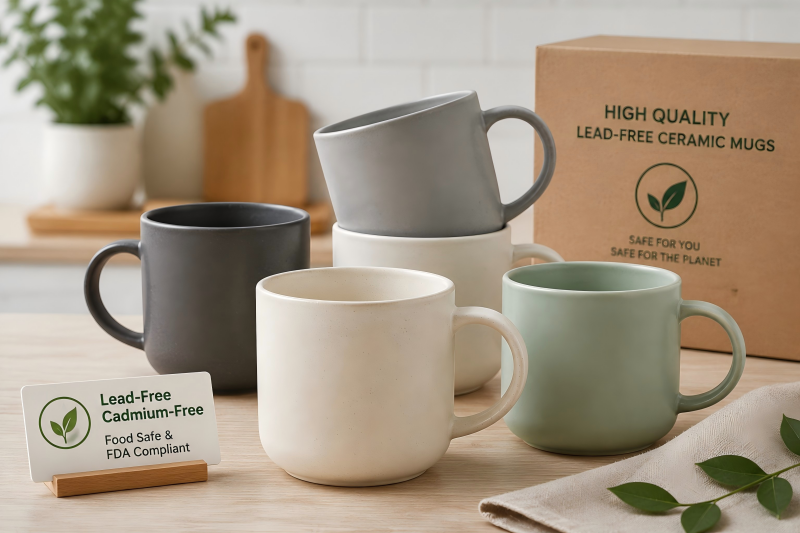
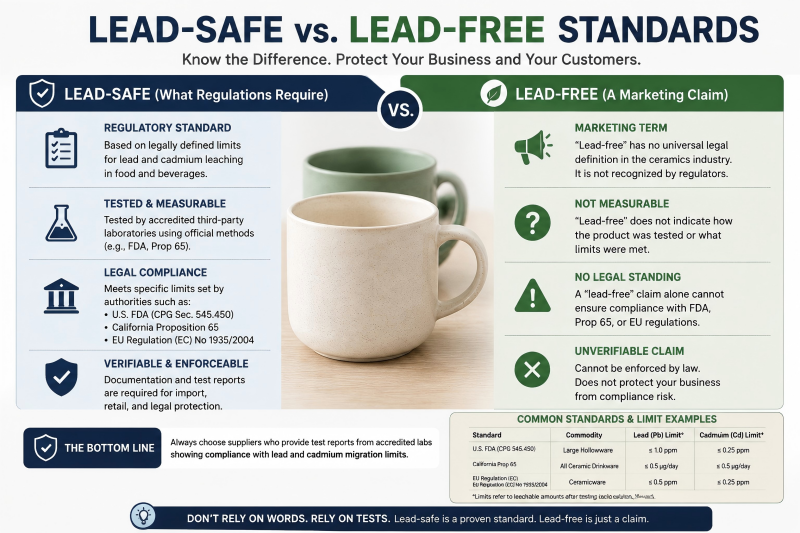
The term "lead-free" is often a misleading marketing claim. The true standard that matters for legal compliance and consumer safety is "lead-safe." This means the mug has been tested and proven not to leach lead or cadmium into beverages above the strict limits set by regulatory bodies like the U.S. Food and Drug Administration (FDA) or California's Proposition 65.
Now that you know the critical difference between a marketing buzzword and a legal standard, you're already ahead of most importers. But this distinction is just the beginning. To truly protect your business, you need to understand where the risk actually comes from and what questions to ask to ensure your supplier has the right controls in place. Let's dive deeper.
Why is "Lead-Safe" a More Important Standard for Lead-Free Ceramic Mugs?
You see the term "lead-free" advertised everywhere, and it feels like the safest choice. But relying on this vague promise can create a false sense of security, leaving your business exposed to non-compliance. The real key is to shift your focus from marketing language to the measurable, regulated standard of "lead-safe," which is what customs officials and labs actually test for.
A "lead-safe" mug is one that meets specific, legally defined limits for heavy metal leaching when tested. These are the ceramic mug safety standards that matter. In contrast, "lead-free" has no official legal definition in the ceramics industry, making it an unreliable and unverifiable claim for ensuring product safety and compliance.
Dive Deeper: Understanding the Regulations
In my 15 years of overseeing production for export to the US and Europe, the most common point of confusion for new buyers is the regulatory landscape. They ask for "lead-free," but what they need are FDA compliant ceramic mugs. Let's break down the two main U.S. standards you must know.
H3: FDA Compliance (CPG Sec. 545.450 & 7117.07)
The FDA sets clear action levels for lead and cadmium that can leach from the food-contact surface of a ceramic product. The test method involves filling the mug with a mild acid solution for 24 hours and then measuring how much lead or cadmium has leached into the solution. The limits vary depending on the type of ceramicware (e.g., flatware, small hollowware, large hollowware). For a typical coffee mug, the limit for lead is very low—we're talking parts per million (ppm). A mug that passes this test is considered "lead-safe" and fit for sale in the United States. For more detailed information, you should review the official FDA requirements for ceramic mugs.
H3: California Proposition 65
Proposition 65 (Prop 65) is even stricter. This California law requires businesses to provide warnings to Californians about significant exposures to chemicals that cause cancer, birth defects, or other reproductive harm. Lead is on this list. The leachable lead limits under Prop 65 are significantly lower than the FDA's. For many of our clients selling into California, meeting Prop 65 is the primary goal. Failing to do so can result in hefty fines and legal battles. This is why when we discuss sourcing lead and cadmium free mugs, what we're really engineering is a product that consistently passes these stringent leaching tests.
A trustworthy food safe ceramic mugs supplier doesn't just say they are compliant; they understand these specific ppm limits and have the testing data to prove it.
What Part of the Production Process Affects Lead-Free Ceramic Mugs?
Many importers assume lead risk comes directly from the clay body. This misconception can cause you to overlook the two most critical sources of contamination: the glaze that coats the mug and the firing process that hardens it. Understanding this is essential because a supplier can start with "safe" materials and still produce a dangerous product if their process is flawed.
The primary risk of lead contamination in ceramic mugs originates from the glaze composition and the kiln firing process. Certain glaze formulas use lead to achieve bright colors and a glossy finish at lower temperatures. If the kiln temperature is too low or the firing time too short, the glaze won't properly mature and seal, allowing lead to leach out.
Dive Deeper: A Look Inside the Factory
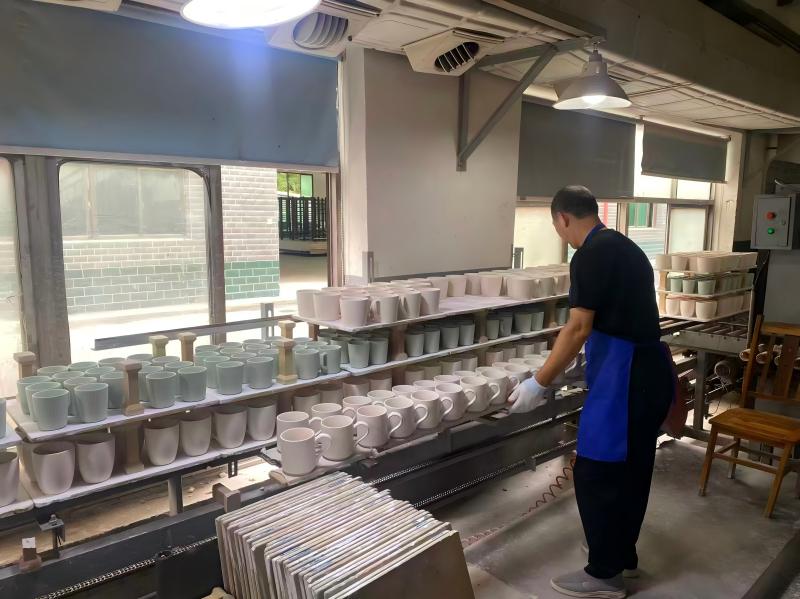
When you're sourcing custom lead free ceramic mugs, the details of the production process are paramount. As someone who manages quality control on the factory floor, I can tell you that safety is engineered, not assumed. Here is where the real work happens.
H3: The Critical Role of Glaze Formulation
Historically, lead compounds were a potter's best friend. They create brilliant, stable colors—especially reds, oranges, and yellows—and allow the glaze to melt and flow smoothly at lower, more economical kiln temperatures. The problem is that if this glaze isn't formulated and fired perfectly, that same lead can become mobile.
A responsible manufacturer, like our facility in Liling, invests in modern, lead-encapsulated pigments or, more commonly, completely lead-free glaze formulations. These advanced glazes require higher firing temperatures and more precise control, which adds to the cost. A supplier cutting corners might revert to a cheaper, low-fire, lead-based glaze to save on energy and material costs, introducing a massive risk. This is a crucial detail in the overall ceramic mug production process. When a client asks us for a bright red mug, our first step is to select a high-quality, stable pigment and formulate a glaze that will remain inert after firing, ensuring it's safe.
H3: Firing Temperature and Duration: The Make-or-Break Step
The kiln is where a mug becomes safe or unsafe. During firing, the glaze undergoes a process called vitrification. The heat melts the silica and other components into a continuous, non-porous, glass-like layer that fuses to the ceramic body. When done correctly, this layer permanently locks any heavy metals in place, making them non-leachable.
Here's what can go wrong:
- Temperature Too Low: If the kiln doesn't reach the required temperature (often over 1200°C or 2200°F for high-quality stoneware), the glaze won't fully vitrify. It may look shiny, but it remains porous and chemically unstable.
- Firing Time Too Short: Even if the peak temperature is reached, it must be held for a specific duration. Rushing the firing cycle to increase output is a common shortcut that leads to improperly matured glazes.
We use computer-controlled kilns with multiple thermocouples to ensure every part of the kiln reaches and holds the precise temperature for the exact required time. This consistency is a non-negotiable part of producing safe ceramic drinkware.
How Do You Verify a Supplier's Claims About Lead-Free Ceramic Mugs?
A potential supplier sends you a shiny SGS test report showing their mugs passed a lead test. You feel relieved and ready to place an order. But this feeling of security can be dangerously misleading. A single report only proves that one specific batch was compliant on one specific day. To truly protect your investment, you must learn to look beyond a single piece of paper and evaluate the supplier's entire quality system.
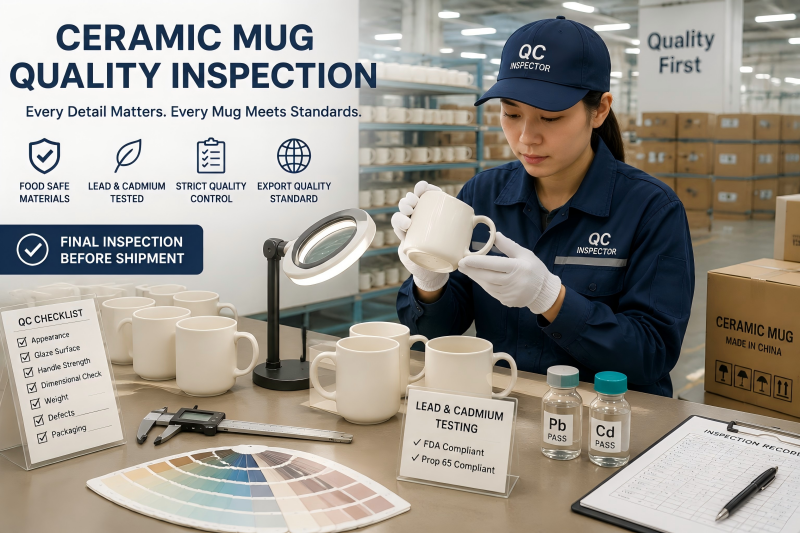
You can verify a supplier's claims about lead-free ceramic mugs by requesting comprehensive documentation that proves a systemic approach to quality. This includes raw material inspection records for glazes, in-process quality control (IPQC) checklists from the production line, final product batch testing records, and a history of third-party compliance reports from accredited labs.
Dive Deeper: Building a Chain of Evidence
Relying on a single test report is like trying to judge a restaurant's hygiene based on one good meal. It doesn't tell you what happens in the kitchen every day. To find a truly reliable partner, you need to see evidence of a robust quality system.
H3: A Cautionary Tale: The Rejected Shipment
I once consulted for an importer whose shipment of 10,000 mugs was detained by U.S. Customs. The supplier had provided a passing lead test from six months prior. However, a random spot test by customs officials showed lead leaching far above the FDA limit. The entire shipment was refused entry and had to be destroyed, resulting in a total loss of over $50,000.
After investigation, we discovered the factory had switched to a cheaper red glaze supplier two months after the original test to save a few cents per mug. They never re-tested and their internal QC was non-existent. They didn't track glaze batches or perform in-process checks. This costly disaster was completely avoidable with better supplier vetting.
H3: What to Ask For: Your QC Documentation Checklist
When evaluating a potential safe ceramic drinkware supplier, ask for more than just a certificate. A transparent and professional factory should be able to provide the following:
- Factory Audits & Certifications: Look for ISO 9001 for quality management systems and BSCI for social compliance. These show a baseline commitment to formalized processes. Our factory, for instance, proudly maintains both.
- Raw Material Inspection (IQC) Records: They should be testing or requiring certificates of analysis for all incoming raw materials, especially glazes and pigments. Ask to see these records.
- In-Process Quality Control (IPQC) Checklists: What checks are performed during production? Ask for their checklists for the glazing and firing stages. Do they log kiln temperatures and firing durations for each batch? This is a core part of any serious ceramic mug quality inspection process.
- Final Quality Control (FQC) & Batch Tracking: How do they link a finished batch of mugs back to the raw materials and production parameters used? A good system allows them to trace any issues back to the source.
- History of Third-Party Testing: Don't just ask for one report. Ask for several reports from the last 1-2 years for similar products. This demonstrates an ongoing commitment to
ceramic mugs lead testingand compliance, which is crucial for those sourcinglead free ceramic mugs wholesale.
Asking these questions separates the professional factories from the risky workshops. It shows you understand the process and are a serious partner. This is a critical step in learning how to find reliable ceramic mug manufacturers in China.
Frequently Asked Questions
Are ceramic mugs made in China safe?
Yes, ceramic mugs from reputable Chinese manufacturers are safe. Factories with established export histories, like our 15 years of exporting to the US and EU, adhere to strict international standards. Safety depends on the supplier's quality control system, material sourcing, and adherence to regulations like FDA and Prop 65, not the country of origin itself.
What is California Proposition 65 for ceramics?
California Proposition 65 requires warnings for products containing chemicals known to cause harm, including lead. For ceramics, it sets extremely low leachable lead and cadmium limits—much stricter than FDA standards. Compliance is critical for any business selling into California, as failure to provide warnings can lead to significant legal penalties.
How often should ceramic mugs lead testing be done?
A responsible manufacturer should conduct third-party lead testing regularly, at least annually, and whenever a critical raw material (like glaze) or process is changed. For ongoing production, we also perform frequent internal batch testing to ensure consistency between official third-party audits. This continuous verification is key to maintaining compliance.
Can I get custom lead free ceramic mugs made safely?
Absolutely. Getting safe custom lead free ceramic mugs is entirely possible with the right partner. A qualified manufacturer will work with you on the design, then select appropriate lead-safe glazes and pigments for your desired colors. They will manage the production process with strict controls and provide testing documentation to verify the final product's safety.
Conclusion
The pursuit of safe, compliant products is not about finding a supplier who makes a simple promise of lead-free ceramic mugs. It's about finding a manufacturing partner who understands the science and systems behind creating a truly "lead-safe" product. The key takeaways are to focus on the legally defined "lead-safe" standard, recognize that risk originates in the glaze and firing process, and verify your supplier's claims by demanding proof of a comprehensive quality control system. Don't rely on a single test report; dig deeper and ask for the documentation that proves consistent, systemic safety.
If you're looking for a partner for your lead free ceramic mugs wholesale business who understands these complexities and can provide the documentation to prove it, let's talk. We help wholesalers and e-commerce sellers in the US, Europe, and South America source compliant, high-quality ceramic mugs with confidence and transparency.