Choosing a mug glaze seems simple, but picking the wrong one can lead to high defect rates, unexpected production delays, and hidden costs that silently erode your profits. This can lead to frustrating stockouts and negative customer reviews, damaging your brand's hard-won reputation. Understanding different mug glazing techniques is the key to moving beyond unit price and making a truly profitable, low-risk sourcing decision.
The right mug glazing technique for your business is the one that aligns with your Total Cost of Ownership (TCO) model, not just the lowest unit price. This means balancing the glaze's aesthetic appeal with its production complexity, typical yield rates, and replenishment lead times to ensure stable quality and predictable inventory for your specific sales volume and brand.
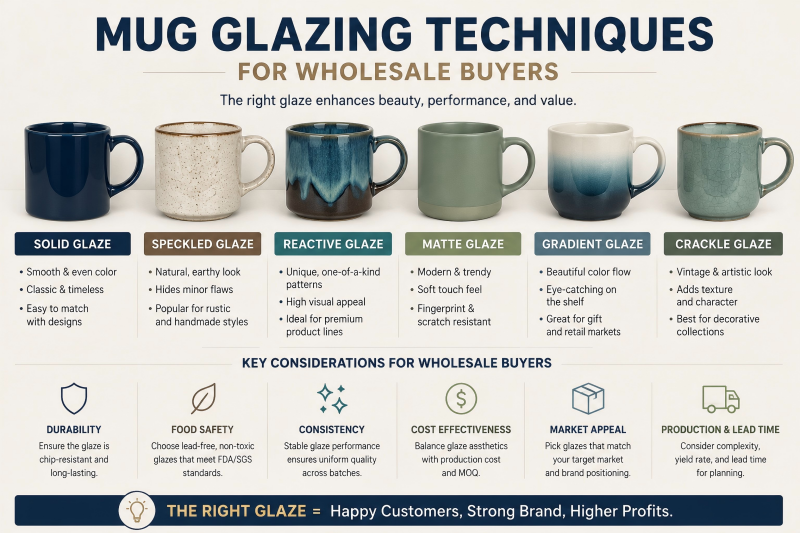
Now that we've established that the "best" glaze depends entirely on your business model, let's look closer at the common options. In my 15 years as a consultant for a custom ceramic mugs supplier, I've helped hundreds of wholesalers and e-commerce sellers navigate these choices. I'll break down the pros, cons, and hidden factory-floor costs of each technique to help you choose wisely.
Is a Solid Color Glaze the Safest Bet for Your Mugs?
You need a reliable, cost-effective mug that you can order in high volumes without constant quality headaches. But you worry that "cost-effective" might mean "boring," failing to capture your customers' attention. The good news is that solid color glazes offer a fantastic balance of consistency, affordability, and a nearly infinite color palette, making them a cornerstone for many successful brands.
A solid color glaze is often the safest and most profitable choice for high-volume wholesalers and e-commerce sellers. Its relatively simple application process results in consistently high yield rates, very low defect risk, and fast production lead times. This ensures a stable supply chain and predictable costs per sellable unit.

Dive Deeper: The Stability and Profitability of Solid Glazes
From a production standpoint, solid color glazes are a manufacturer's best friend. They represent the most streamlined part of the ceramic mug manufacturing process. The application is straightforward—mugs are typically dipped into a large vat of glaze or sprayed by a machine. This high level of automation and repeatability leads to incredible consistency.
The most important metric here is the yield rate. For a standard solid color gloss glaze, we typically see a yield rate of 95% to 98%. This means that for every 1,000 mugs we produce, 950 to 980 will pass our rigorous quality control checks. This low defect rate means the unit price you are quoted is extremely close to your final cost per sellable unit. There are very few expensive surprises.
I remember a client from South America who was captivated by a complex, trendy glaze. However, their business model relied on high volume and thin margins. After we ran the numbers, they realized the potential 15% defect rate on the trendy glaze would erase their entire profit. We helped them develop a line of mugs with a vibrant, unique solid color palette instead. Their effective cost per unit dropped significantly, their inventory became predictable, and their business thrived.
For wholesalers and e-commerce sellers, this stability has profound business implications:
- Improved Cash Flow: Faster production lead times (typically 30-45 days) mean you can restock quicker and tie up less capital in inventory.
- Lower Risk: Predictable quality and supply reduce the risk of stockouts or receiving a batch with high defects that you can't sell.
- Brand Consistency: Every mug your customer receives looks just like the one on your website, building trust and reducing returns.
This is why solid color glazes are the go-to for many large-scale wholesale ceramic mugs supplier orders and are a reliable choice for OEM ceramic mugs. Furthermore, a well-formulated solid gloss glaze creates an exceptionally durable ceramic mug finish, making it one of the most reliable options for dishwasher safe ceramic mugs.
| Feature | Solid Color Glaze | Reactive Glaze |
|---|---|---|
| Unit Price | Low to Medium | Medium to High |
| Typical Yield Rate | 95-98% | 80-90% |
| Lead Time | 30-45 Days | 50-70 Days |
| Replenishment | Fast & Predictable | Slower & Variable |
| Best For | High-volume, stable inventory | Niche, premium brands |
Are Reactive Glaze Mug Glazing Techniques Worth the Risk?
You want to offer a product with an artisanal, unique look that makes your brand stand out in a crowded market. Reactive glazes seem perfect for this. But you've heard horror stories about inconsistent results, high defect rates, and production delays that can wipe out your profit margins and leave you with angry customers. So, is the beauty of reactive glaze worth the business risk?
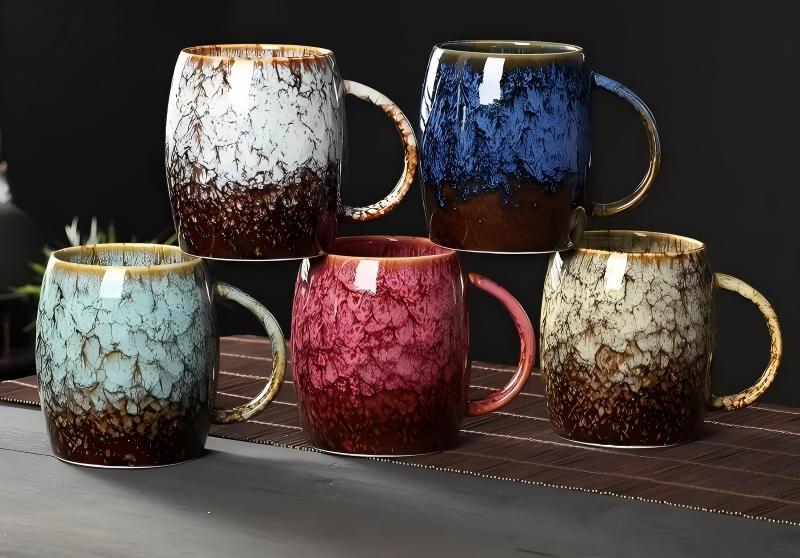
Reactive glaze mug glazing techniques are worth the risk for brands that can command a premium price and manage a less predictable supply chain. The unique, non-uniform finish commands higher perceived value, but this comes at the cost of lower production yields, longer lead times, and the need for a flexible quality standard.
Dive Deeper: The Art and Science of Reactive Glazes
The "reaction" in a reactive glaze happens inside the kiln. These special glazes contain crystals and metal oxides that melt and flow at high temperatures, creating unique patterns, colors, and textures. This means no two reactive glaze mugs are ever exactly alike. This uniqueness is a powerful selling point, but it's also a significant production challenge.
The final look is influenced by tiny variables:
- The thickness of the glaze application.
- The exact temperature curve of the kiln.
- The mug's specific location inside the kiln.
This is why we consider it one of the more complex ceramic mug glaze types. I once worked with a US-based e-commerce brand that fell in love with a sample of a speckled blue reactive glaze. In mass production, we found that about 15% of the mugs came out with a greener tint due to their position in the kiln. The key to success was not to try and make them all identical—that's impossible. Instead, we worked together to define an "acceptable range of variation." We sent them photos of the different outcomes, and they approved a spectrum of blue-to-green that they could market as a "unique, artisanal feature." This level of communication is vital for any OEM ceramic mugs order involving these glazes.
Let's look at the Total Cost of Ownership, which is a key part of any true ceramic mug cost breakdown.
- Mug A (Solid Glaze): $2.00 unit price with a 2% defect rate. On an order of 1,000 units, you pay $2,000 and receive 980 sellable mugs. Your effective cost is $2.04 per sellable unit.
- Mug B (Reactive Glaze): $1.80 unit price with a 15% defect rate. On an order of 1,000 units, you pay $1,800 and receive 850 sellable mugs. Your effective cost is $2.12 per sellable unit.
In this common scenario, the "cheaper" reactive glaze mug is actually more expensive once you account for the units you can't sell. This is where ceramic mug factory quality control becomes critical. Our job isn't to force uniformity; it's to ensure every mug we ship falls within the pre-agreed standard of beauty and function, culling the true defects.
Why are Matte Finish Mug Glazing Techniques So Popular?
You're looking to add a modern, sophisticated, and highly photogenic product to your collection. Matte finishes, with their understated and tactile appeal, seem like a perfect fit. But you're rightly concerned about potential durability issues like scratching, staining, or utensil marks that could lead to customer complaints and damage your brand's reputation for quality.
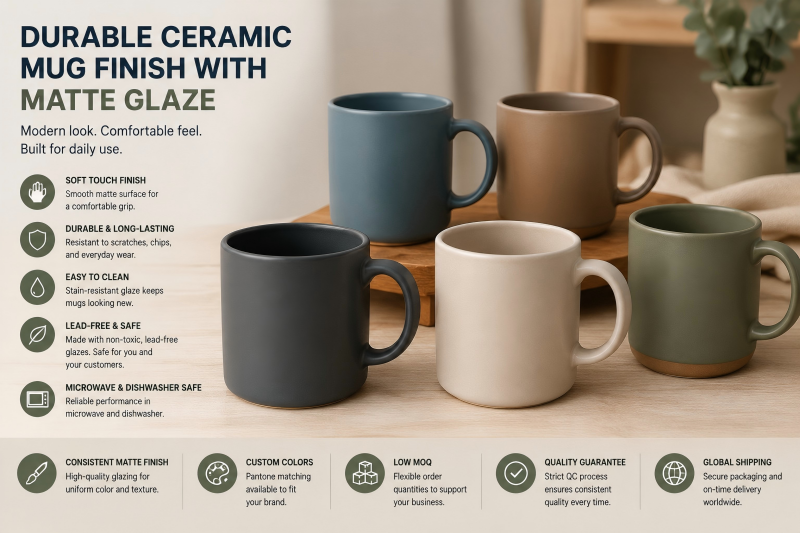
Matte finish mug glazing techniques have become incredibly popular due to their modern, minimalist aesthetic and pleasant, non-reflective surface. This premium perception often allows for higher retail pricing, but buyers must be vigilant about sourcing a high-quality, durable ceramic mug finish to avoid common issues like utensil marks and staining.
Dive Deeper: The Allure and The Challenge of Matte Finishes
The appeal of a matte glaze is undeniable. It feels contemporary and luxurious. It doesn't show fingerprints like a dark gloss glaze might, and it looks fantastic in product photography for e-commerce sites and social media feeds. The tactile experience of holding a smooth, non-glossy mug is a selling point in itself.
However, the very nature of a matte surface presents a technical challenge. Unlike a perfectly smooth, non-porous gloss glaze, a matte finish has a microscopic texture. This is what diffuses light to prevent shine. In lower-quality formulations, this texture can:
- Trap oils and pigments, leading to stains from coffee or tea.
- Be susceptible to "silver-marking", which are the gray streaks left behind by metal utensils. The metal is actually abrading and depositing onto the rougher ceramic surface.
As a factory that has been exporting to demanding European and American markets for 15 years, we have invested significant R&D into perfecting our matte glaze formulas to be more robust and resistant to these issues. One piece of advice I often give clients is to consider darker matte colors like charcoal, black, or deep navy, as they naturally conceal potential utensil marks far better than stark white or light pastel shades.
When sourcing matte mugs, partnering with an experienced custom ceramic mugs manufacturer is non-negotiable. You need to ask the right questions to protect your investment.
- "Can you provide samples that I can personally test with my own spoons and forks?" (Never skip this step!)
- "What specific ceramic mug factory quality control tests do you perform to check for matte glaze durability and stain resistance?"
- "Is this specific matte glaze formulation tested and certified to be food-safe and FDA compliant for ceramic mugs?"
- "Do you classify this as a dishwasher safe ceramic mugs finish?" (Many high-quality matte glazes are, but you must always verify.)
I once helped a German e-commerce seller who was on the verge of dropping their matte mug line due to a flood of customer complaints about scratches. They were sourcing from a different, less experienced factory. We sent them samples of our matte black mugs. They put them through a "torture test" in their own office kitchen for a week. The difference was night and day. They placed a trial order, and it became one of their bestsellers. That was five years ago, and they remain a key partner today.
Frequently Asked Questions
What is the best glaze for ceramic mugs?
There is no single "best" glaze, as the ideal choice depends entirely on your business model. For high-volume sales where cost and inventory stability are paramount, a solid color gloss glaze is often the best glaze for ceramic mugs. For a niche, premium brand aiming for a unique, artisanal feel, a reactive glaze can be a fantastic choice.
How does the ceramic mug glazing process affect cost?
The complexity of the ceramic mug glazing process is a major factor in the final cost. Simple, automated processes like dipping for solid colors result in high yields and lower labor costs. In contrast, multi-step or manual applications required for reactive or two-tone glazes have lower yields and higher labor inputs, increasing the final cost per sellable unit.
Are all glazed ceramic mugs dishwasher safe?
Most modern, high-quality glazed ceramic mugs are designed to be dishwasher safe, but it is not a universal guarantee. The durability depends heavily on the glaze formulation and the firing temperature used in manufacturing. It is crucial to confirm this specification with your wholesale ceramic mugs supplier to ensure the products meet your customers' expectations for dishwasher safe ceramic mugs.
Can you combine different mug glazing techniques?
Absolutely. Combining finishes, such as a matte exterior with a glossy interior, is a very popular wholesale mug customization option. This approach offers the modern tactile feel of matte on the outside while providing the easy-to-clean, stain-resistant benefits of a gloss glaze on the inside. Be aware that this two-step process will influence the final cost and production time.
Conclusion
Choosing the right glaze is one of the most critical decisions you'll make when sourcing ceramic mugs, with implications far beyond simple aesthetics. Instead of getting fixated on the lowest unit price, I urge you to evaluate different mug glazing techniques through the strategic lens of Total Cost of Ownership. By carefully considering production yield rates, potential defect percentages, and replenishment lead times, you can select a finish that not only delights your customers but also supports a healthy, stable, and profitable business. This thoughtful approach is the foundation of a successful product line and a lasting partnership with your manufacturer.
If you're looking for a reliable custom ceramic mugs manufacturer with the experience to guide you through these important decisions, my team and I are here to help. Contact us today for a free, no-obligation consultation, and let's work together to build your next bestselling product.