Sourcing products for your business, you're constantly balancing cost and quality, especially when it comes to popular items like mugs. You see a low unit price and it feels like an easy win, but a nagging thought remains—what if hidden quality issues lead to a flood of customer returns and damage your brand's reputation? Understanding what truly defines premium ceramic mugs is the key to moving beyond price and making a strategic procurement decision that protects your profitability.
The difference in premium ceramic mugs lies in superior raw materials, meticulous production processes, and stringent quality control. This results in greater durability, a flawless finish, and consistency across batches. For a business, this translates directly to lower total costs due to fewer defects, reduced customer returns, and a stronger brand reputation built on perceived value.
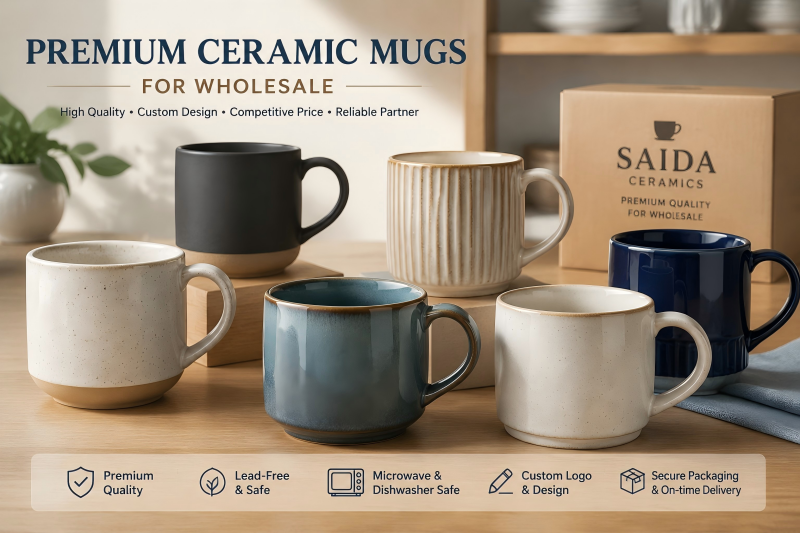
Now that we have a clear definition, let’s explore why these differences matter so much. This isn't just about aesthetics; it's about the tangible impact that choosing a premium product has on your operations, your customer satisfaction, and ultimately, your bottom line.
How Does Unit Price Differ From Total Cost of Ownership?
As a buyer, your first instinct is often to focus on the unit price to maximize your margins. The problem is that a low initial price can be deceptive, as frequent defects, returns, and the cost of shipping replacements quickly eat away at those profits. The Total Cost of Ownership (TCO) model provides a more realistic financial picture and helps protect your net profit.
The TCO model calculates the true cost by adding all associated expenses to the initial unit price. This includes the hidden operational costs of handling returns, customer service labor, and lost customer loyalty due to a poor experience. It gives you a far more accurate measure of an item's true profitability.
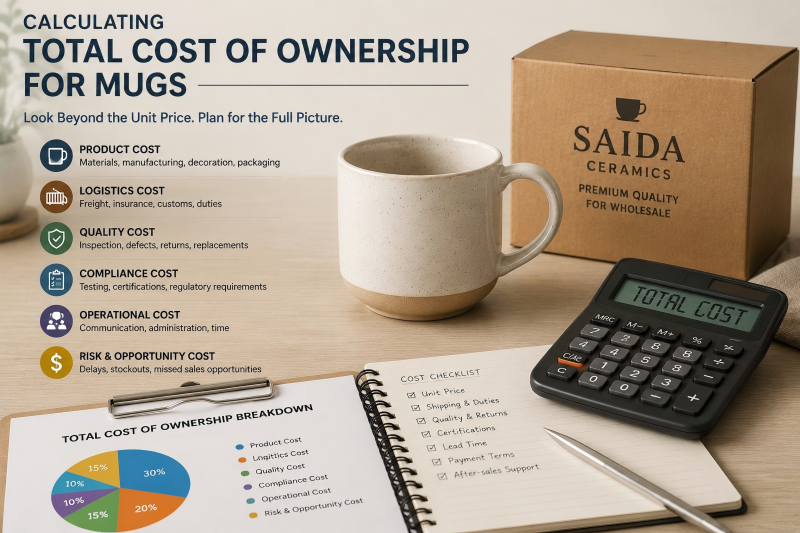
Dive Deeper: The TCO Formula in Action
For wholesalers and e-commerce sellers, TCO is not just an accounting term; it's a critical risk management tool. Many buyers I've worked with have mistakenly equated "low price" with "low cost," only to find their profits eroded by post-sale problems.
Let's break down a simple, real-world scenario for an order of 5,000 mugs.
The Scenario: You're choosing between two suppliers.
| Metric | Supplier A (Low-Price) | Supplier B (Premium) |
|---|---|---|
| Unit Price | $1.00 | $1.25 |
| Initial Order Cost | $5,000 | $6,250 |
| Reported Defect/Return Rate | 8% | <1% |
| Number of Defective Units | 400 | 50 |
At first glance, Supplier A looks like a $1,250 savings. But now, let's factor in the hidden costs associated with that 8% defect rate. Assume each return costs your business $10 in labor (customer service time, warehouse processing) and replacement shipping.
- Supplier A's Hidden Costs: 400 units x $10/return = $4,000
- Supplier B's Hidden Costs: 50 units x $10/return = $500
Now, let's calculate the Total Cost of Ownership for each.
- Supplier A TCO: $5,000 (Initial Cost) + $4,000 (Hidden Costs) = $9,000
- Supplier B TCO: $6,250 (Initial Cost) + $500 (Hidden Costs) = $6,750
In this realistic scenario, choosing the supplier of premium ceramic mugs actually saves you $2,250. This doesn't even account for the unquantifiable cost of negative reviews and brand reputation damage. When I walk clients through this math, it's often an eye-opening moment. The most profitable decision isn't always the one with the lowest price tag. Choosing the right partner from the start is crucial. If you are beginning your search, our guide on How to Find Reliable Ceramic Mug Manufacturers in China can be a valuable resource.
What Quality Details Should You Look For in Premium Ceramic Mugs?
When browsing supplier catalogs, all mugs can start to look the same in the photos. This makes it impossible to judge durability or finish, leaving you to hope for the best until the first wave of customer complaints reveals the truth. The solution is to learn how to identify the subtle, often non-photographable details that signal superior quality in premium ceramic mugs.
Beyond the picture, you must evaluate the smoothness of the glaze, the consistency of the color across a batch, the physical weight and balance, and the complete absence of pinholes, black spots, or uneven surfaces. These are the true markers of a well-crafted product that will satisfy your customers.
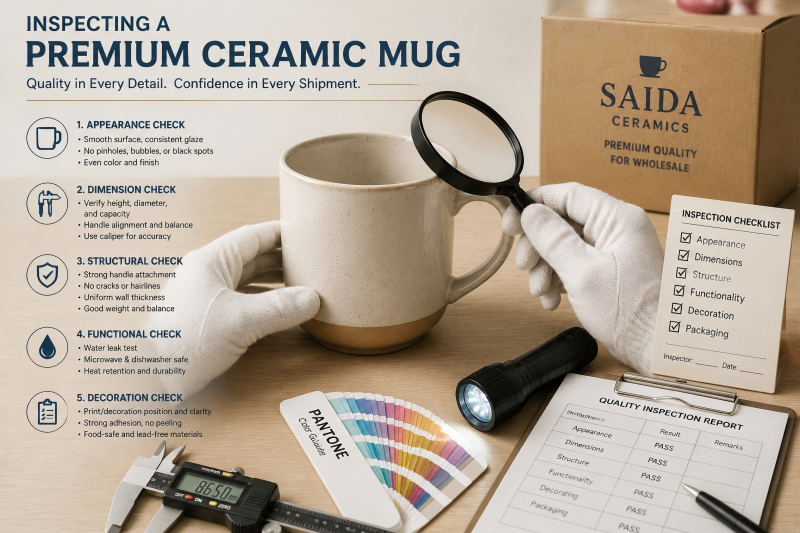
Dive Deeper: Translating Details into Business Value
For over 15 years, I've advised buyers to always request physical samples. A photo can hide a world of flaws, but a product in your hand tells the truth. Here’s what I tell them to look for and why it matters for their business.
H3: The Glaze: Your First Indicator of Quality
The glaze is more than just a shiny coating; it's the mug's primary protective layer and the main point of contact for the user.
- What to look for: A premium glaze is perfectly smooth, with no bumps, ripples, or gritty texture. It should feel almost like glass. Run your finger along the rim and the inside. There should be no roughness.
- Red Flags: Pinholes (tiny holes in the glaze), blisters, or "crawling" (where the glaze has pulled back to expose the ceramic body) are signs of poor application or firing. These flaws often originate during key stages of manufacturing, which you can learn more about in our overview of the Complete Ceramic Mug Production Process.
- Business Impact: A flawless glaze isn't just for looks. It's less prone to staining from coffee or tea, easier to clean, and provides a superior tactile experience. For e-commerce sellers, a perfect surface means cleaner product photos and, more importantly, fewer customer returns for "imperfections."
H3: Color and Decoration Consistency
If you're building a brand, consistency is non-negotiable. Whether you offer a range of solid colors or are creating private label ceramic mugs with a logo, every piece must match your brand standards.
- What to look for: Across a sample batch, the color should be uniform. A "white" mug from a cheap supplier might have shades of grey or yellow. For printed designs, the colors must be vibrant and accurately matched to your Pantone specifications. Decals should be applied without bubbles, cracks, or misalignments.
- Red Flags: Visible color variation between units, faded or misaligned logos, and bubbles under the decal.
- Business Impact: Consistency ensures your entire inventory looks professional and cohesive. It prevents "item not as described" complaints from customers who receive a mug that looks different from the one on your website. For any OEM ceramic mug manufacturer, achieving this consistency is a hallmark of their quality control.
H3: Form and Function: Weight, Balance, and Handle
How a mug feels in the hand is a subconscious indicator of quality. It's a detail that customers may not be able to articulate, but they will definitely notice.
- What to look for: A premium mug has a satisfying, balanced weight—not just heavy, but stable. The handle should be ergonomic, allowing for a comfortable and secure grip without your knuckles touching the hot surface. The base should be flat and stable.
- Red Flags: Mugs that feel flimsy and light, handles that are too small or awkwardly shaped, or a wobbly base.
- Business Impact: A positive user experience is a direct driver of positive reviews. When a customer loves using your mug every day, they become a brand advocate. This small detail contributes significantly to customer loyalty and repeat business.
How Do Premium Ceramic Mugs Impact Your Profitability?
The theory of Total Cost of Ownership makes sense, but you understandably need real-world proof before paying a higher unit price. You are hesitant to make the investment without certainty that it will actually pay off. Let’s walk through an anonymous client's story, which perfectly illustrates the journey from a low-cost supplier to a profitable partnership with a luxury ceramic mugs supplier.
By switching to a supplier of premium ceramic mugs with a higher unit cost, our client ultimately reduced their defect-and-return rate from a staggering 8% to less than 1%. This dramatic reduction in operational costs led directly to a higher net profit and a significantly stronger brand reputation in their market.
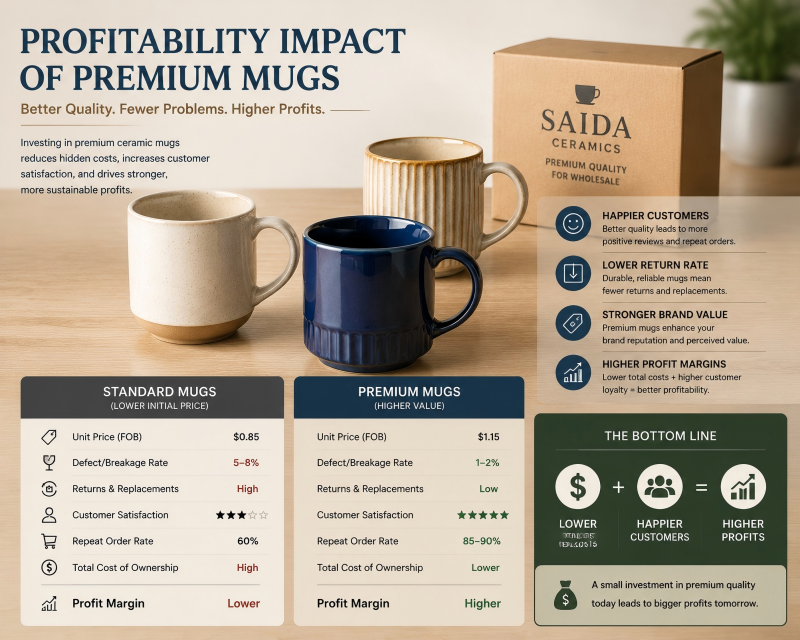
Dive Deeper: A Case Study in Profitability
A few years ago, an e-commerce seller specializing in home goods approached me. They were frustrated. They had sourced a large batch of 10,000 mugs from a supplier in China based on a very attractive unit price of $0.95.
The Initial Situation On paper, the deal was perfect. The photos looked great, and the low price promised a healthy margin. The problems began about a month after the products went live on their store.
The Hidden Costs Emerge Customer service was quickly overwhelmed. Complaints poured in about a few key issues:
- Chips on the rim, discovered upon unboxing.
- Visible black spots and pinholes in the glaze.
- Inconsistent color—the "white" mugs varied from bright white to a dull grey.
Their return rate for this single product shot up to 8%. For a 10,000-unit order, that’s 800 unhappy customers. Their operations team was spending all its time processing returns instead of focusing on growth. The negative reviews started to affect their store's overall rating.
The Switch and The Result After analyzing their TCO, they realized they were losing money despite the low unit price. They decided to partner with us to develop a line of custom premium ceramic mugs. Our unit price was higher at $1.15, a 21% increase. They were nervous, but they trusted our process, which included rigorous quality control and material verification. Beyond visual inspection, it's also crucial to ensure the materials are safe. We always recommend buyers verify this, as we discuss in our article, "Are Your Ceramic Mugs Really FDA Compliant?".
Six months after launching the new mugs, the results were transformative:
- Their defect and return rate fell to below 1%.
- Customer reviews became overwhelmingly positive, often mentioning the "solid feel" and "flawless finish."
- Their net profit on the product line increased by 15% because the savings from eliminating returns far outweighed the higher initial unit cost.
This client's story is not unique. Time and again, I've seen that investing in quality upfront is the most reliable path to long-term profitability and building a brand that customers trust. Finding a reliable ceramic mug supplier China who understands this principle is the key.
Frequently Asked Questions
Are premium ceramic mugs more durable?
Yes, generally. They are often made from higher-grade clay and fired at higher temperatures, which makes the body denser and more resistant to chipping. The glaze is also typically thicker and applied more evenly, offering better protection against scratches and daily wear.
Can I get custom designs on premium mugs?
Absolutely. A reputable premium ceramic mug manufacturer often specializes in customization. This includes precise color matching, intricate decal application, and even creating unique mold shapes. The higher quality control standards ensure your custom design is executed flawlessly across the entire batch.
Does "premium" always mean more expensive?
Premium mugs have a higher unit price, but they often have a lower Total Cost of Ownership. As shown in our example, by drastically reducing costs associated with defects, returns, and customer service, the more expensive mug can become the more profitable choice for your business.
How can I verify the quality before placing a large order for wholesale premium ceramic mugs?
Never commit to a large order based on photos alone. Always request pre-production samples to evaluate in person. Use these samples to check the glaze, weight, color consistency, and overall feel. Establish clear, written quality control criteria with your supplier before production begins.
Conclusion
Choosing the right mug for your business is far more than an aesthetic choice; it's a strategic financial decision. Shifting your focus from a simple unit price to the more comprehensive Total Cost of Ownership is the most effective way to protect your investment and ensure long-term profitability. The defining characteristics of premium ceramic mugs—a flawless glaze, consistent color, superior materials, and ergonomic design—are not just nice-to-haves. They are critical variables that directly reduce your operational costs, minimize customer returns, and build a brand reputation that commands loyalty.
If you are a wholesaler or e-commerce seller ready to build a reliable, low-risk, and highly profitable mug collection, the next step is to partner with a supplier who understands these principles. Contact us today to discuss your project and learn how quality sourcing can become your competitive advantage.