Struggling to get a straight answer on the MOQ for custom ceramic mugs? You find that every supplier gives you a different number, making it impossible to plan your inventory and budget. This frustration leaves you wondering if a low number is too good to be true, while a high one feels completely out of reach. The truth is, the MOQ isn't just a number; it's a reflection of a factory's entire process, and understanding it is the key to choosing the right partner.
Quick Answer: What Is the MOQ for Custom Ceramic Mugs?
| The typical MOQ for custom ceramic mugs ranges from: | Project Type | Typical MOQ |
|---|---|---|
| Logo printing on stock mugs | 500–1,000 pcs | |
| Private label ceramic mugs | 1,000–2,000 pcs | |
| Custom glaze development | 1,000–3,000 pcs | |
| OEM custom mold mugs | 3,000–5,000+ pcs |
The minimum order quantity (MOQ) for custom ceramic mugs is not a single, standard number. It typically ranges from 500 to 3,000 units and is determined by the fixed costs of production, such as mold setup, decal printing, glaze preparation, and the minimum batch size required for an energy-efficient kiln firing. The final number is a diagnostic tool that reveals a supplier's scale, flexibility, and operational model.
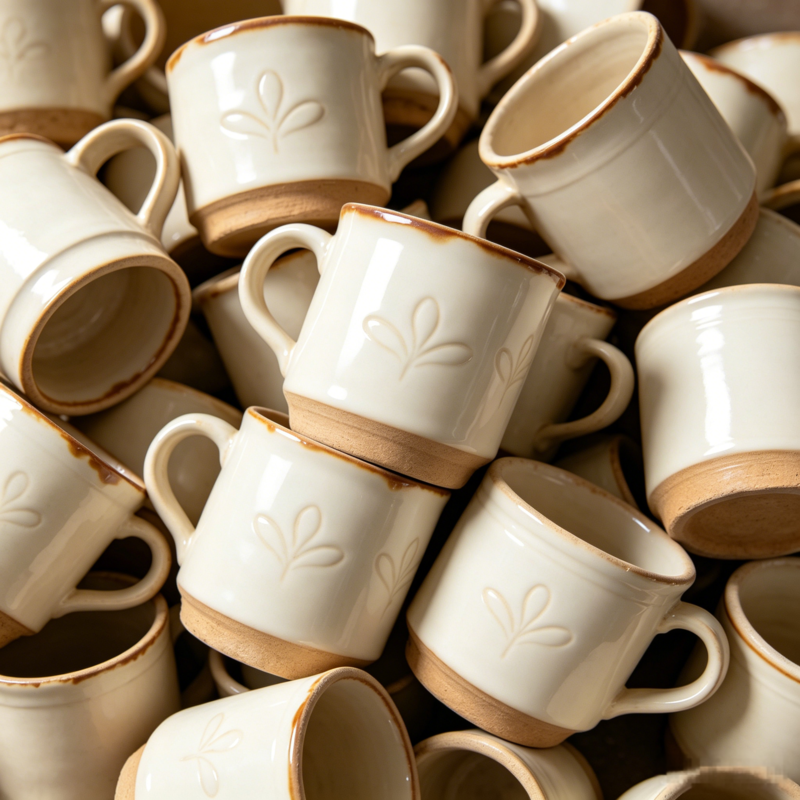
This number tells you more than just how many mugs you have to buy. It's a window into the supplier's world. By digging a little deeper, you can use the MOQ to assess a potential partner's capabilities, identify risks, and ultimately find a manufacturer that aligns with your business goals.
Why Doesn't a Standard MOQ for Custom Ceramic Mugs Exist?
Are you confused why one factory quotes an MOQ of 500 while another insists on 3,000? This inconsistency can make you feel like suppliers are just picking numbers out of thin air. In reality, these numbers are deeply tied to the unchangeable costs of manufacturing.
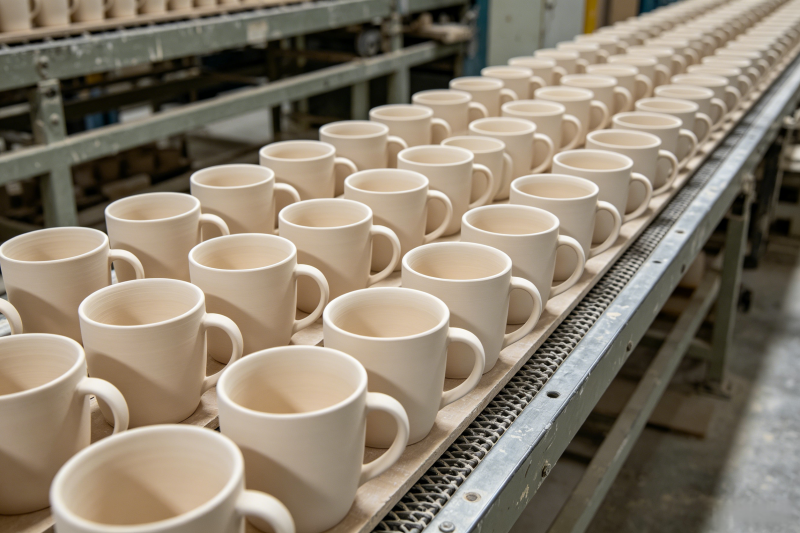
The MOQ for a custom ceramic mug order isn't arbitrary; it's a calculated figure based on the real-world fixed costs required to initiate a unique production run. These "setup costs" must be covered regardless of whether we produce 100 mugs or 10,000.
Dive Deeper: The Real Cost Drivers of a Custom Mug Order
As a factory with over 15 years of experience, I can tell you that the MOQ is a puzzle solved by balancing costs, efficiency, and quality. When we calculate the minimum order for a new client, we aren't just thinking about the raw materials. We're looking at the entire production line. A very low MOQ often means compromising on one of these critical steps, which can lead to higher prices or lower quality.
Here are the four main factors that determine the MOQ for any professional ceramic factory:
- Mold Setup and Costs: For a truly custom mug shape, a new master mold and subsequent production molds must be created. This is a significant upfront cost in both skilled labor and materials. To make this cost viable, it must be spread across a large number of units. A factory quoting a tiny MOQ for a custom shape is likely not making a new mold, but using a pre-existing one that is merely "close enough."
- Decal and Printing Plates: Your custom logo isn't just printed on like a piece of paper. It requires creating decal printing plates—one for each color in your design. These plates have a fixed setup cost. Running a small batch of, say, 100 mugs means that the per-unit cost of these plates becomes prohibitively expensive. A larger order allows this cost to be amortized, making each mug more affordable.
- Glaze and Clay Preparation: Preparing a specific Pantone-matched glaze color is a science. Our technicians must mix and test small batches to ensure a perfect match. This process uses materials and, more importantly, skilled labor. Preparing a large vat of custom glaze for only a handful of mugs is incredibly wasteful and inefficient. The same principle applies to preparing the clay body for production.
- Kiln Firing Efficiency: This is perhaps the biggest factor. Our industrial kilns are massive and consume a significant amount of energy. Firing a half-empty kiln is like running a commercial airliner with only ten passengers—it's economically disastrous. A professional, BSCI-certified factory like ours must run full kilns to remain energy-efficient and cost-effective. The MOQ is often calculated to fill at least one section or one full "car" in a tunnel kiln.
A supplier who ignores these realities and offers an extremely low MOQ might be cutting corners, combining your order with others (risking color mismatches), or is simply a trading company that doesn't understand the production process at all.
What Do Different MOQ Numbers Reveal About a Supplier?
Have you ever received a quote with a 5,000-unit MOQ and felt it was completely out of touch with your needs? Or a 200-unit MOQ and wondered what the catch was? These numbers are signals. They tell you what kind of business you're dealing with before you even sign a contract.
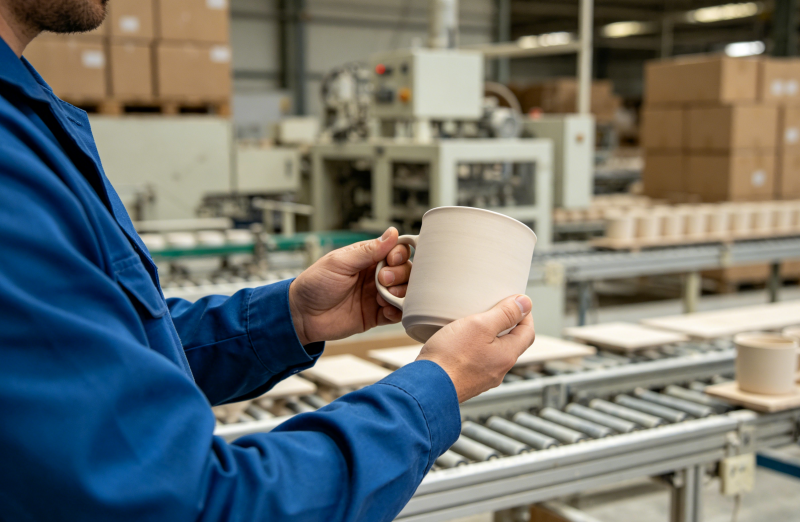
The MOQ a supplier provides is a direct signal of their production scale, business model, and operational priorities. A very high number suggests a focus on volume and price, while a very low number can indicate a different set of risks related to consistency and quality control.
Dive Deeper: Profiling Suppliers by Their MOQ
For buyers in Europe and South America, understanding these signals is crucial for de-risking procurement. The "right" MOQ depends entirely on your business model—a promotional products wholesaler has very different needs than a boutique e-commerce brand. Let's break down what these numbers typically mean.
H3: The High MOQ Supplier (3,000+ units)
When you see an MOQ of 3,000, 5,000, or even 10,000 units, you are likely talking to a highly automated, large-scale factory. These operations are built for one thing: efficiency at volume. They supply major international retailers and brands that order by the container load.
- Pros: Extremely competitive per-unit pricing, high level of consistency due to automation, and massive production capacity. They often have robust certifications like ISO9001 and BSCI because their primary clients demand it.
- Cons: Almost zero flexibility on quantity or customization details. Lead times can be long as your order waits in a queue behind much larger ones. Communication may be less personal and more process-driven.
- Risk Profile: The primary risk here is a mismatch of scale. If you can't meet their minimums, you can't do business. If you can meet their minimums but require high-touch service or slight variations, you may face frustration.
H3: The Mid-Range MOQ Supplier (1,000 - 3,000 units)
This is the sweet spot for many wholesalers and established e-commerce sellers. Factories in this range, like ours, are designed to balance efficiency with flexibility. We have professional production lines and quality control systems but are structured to handle custom orders for clients who are scaling up.
- Pros: A good balance between price and flexibility. Capable of handling complex customizations. More direct and consultative communication. As a 15-year factory, we have the experience to guide clients through the process.
- Cons: Per-unit price will be higher than the high-volume factories. We are disciplined about our MOQs because we understand the production costs—we won't fire a half-empty kiln just to win a small order.
- Risk Profile: The main "risk" is that we will be honest about what is and isn't possible. We protect our production schedule and quality standards, which means we might say "no" to a request that would compromise the final product or delivery timeline. This discipline is actually a sign of a reliable partner.
H3: The Low MOQ Player (<500 units)
An offer of a very low MOQ (e.g., 100-500 mugs) is a red flag for experienced buyers. This almost never comes from a mid-to-large-scale factory. You are likely dealing with either a trading company or a very small, manual workshop.
- Trading Company: They don't manufacture anything. They take your small order and try to piggyback it onto a larger factory's production run, often without the factory's full cooperation.
- Small Workshop: This could be a family-run operation. While they offer high flexibility, they typically lack automated equipment, robust QC processes, and certifications like BSCI.
Supplier Type Comparison
| Feature | High MOQ (3,000+) | Mid-Range MOQ (1,000-3,000) | Low MOQ (<500) |
|---|---|---|---|
| Likely Profile | Automated Mass Producer | Flexible Factory (like us) | Trading Co. / Small Workshop |
| Best For | Major Retail Chains | Wholesalers, E-commerce | Test runs, local events |
| Pricing | Lowest per unit | Competitive, value-driven | Highest per unit |
| Flexibility | Very Low | Moderate to High | Very High |
| Quality Risk | Low (Consistency) | Low (Process Control) | High (Inconsistency) |
| Lead Time Risk | Moderate (long queues) | Low (predictable schedule) | High (unpredictable) |
What Questions Should I Ask Instead of Just the MOQ for Custom Ceramic Mugs?
You're focused on getting one number, but that's limiting your ability to find the best partner. Asking "what is your MOQ?" is a closed-ended question that gives you a single, often unhelpful, data point. You feel stuck when the number doesn't fit your plan.
To truly understand a supplier's capabilities and find the best value, you need to ask a series of open-ended questions. This transforms the conversation from a simple price check into a strategic discussion about partnership and scaling your business.

Dive Deeper: Uncovering the True Cost and Flexibility
The goal is to understand the variables that influence the MOQ for custom ceramic mugs. A professional supplier will welcome these questions because it shows you are a serious buyer who understands the fundamentals of manufacturing. When a new e-commerce seller from Europe asks me these questions, I know they are on the right track.
Here are the questions you should be asking:
H3: "What are the price tiers for 500, 1,000, and 3,000 units?"
This question immediately shifts the focus from a single barrier (the MOQ) to a spectrum of possibilities. It forces the supplier to reveal their pricing structure and demonstrates the economies of scale.
- Why it's better: It shows you how much you can save by increasing your order size, helping you make a strategic decision. You might find that ordering 1,200 units instead of 1,000 drops the per-unit price by 15%, making the larger order more profitable in the long run. It also helps you quickly identify suppliers whose pricing model doesn't fit your business, regardless of the MOQ.
H3: "Which customization options have the biggest impact on the minimum order?"
Many buyers assume all customizations are equal. They are not. An in-glaze logo has different requirements than a simple decal. A custom handle shape is a completely different world than a custom glaze color.
- Why it's better: This question helps you understand the technical constraints. A supplier might tell you, "For our standard 11oz white mug with a 2-color logo, the MOQ is 1,000. But if you want that custom dark green glaze, we need to make a full batch, so the MOQ for that specific feature is 2,500." This allows you to make trade-offs. Maybe a standard color is acceptable for your first order to get the lower MOQ.
H3: "What is the MOQ and pricing for a re-order of the same design?"
This is a critical question that many new buyers forget to ask. Your relationship with a supplier is not about a single transaction; it's about building a supply chain for the future.
- Why it's better: For a re-order, the most expensive fixed costs—mold creation and decal plate setup—are already paid for. A good factory should offer a lower MOQ and/or better pricing on re-orders. Their answer reveals how they view partnerships. If the re-order MOQ is the same as the initial order, they may not be set up to support growing businesses. We value our long-term partners, so our re-order process is designed to be easier and more efficient.
How Does the MOQ for Custom Ceramic Mugs Relate to My Business Risk?
You might think a supplier willing to accept any small order is a blessing. They seem flexible and easy to work with, right? This perception can be dangerous, leading to unexpected delays, quality issues, and a damaged reputation for your brand.
A supplier's approach to the MOQ for custom ceramic mugs is a direct indicator of their operational discipline and, therefore, your potential business risk. An overly flexible supplier can introduce chaos, while a reasonably firm supplier often provides stability and predictability.

Dive Deeper: The Hidden Dangers of "Too Flexible" Suppliers
Over my 15 years in this industry, I've seen countless buyers get excited by a promise of a 200-unit MOQ, only to face major problems down the line. That's because a factory cannot defy the laws of production economics. If a supplier agrees to a number that is clearly below the threshold for an efficient production run, they have to make up for it somewhere. Here’s how:
The "Batching" Gamble:
The most common tactic is for a supplier (often a trading company) to accept your small 300-piece order for blue mugs and hold it. They wait until another client orders 1,000 blue mugs. Then, they try to "batch" your order onto the end of the larger run.
This creates several severe risks for you:
- Indefinite Delays: Your order is now completely dependent on someone else's timeline. If the other client's order is delayed or canceled, your order is stuck in limbo indefinitely. The supplier who promised you a 30-day lead time now can't give you any firm delivery date.
- Color and Quality Inconsistency: What if the other client's "blue" is slightly different from your specified Pantone color? The factory is optimizing for the 1,000-unit order, not your 300-unit order. You may receive mugs that are the wrong shade, compromising your brand identity. The same goes for quality control; your small batch gets the least amount of attention.
- Loss of Control: You have effectively lost all control over your production schedule and quality assurance. Your "flexible" supplier has outsourced your risk management to pure chance.
The Power of a Disciplined MOQ:
In contrast, a factory that provides a firm—but reasonable—MOQ is signaling something very different. When we state that our MOQ for a certain design is 1,200 units, it's because we know that's the number required to dedicate a specific, scheduled run on our production line.
This means:
- A Predictable Schedule: Your order gets its own slot in the kiln. We can give you a reliable lead time because your production is not dependent on anyone else.
- Guaranteed Quality: The glaze is mixed specifically for your order. The decals are printed for your order. The QC team is checking your mugs against your quality standards.
- Transparency: A firm MOQ is a sign of honesty. It means the supplier understands their own costs and is not making promises they can't keep. It's a hallmark of a professional, ISO9001-certified operation.
Choosing a supplier with a disciplined MOQ isn't an inconvenience; it's your first and best step in supply chain risk management.
Frequently Asked Questions
What is a typical starting MOQ for a simple logo mug?
For a standard shape with a simple 1-2 color logo decal, most flexible factories like ours will have a starting MOQ between 1,000 and 1,200 pieces. This allows for an efficient production run. Be wary of quotes under 500, as they likely come with the risks mentioned above.
Can I order a mix of different mug designs in one MOQ?
Generally, no. From a production standpoint, two different designs—even if they use the same mug body—are treated as two separate orders. Each requires its own decal setup and application process. Therefore, each design would need to meet the MOQ individually.
Does the mug material (stoneware vs. porcelain) affect the MOQ?
Yes, it can. Stoneware and porcelain have different firing temperatures and require different clay preparations. A factory might have a lower MOQ for their most commonly produced material (e.g., stoneware) because they can more easily combine smaller orders of the same material into a full kiln run.
How much does the MOQ drop for a re-order?
For a direct re-order with no changes, the MOQ can often be more flexible. Since the molds and decal plates are already created, the main constraint is still the kiln batch size. Many factories will offer a slightly lower re-order MOQ (e.g., dropping from 1,200 to 800) as a sign of partnership, but it rarely drops below 500-600.
Conclusion
Ultimately, the MOQ for custom ceramic mugs is far more than a number—it's a diagnostic tool. A high number isn't always bad, and a low number isn't a guaranteed win. The key is to look past the number itself and understand what it signals about a supplier's production process, scale, and operational discipline. By asking smarter questions about price tiers, customization impacts, and re-order policies, you can transform the MOQ conversation from a frustrating barrier into a strategic assessment that helps you find a reliable, long-term partner.
As a factory with 15 years of experience exporting to wholesalers and e-commerce sellers in Europe and South America, we pride ourselves on transparency. If you're looking for a partner who can explain the costs and help you scale effectively, contact us today to discuss your project. We're ready to build something great together.