Struggling to design a promotional mug that actually delivers results? You worry that a wrong choice will not only waste your marketing budget but also cheapen your brand's image. The truth is, a poorly chosen mug can fade, chip, or feel flimsy, turning your promotional effort into a liability. The key is to shift your mindset from pure creativity to strategic decision-making, ensuring every design choice supports your ultimate goal.
To design a successful promotional mug, you must first define its purpose, audience, and budget. Next, select a mug style and decoration method that aligns with these goals. Finally, design protective and appealing packaging and always approve a physical pre-production sample before committing to a full production run to ensure quality and accuracy.
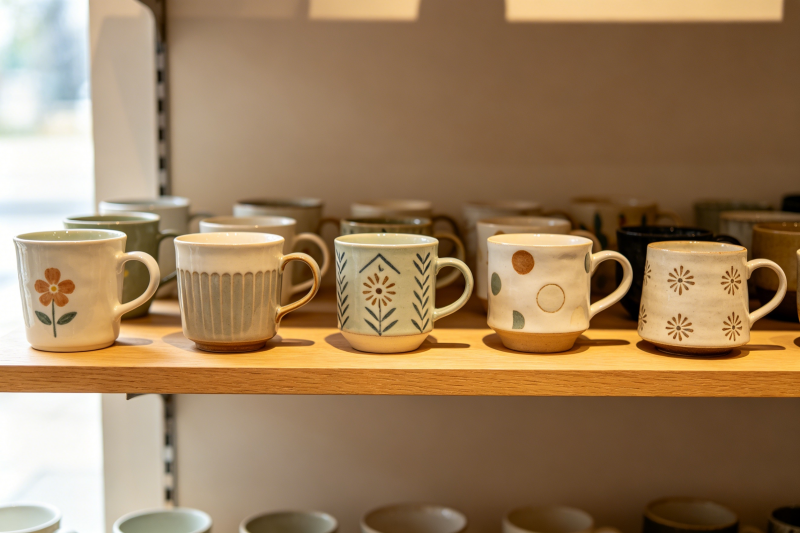
Thinking like a manufacturer is the secret to getting it right. It’s not just about what the mug looks like on a screen, but how it feels in your customer's hand and how it holds up over time. Let's break down the critical decisions you need to make.
Should You Choose a Mug Style Before Defining Its Purpose?
You've found a mug with a unique shape and color that you absolutely love. But rushing to place a logo on it without considering its purpose can be a costly mistake. A mug that's perfect for a high-end client gift might be completely wrong for a mass trade show giveaway. Aligning the style with your campaign's context is the first and most important step.
The most common failure we see is a mismatch between the product and the promotional goal. The mug's style, weight, and material must be a strategic fit for both the intended recipient and the message you want to send.
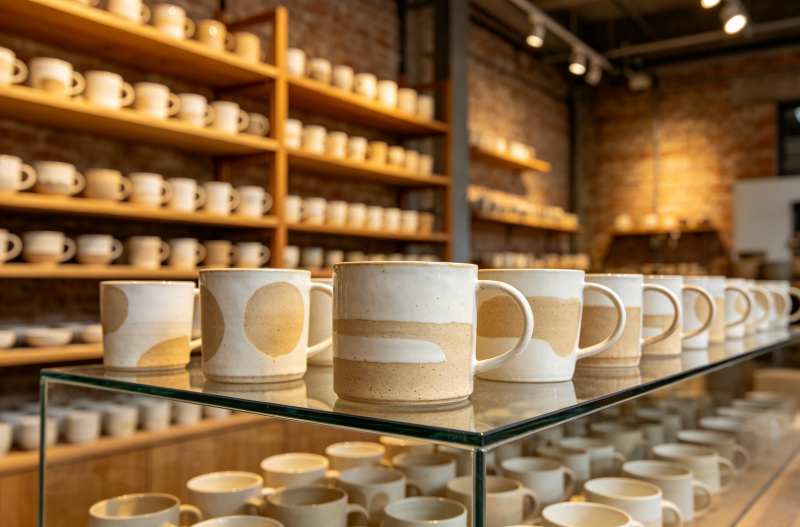
Define Your Promotional Context First
Before you fall in love with a specific design, ask yourself: Who is this for, and what do I want them to think about my brand? The answer will guide your entire design process. A promotional mug is not a one-size-fits-all product. The right choice depends entirely on the situation.
Over my 15 years in ceramic manufacturing, I've seen clients order beautiful, heavy 15 oz. mugs for a trade show, only to realize that attendees, already loaded with brochures and samples, didn't want to carry them. A simple, lighter 11 oz. C-handle mug would have been more effective and saved them thousands in product and shipping costs.
Let's break down a few common scenarios:
- Mass Trade Show Giveaways: The primary goals are brand awareness and lead generation. You need a high volume of mugs at a low cost per unit. The classic 11 oz. ceramic C-handle mug is a workhorse for a reason. It's cost-effective, universally recognized, and provides a great canvas for a simple logo. Durability is less critical than immediate impact and budget efficiency.
- Employee Welcome Kits: Here, the goal is to foster a sense of belonging and company pride. The mug should feel like a genuine gift, not a cheap freebie. Consider a 12-14 oz. mug with a more ergonomic handle or a unique glaze. The perceived value is more important than the absolute lowest cost. You want a mug that becomes their daily driver at their desk.
- Premium Client Gifts: The objective is to show appreciation and reinforce a high-value relationship. Cost is a secondary concern to quality and perception. Opt for a premium ceramic or stoneware mug with a noticeable weight and a sophisticated finish. The decoration should be subtle and elegant. In this context, the mug is a physical representation of your brand's quality standards.
- E-commerce Merchandise: For brands selling directly to consumers, the mug is the product. It must be desirable, durable, and "Instagrammable." This is where you can explore unique shapes, full-wrap designs via sublimation, and special effects like metallic inks. Durability is paramount, as customers will expect it to withstand daily use, including dishwashers and microwaves.
Here’s a table to help you match the mug to the mission:
| Promotional Context | Recommended Mug Style | Key Considerations |
|---|---|---|
| Trade Show Giveaway | 11 oz. Standard Ceramic | Low Cost, High Volume, Simple Logo |
| Employee Welcome Kit | 12-14 oz. Modern/Ergonomic | Perceived Value, Daily Use Comfort |
| Premium Client Gift | 15 oz.+ Stoneware/Premium | High-Quality Feel, Elegant Design |
| E-commerce Store | Unique Shape/Full-Wrap Design | Desirability, High Durability |
By defining your purpose first, you ensure the promotional mug you design is not just a cup with a logo, but a strategic tool that achieves its objective.
Is Your Decoration Method More Important Than Your Artwork?
You've spent weeks perfecting a beautiful, multi-color logo for your promotional campaign. But if you choose the wrong printing method, that brilliant design could peel off after one wash, look faded upon arrival, or have colors that don't match your brand at all. Understanding the decoration method is as critical to your design as the artwork itself.
Your choice of printing technology directly impacts the durability, color accuracy, and final cost of your promotional mug. Focusing only on the visual appeal of the artwork while ignoring the production method is a recipe for disappointment.
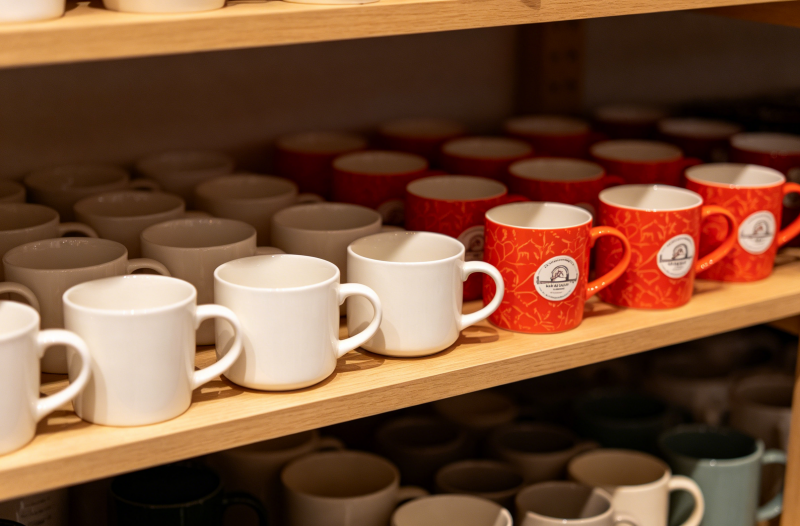
Understanding the Big Three: Decal, Sublimation, and Screen Printing
As an exporter to demanding markets in Europe and the Americas, we know that durability is non-negotiable. The decoration method isn't just a technical detail; it's a promise of quality. Let's explore the most common options and what they mean for your business goals.
H3: High-Fired Decal Printing This is the gold standard for durable, premium ceramic decoration. The process involves printing your design onto special decal paper. This decal is then meticulously applied to the mug by hand. Finally, the mug is fired in a kiln at high temperatures (over 800°C or 1470°F). This firing process fuses the design into the mug's glaze, making it a permanent part of the piece.
- Best for: Corporate logos, intricate designs with specific Pantone colors, and any project where longevity and a premium feel are essential.
- Key Benefit: Maximum durability. A high-fired decal is dishwasher safe, microwave safe, and will not fade or scratch off with normal use. It's the method we specialize in and recommend for most B2B applications.
- Insider Tip: Always ask your supplier, "Is this a high-fired or low-fired decal?" A low-fired decal is essentially a baked-on sticker that will peel and fade quickly. It's a common cost-cutting tactic that compromises the entire product.
H3: Dye Sublimation Sublimation is a digital printing process that uses heat to transfer dye onto the mug's surface. It's fantastic for creating vibrant, full-color, photographic images that can wrap from edge to edge. The ink turns into a gas under heat and pressure, infusing itself into the mug's special polymer coating.
- Best for: Full-color photos, complex gradients, and bold, all-over patterns. It's a favorite for e-commerce stores and personal gifts.
- Key Benefit: Photorealistic quality. It allows for unlimited colors and gradients without any additional setup fees per color.
- Limitation: While good, its durability can be slightly less than a high-fired decal, especially with repeated exposure to harsh dishwasher cycles or direct, prolonged sunlight.
H3: Screen Printing (Direct Printing) Screen printing involves pushing ink through a mesh screen stencil directly onto the mug's surface. A separate screen is needed for each color in the design. It's a straightforward and highly efficient process for simpler graphics.
- Best for: Simple, one or two-color logos on large volume orders.
- Key Benefit: Cost-effectiveness. For large quantities with simple artwork, screen printing often offers the lowest cost per unit.
- Limitation: It's not ideal for complex, multi-color designs or photographic images due to the setup costs and alignment challenges of using multiple screens.
Here is a quick comparison:
| Feature | High-Fired Decal | Sublimation | Screen Printing |
|---|---|---|---|
| Durability | Excellent | Good | Good |
| Color Complexity | Excellent (Pantone match) | Excellent (Full Photo) | Limited (1-4 colors ideal) |
| Cost Per Unit | Medium-High | Medium | Low (at high volume) |
| Best Use Case | Premium Corporate Gifts | E-commerce, Photo Mugs | Mass Giveaways |
Choosing the right decoration method is a strategic design decision that ensures your promotional mug looks great not just on day one, but for years to come.
How Does Packaging Impact Your Promotional Mug Design?
You've designed the perfect promotional mug. You've selected the right material and the most durable printing method. Now you're just looking for the cheapest box to ship it in, right? This is one of the most damaging and common mistakes a buyer can make. If your mug arrives broken or in a flimsy, generic box, the entire investment is undermined.
Packaging should be treated as an integral part of your promotional mug design, not as a shipping afterthought. It serves two critical functions: protecting your investment and enhancing your brand's perceived value.
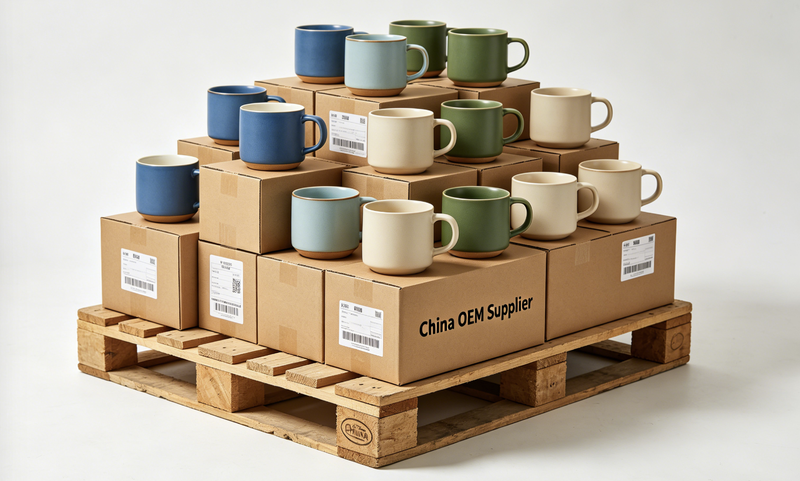
Packaging for Protection and Perception
After 15 years of exporting fragile ceramics to North America, South America, and Europe, I can tell you with certainty: saving a few cents on packaging often leads to dollars lost in replacements, claims, and reputational damage. The unboxing experience is the final, and often most memorable, part of the user's interaction with your brand.
H3: The First Job: Protection A broken mug is worse than no mug at all. It creates a negative brand experience and a logistical headache. Your packaging's primary role is to ensure the product arrives intact.
- Standard Options: For bulk shipments to a single location (like your office), mugs are often packed in multi-layer cardboard trays with "egg crate" dividers. This is efficient and protective for palletized freight.
- Individual Mailers: If you plan to ship mugs directly to individual customers or employees, you need a robust individual box. These are typically made of corrugated cardboard and should be tested to withstand drops and impacts common in courier networks. We often recommend a "box-in-a-box" system for maximum security.
- What to Ask Your Supplier: Ask about their transit testing procedures. Do they perform drop tests? Can they provide packaging solutions certified by carriers like UPS or FedEx? A reliable manufacturer will have standard solutions and be able to engineer custom ones.
H3: The Second Job: Perception The moment the recipient opens the box is a critical marketing opportunity. A plain white or brown cardboard box says "commodity." A custom-designed box says "thoughtful gift."
- Enhancing Perceived Value: A well-designed box with your logo, brand colors, or a custom message dramatically increases the perceived value of the mug inside. For a premium client gift, the box is not just a container; it's part of the presentation.
- E-commerce Unboxing: For e-commerce sellers, the unboxing experience is a huge part of your brand identity and a major driver of social media sharing. Investing in branded tissue paper, a custom box, or even a simple printed sticker can yield significant returns in customer loyalty and organic marketing.
- Cost vs. Benefit: While custom packaging adds to the unit cost, the increase is often marginal compared to the boost in brand perception. Even a simple one-color print on a standard white box can elevate the entire product.
Don't let your beautifully designed promotional mug be let down at the final hurdle. Discuss packaging options with your supplier early in the design process to create a holistic product experience.
Why Is a Sample the Most Critical Step in Your Design Process?
Your digital mockup looks perfect. The colors are vibrant, the logo is sharp, and you're ready to approve the order for 5,000 units to save time. But hold on. What if the red in your logo prints as a slightly dull orange? What if the mug feels unexpectedly light and cheap in your hand? A digital proof can't tell you these things.
A physical pre-production sample is not an optional extra; it is the single most important risk-mitigation tool you have. It is your only true guarantee that the final product will match your expectations in color, feel, and quality.
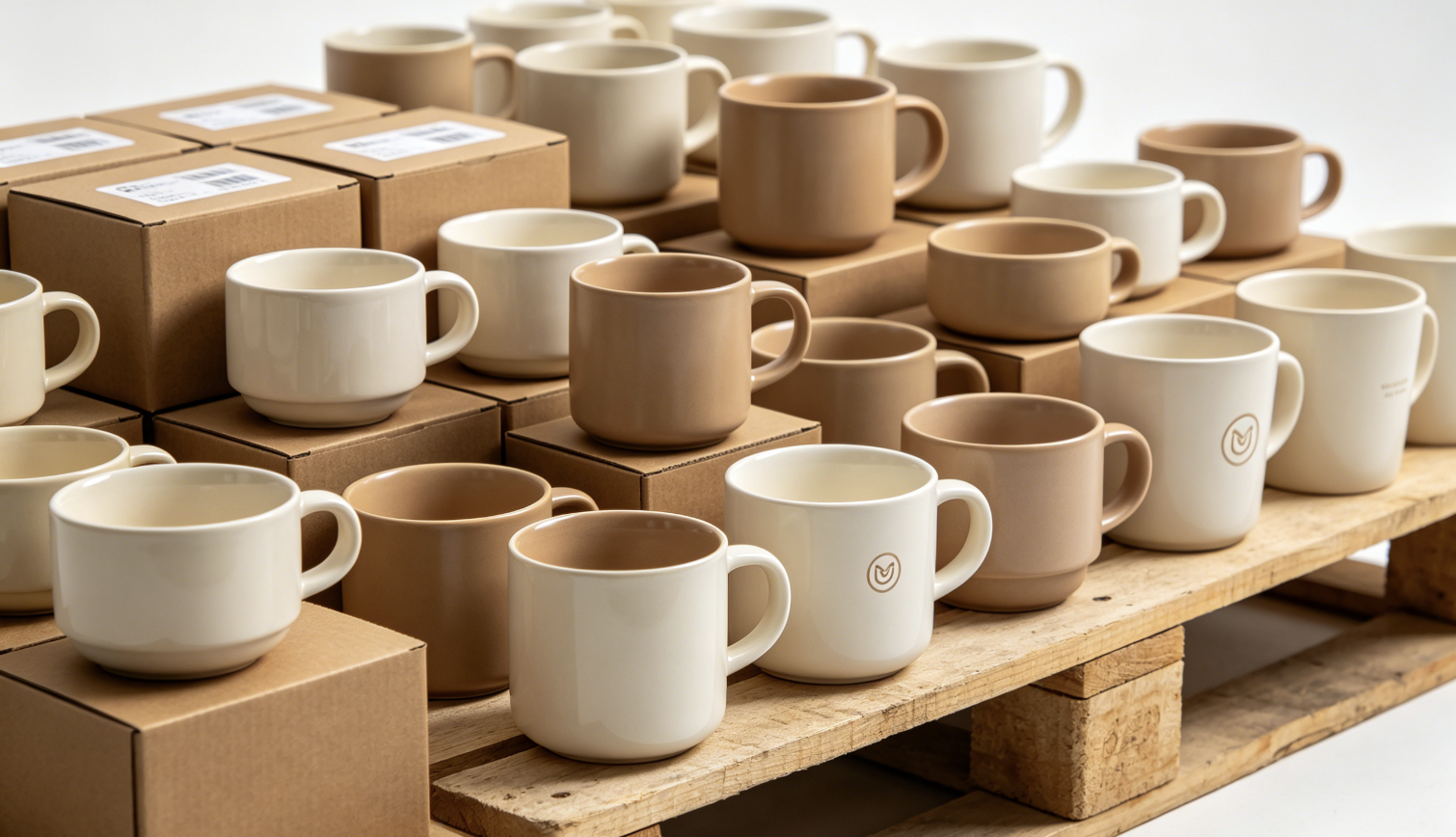
From Hypothesis to Reality: What to Check in Your Sample
Think of your design on paper (or screen) as a hypothesis. The physical sample is the experiment that proves or disproves it. I cannot count the number of times a client has been saved from a costly mistake by a pre-production sample. Colors on a backlit screen are fundamentally different from ceramic glazes fired in a kiln.
A common mistake is trying to save the small sample fee (typically $50-$100) or a few days of lead time by skipping this step. That is a massive gamble on a large order. That sample fee is the cheapest insurance policy you will ever buy.
When your sample arrives, don't just give it a quick glance. Use this checklist to conduct a thorough review:
- Color Fidelity: This is the number one reason for sample adjustments. Compare the printed colors on the mug to your official brand Pantone (PMS) color guides. Look at it under different lighting conditions (office fluorescent, natural daylight). Is the red truly your red?
- Weight, Shape, and Feel: Hold the mug. Does it feel substantial and valuable, or light and flimsy? Is the handle comfortable to hold? Does the overall shape match what you envisioned?
- Print Quality and Placement: Look closely at your logo or design. Are the edges sharp and crisp? Are there any smudges, pinholes in the glaze, or blemishes? Is the logo placed exactly where you specified—centered, level, and at the correct height? Use a ruler if you have to.
- Durability Test (The Home Version): If you have time, put the sample to the test. Run it through your home dishwasher a few times. Does the print hold up? Gently try to scratch the design with your fingernail (a high-fired decal will be impossible to scratch). This gives you a real-world sense of the product's longevity.
Approving a mass-produced order based solely on a PDF proof is one of the biggest risks you can take in promotional product sourcing. The physical sample transforms your design from an abstract idea into a tangible object you can trust. Never skip it.
Frequently Asked Questions
How much does it cost to design a promotional mug?
The cost varies widely based on the mug's quality, the order quantity, and the decoration method. A simple, screen-printed ceramic mug on a large order might cost under $2 per unit, while a premium, full-color sublimated stoneware mug in smaller quantities could be over $10.
What is the most durable printing method for mugs?
High-fired decal printing is the most durable method. The design is fused into the mug's glaze at very high temperatures, making it permanent. These mugs are highly resistant to scratching and are safe for both dishwashers and microwaves, ensuring your brand message lasts for years.
What's the standard lead time for a custom mug order?
Standard lead time is typically 45-60 days, which includes 10-15 days for sample approval and 30-45 days for mass production. This does not include shipping time, which can vary from 25-40 days depending on whether you're in Europe or the Americas. Always confirm the full timeline with your supplier.
Can I put a full-color photo on a promotional mug?
Yes, absolutely. The best method for printing full-color, photorealistic images is dye sublimation. This process allows for vibrant, edge-to-edge prints with unlimited colors and smooth gradients, making it perfect for complex artwork, photographs, and eye-catching patterns.
Conclusion
Designing a successful promotional mug is a strategic process, not just a creative one. It requires you to make a series of informed trade-offs that balance cost, brand perception, and physical durability. By prioritizing purpose over style, understanding that the decoration method is a core part of the design, treating packaging as essential, and never skipping the physical sample, you transform a simple giveaway into a powerful marketing tool. This approach ensures your investment delivers tangible returns and positively represents your brand in the hands of your customers, clients, and employees.
As a 15-year manufacturer of ceramic mugs and dinnerware for clients in Europe and the Americas, we help wholesalers and e-commerce brands navigate these decisions every day. If you're looking for a reliable partner for your next promotional mug project, contact our team to discuss your requirements and get a quote.
Need Help Designing Your Promotional Mug?
Our ceramic mug engineering team can help you select:
✓ Mug style ✓ Ceramic material ✓ Printing method ✓ Packaging solution ✓ Production quantity
Get professional recommendations before starting your project.