Struggling to get a straight answer on the custom mug manufacturing cost for your next product line? You receive quotes that vary wildly, making it impossible to budget accurately and feel confident in your sourcing decision. The key isn't to find a single magic number, but to understand the factors that build your final price so you can make the smartest trade-offs for your business.
The final custom mug manufacturing cost is not a single number but a sum of several key variables. These include material choice (e.g., stoneware, porcelain), size and complexity, decoration method, order quantity, packaging requirements, compliance testing (like FDA or Prop 65), and shipping logistics. Your final unit price depends on the specific choices you make for each factor.
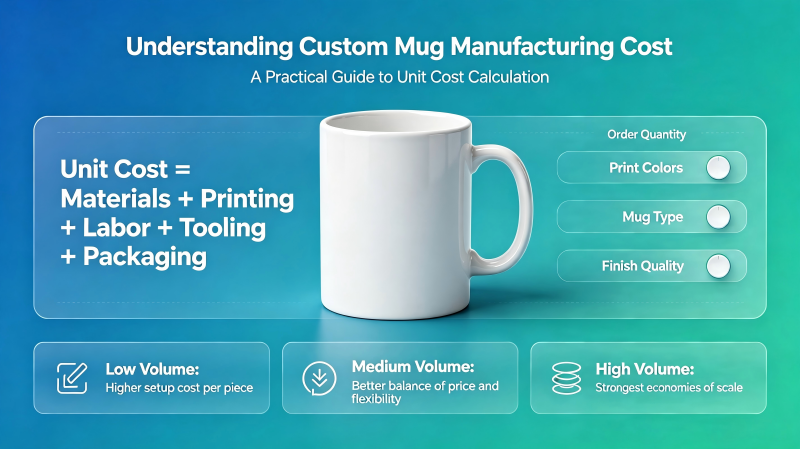
Now that you have the direct answer, let's dive deeper. Understanding these variables is the difference between a successful product launch and a costly mistake. As a manufacturer with 15 years of experience, I want to walk you through how we calculate your quote, so you can ask the right questions.
What Are the Key Variables Affecting Custom Mug Manufacturing Cost?
Are you wondering why one mug is quoted at $1.50 and a similar-looking one is $3.00? The difference is almost always hidden in the production details, which can feel overwhelming. The solution is to break down the mug into its core components and decisions.
Each choice you make has a direct impact on the unit price. A reliable manufacturing partner will help you navigate these trade-offs to balance quality with your target cost, rather than just giving you a price.
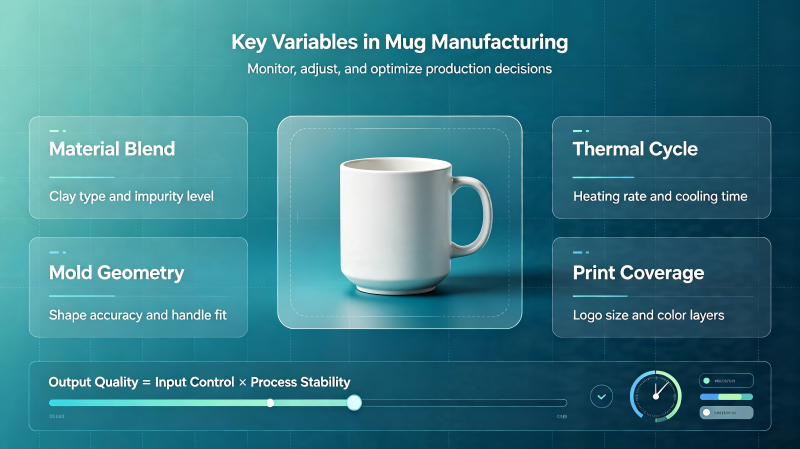
Dive Deeper: A Breakdown of the 7 Core Cost Factors
Based on our 15 years of exporting mugs to wholesalers and e-commerce sellers in the US, Europe, and South America, the final price always comes down to these seven elements.
1. Material
The type of ceramic used is a primary cost driver. Stoneware is often the most cost-effective, but it's heavier and less refined. Porcelain is more expensive due to its higher firing temperatures and purer raw materials, which result in a stronger, more elegant finish. New bone china offers a vegan-friendly alternative to traditional bone china, providing translucency and strength at a mid-range price point.
| Material | Key Characteristics | Relative Cost | Best For |
|---|---|---|---|
| Stoneware | Opaque, thick, durable, rustic feel | Low | Everyday use, coffee shops, budget-friendly promos |
| Porcelain | Non-porous, strong, bright white | Medium-High | High-end retail, corporate gifts, durable dinnerware |
| New Bone China | Translucent, lightweight, delicate look | Medium | E-commerce brands, gift sets, elegant designs |
Your choice here affects not just the price but also the perceived value and durability of your product.
2. Size, Shape, and Complexity
A standard 11 oz C-handle mug is the baseline. The more the mug deviates from this standard, the more it costs.
- Size: A larger 15 oz or 20 oz mug naturally uses more raw material and takes up more kiln space, increasing its cost.
- Shape: A custom, non-standard shape requires creating a new production mold. This mold fee is a one-time fixed cost (often $500-$1500) that gets amortized over your order. The more complex the shape, the higher the mold fee and the higher the potential defect rate during production, which also influences the unit price.
3. Decoration Method
How your design is applied is a major cost variable.
- Decal Printing: This is the most common method for multi-color or photorealistic designs. The cost depends on the number of colors and the size of the decal. It's versatile but can be less durable than other methods if not fired correctly.
- Screen Printing: Ideal for simple, one or two-color logos. It's very cost-effective for large quantities but limited in color complexity.
- Sublimation: Great for full-color, full-wrap designs on specially coated mugs. The per-unit cost is relatively stable regardless of quantity, making it good for smaller, highly customized orders.
- Special Finishes: Embossing, debossing, metallic glazes, or reactive glazes all require extra production steps and often have lower yield rates, significantly increasing the unit cost.
4. Order Quantity
This is your most powerful tool for reducing the per-unit cost. I'll cover this in its own section below because it's so important.
5. Packaging
Don't underestimate this! A plain bulk-packed box is cheap. A custom-printed, full-color retail box with an internal insert to prevent breakage can sometimes cost as much as the mug itself. We often see new e-commerce sellers forget to budget for mail-order-safe packaging, which is essential to reduce damage and negative reviews.
6. Compliance and Testing
Selling in specific markets requires specific tests.
- FDA / EU Food Grade: Standard for any item that will hold food or drink. This is a basic requirement.
- California Proposition 65: A requirement for selling in California, testing for lead and cadmium. This is non-negotiable for US-market clients and adds a fixed cost to the project.
- Dishwasher & Microwave Safety: While not a legal requirement, testing ensures your claims are valid. A cheaper decal might not survive 50 dishwasher cycles, and we can advise on the right materials to guarantee performance.
7. Shipping and Logistics (Incoterms)
The final piece is getting the mugs from our factory in Liling, China, to your warehouse. The cost will vary dramatically based on the shipping term (Incoterm) you choose:
- EXW (Ex Works): You are responsible for all shipping from our factory door. Lowest price from us, but you handle all logistics.
- FOB (Free On Board): We deliver the goods to the port (e.g., FOB Shanghai). This is the most common term. The custom mug manufacturing cost you are quoted often refers to the FOB price.
- DDP (Delivered Duty Paid): We handle everything, delivering the mugs to your final destination with all duties and taxes paid. This is the highest unit price but offers you the most convenience and cost certainty.
How Does Order Quantity Influence the Unit Cost?
You've received a quote and are wondering if the price is negotiable. The biggest lever you can pull isn't haggling—it's adjusting your order quantity. This feels counterintuitive; shouldn't buying more just cost more in total? Yes, but the per-unit price drops significantly.
The secret lies in understanding fixed vs. variable costs. By ordering a larger quantity, you spread the fixed setup costs across more units, making each individual mug much cheaper to produce.
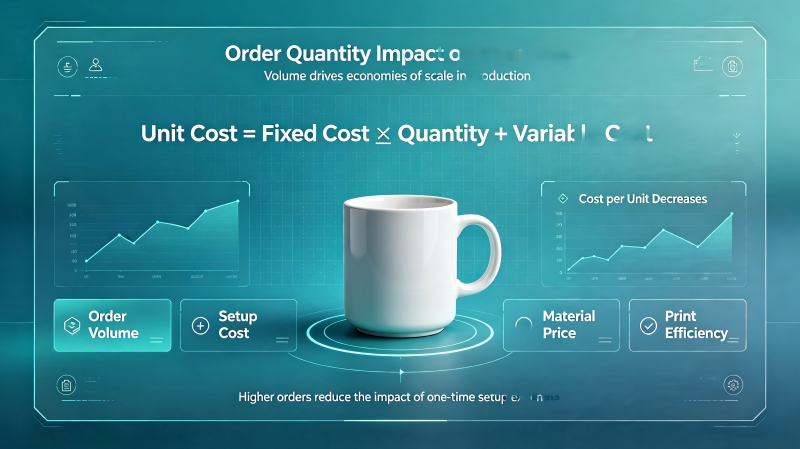
Dive Deeper: The Power of Amortization
Let's break this down with a real-world scenario. Imagine you want to create a mug with a custom shape and a 4-color logo.
Fixed Costs (One-time fees, regardless of quantity):
- Custom Mold Fee: $800
- Printing Plate Setup for 4-Color Decal: $200
- Total Fixed Costs: $1,000
Variable Costs (Per-unit cost):
- Raw Material, Labor, Glazing, Firing: $1.20 per mug
Now, let's see how the custom mug manufacturing cost per unit changes based on your order quantity.
| Order Quantity | Total Variable Cost | Total Fixed Cost | Total Project Cost | Final Cost Per Mug |
|---|---|---|---|---|
| 500 units | 500 x $1.20 = $600 | $1,000 | $1,600 | $3.20 |
| 2,500 units | 2,500 x $1.20 = $3,000 | $1,000 | $4,000 | $1.60 |
| 5,000 units | 5,000 x $1.20 = $6,000 | $1,000 | $7,000 | $1.40 |
| 10,000 units | 10,000 x $1.20 = $12,000 | $1,000 | $13,000 | $1.30 |
As you can see, jumping from 500 to 2,500 units cuts your unit price in half. The savings become less dramatic at higher volumes, but they are still significant.
This is a conversation I have almost daily with our clients. A first-time e-commerce seller might be hesitant to order more than 1,000 units due to cash flow and warehouse space. In contrast, an established wholesaler who can order 10,000 units will achieve a much lower cost of goods, giving them a significant margin advantage in the market.
Our role as your manufacturer is to be transparent about this. We can help you find the "sweet spot" where the quantity discount provides a meaningful return without over-burdening you with inventory. Sometimes, simplifying a design to remove a fixed cost (like using a standard shape to avoid the mold fee) is a better strategy for smaller orders.
What Are the Hidden Costs in Custom Mug Manufacturing?
You've budgeted for the per-unit price, but suddenly you're hit with unexpected fees for molds and testing. This is one of the most common and frustrating experiences for first-time importers. These aren't "hidden fees" from a good supplier; they are essential, non-negotiable project costs.
Understanding these non-unit costs upfront is critical for accurate budgeting. A low unit price is meaningless if you have to pay thousands in additional fixed costs you didn't plan for.
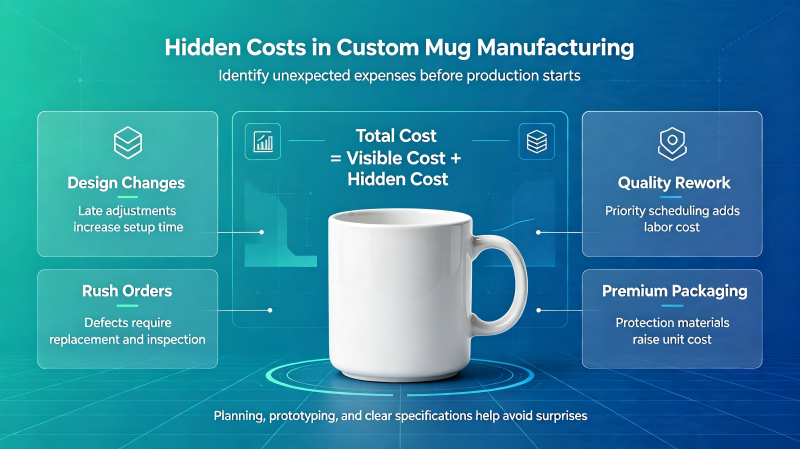
Dive Deeper: Moving Beyond the Unit Price
When we prepare a quote, we separate the unit price from the project-level fixed costs. This gives you a clear picture of your total investment. Here are the three main "hidden" costs to plan for.
1. Mold Fees for Custom Shapes
- What it is: A fee to design and create the master mold used in mass production for a unique mug shape.
- Why it's necessary: Every unique shape requires its own mold. This is a highly skilled process. The mold is made of plaster and has a limited lifespan, but the initial creation is a significant upfront effort.
- Cost Impact: Typically ranges from $500 to $1,500, depending on complexity. If you are using one of our thousands of existing factory shapes, this cost is $0.
- Insider Tip: I always advise new buyers to start with a standard factory shape for their first order. This eliminates the mold fee, reduces risk, and shortens the production timeline. Once your product is proven in the market, you can invest in a unique shape for your second or third order to differentiate your brand.
2. Compliance Testing Fees
- What it is: A fee paid to a third-party lab (like SGS or Intertek) to test the product for harmful substances like lead and cadmium.
- Why it's necessary: This is a legal requirement for market access. Selling a mug in California without Prop 65 certification, for example, can lead to huge fines and legal trouble. It's not optional. It protects you and your end customers.
- Cost Impact: A standard Prop 65 test for a ceramic item might cost $200 - $400 per item/color. The cost depends on the number of different colored glazes or decals used, as each must be tested.
- Anecdote: I recently worked with a new Amazon seller who wanted to skip Prop 65 testing to save money. I had to explain that Amazon could suspend their listing or their entire account if a customer complained and they couldn't provide a valid test report. They quickly realized it was an essential investment, not an optional expense.
3. High-Quality Protective Packaging
- What it is: The cost of designing and producing packaging that can withstand the rigors of international shipping and last-mile delivery.
- Why it's necessary: Standard bulk packaging is fine for wholesale, but for e-commerce, it's a recipe for disaster. A single broken mug costs you the product, the shipping, the replacement, and customer goodwill. A good mail-order box with inserts is your insurance policy.
- Cost Impact: A simple brown cardboard mailer box might add $0.20 - $0.40 per unit. A full-color printed retail box with custom foam inserts could be $0.80 - $1.50+ per unit.
- The Trade-off: Saving $0.30 on a cheaper box might seem smart, but if it increases your damage rate from 1% to 5%, you've lost money and damaged your brand's reputation.
Understanding these three costs is crucial for calculating the true custom mug manufacturing cost and ensuring a smooth, predictable production run.
How to Find Reliable Ceramic Mug Manufacturers in China?
You know the cost factors, but how do you find a partner you can trust to deliver quality and guide you through this process? Finding a reliable supplier among thousands of options can seem impossible. You worry about scams, poor quality, and communication barriers.
The key is to look for specific signals of professionalism and experience. A good manufacturer doesn't just sell you a product; they act as your manufacturing consultant, helping you de-risk your investment.
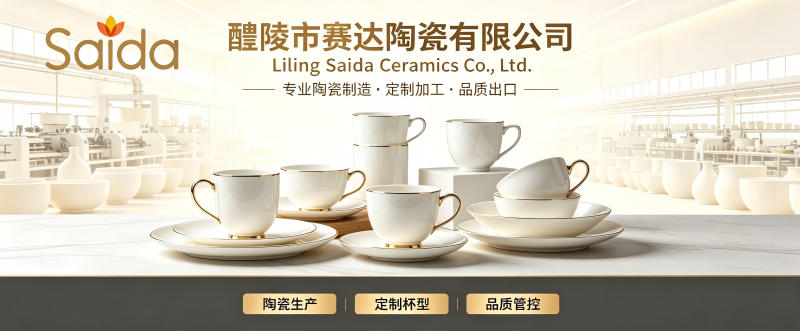
Dive Deeper: Vetting Your Manufacturing Partner
As a factory based in Liling, the "ceramic capital" of China, we know what separates professional export operations from the rest. Here’s what to look for when you're sourcing a partner for your custom mugs.
1. Look for Verifiable Certifications
Certifications are third-party proof of a factory's commitment to quality and ethical standards. They are not just logos on a website; they represent real audits and processes.
- ISO 9001: This is the international standard for a Quality Management System (QMS). It means the factory has documented processes for everything from raw material inspection to final quality control. It's a fundamental sign of a professionally run operation.
- BSCI (Business Social Compliance Initiative): This audit focuses on social compliance and ethical working conditions. For clients selling to major retailers in Europe and the US, this is often a mandatory requirement. It shows the factory treats its workers fairly.
- Factory Audits (e.g., Sedex, SCAN): Many large retailers conduct their own proprietary audits. If a factory mentions passing audits for clients like Walmart, Target, or major European chains, it's a strong indicator of their capabilities.
2. Prioritize Communication and Expertise
A low price means nothing if the supplier doesn't understand your requirements or can't communicate effectively.
- Responsiveness: Do they answer your questions clearly and in a timely manner?
- Problem-Solving: When you present a complex design, do they just say "no," or do they suggest alternative methods to achieve your vision within your budget? For example, they might say, "A full-wrap embossed logo is very difficult, but we could achieve a similar premium feel with a deep-etched decal."
- Market Knowledge: Do they understand the requirements for your target market? A good partner will proactively ask if you need Prop 65 testing for the US or LFGB for Germany. This shows they have experience exporting to your region.
3. Ask for Their "Home Base"
China has several major ceramic production hubs, each with its own specialty.
- Liling (Hunan): This is our home. Liling is famous for high-quality stoneware and porcelain, especially with complex decal decorations and colored glazes. It's a hub for major international brands.
- Chaozhou (Guangdong): Known for fine porcelain and bone china, often for daily-use dinnerware.
- Zibo (Shandong): A major producer of more basic, mass-market ceramics and glassware.
Knowing where a factory is located can give you a clue about their likely expertise.
4. Start with a Sample
Never place a bulk order without first approving a physical sample. This is your chance to assess the quality of the material, the accuracy of the color, and the sharpness of the printing. The sample process is a test of the supplier's attention to detail and ability to execute your vision. A reliable partner will insist on sample approval before starting mass production.
Frequently Asked Questions
What is a typical Minimum Order Quantity (MOQ) for custom mugs?
For a fully customized mug (custom color or decal), the MOQ is typically between 1,000 and 3,000 units. This quantity allows us to operate the kiln and printing lines efficiently. For very complex designs or custom shapes, the MOQ might be higher to justify the setup costs.
How much does a custom mold for a mug typically cost?
A custom mold fee generally ranges from $500 to $1,500. The final cost depends on the complexity of the shape. This is a one-time fee for the initial project. If you reorder the same shape, you will not pay this fee again. Using one of our existing factory shapes has no mold fee.
How can I be sure my mugs are safe for food use?
We ensure all our products meet international food-grade standards like FDA and EU regulations. We work with third-party labs like SGS, TUV, and Intertek to provide official compliance test reports for your specific product, giving you the documentation needed for import and retail.
How long does the entire custom mug manufacturing process take?
From confirming the design to having the goods ready to ship, the process usually takes 45-60 days. This includes 7-10 days for creating and approving a pre-production sample, and 30-45 days for mass production. This timeline can vary based on order complexity and factory capacity.
Conclusion
Ultimately, the custom mug manufacturing cost is not a mystery but a direct result of your project choices. By understanding the seven key variables—material, size, decoration, quantity, packaging, testing, and shipping—you move from being a price-taker to a strategic buyer. The most critical takeaway is that order quantity is your strongest lever for reducing unit cost, and non-unit costs like molds and compliance are essential investments, not optional add-ons. A transparent manufacturing partner will guide you through these trade-offs to achieve the perfect balance of price, quality, and brand vision.
As a factory with 15 years of experience serving wholesalers and e-commerce sellers worldwide, we are here to help you navigate this process. If you're ready to get a detailed, transparent quote based on these factors, contact our team today.