Struggling to find a promotional item with real staying power? You invest in merchandise hoping for brand visibility, but too often, trendy gadgets and cheap giveaways end up in a desk drawer or the trash. Choosing the right promotional mugs, however, transforms a simple gift into a daily-use tool that keeps your brand top-of-mind for years.
The high return on investment from promotional mugs comes from their unique ability to become an integrated part of a person's daily routine. A well-made, thoughtfully designed mug isn't just a gift; it's a useful object. This daily use translates into an extremely low cost-per-impression, delivering consistent brand exposure long after other promotional items are forgotten.
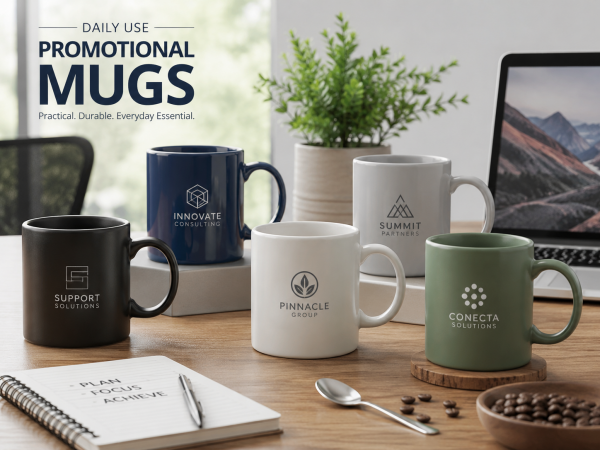
This might sound simple, but there's a huge difference between a mug that gets used and one that collects dust. The secret to unlocking that high ROI isn't just buying mugs; it's about choosing the right ones. Let's dive into what makes a mug a "keeper" and how to calculate its true value.
Aren't People Tired of Receiving Promotional Mugs?
Worried your branded mug will just get a polite nod before being relegated to the back of a cluttered cupboard? It's a valid concern. Many marketing managers I talk to feel that mugs are "old-fashioned" and that everyone already has too many.
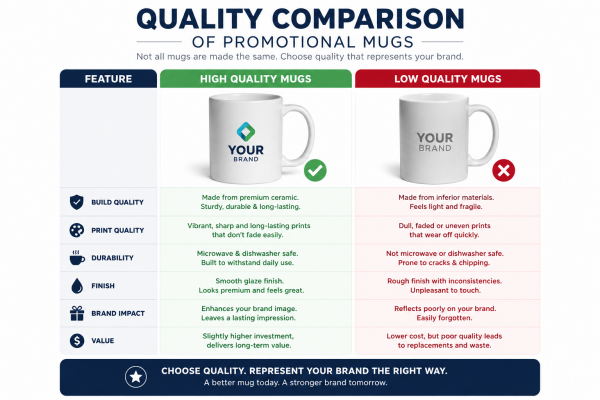
The truth is, people aren't tired of mugs; they're tired of bad mugs. A cheap, lightweight, or awkwardly designed mug feels disposable because it is. A high-quality, thoughtfully designed mug, however, is perceived as a valuable tool, not just another piece of branded swag.
Dive Deeper: From "Another Gift" to "My Favorite Mug"
In my 15 years as a manufacturer, I've learned a crucial lesson from our wholesale partners: people don't throw away good mugs. The key to overcoming the "too many mugs" problem is to provide one that instantly feels better than the others in their collection. This is what we call a "keeper mug."
What makes a mug a keeper? It's not about flashy designs; it's about tangible quality and practical features that create a great user experience.
- A Substantial Feel: A mug with some heft feels valuable. When someone picks it up, the weight communicates durability and quality before they even take a sip. Cheap, thin-walled ceramic feels fragile and disposable.
- A Comfortable Handle: This is surprisingly critical. A handle that's too small, too thin, or has sharp edges makes the mug unpleasant to use. A well-designed, ergonomic handle that fits comfortably in the hand makes it a go-to choice every morning.
- A Smooth, Safe Glaze: The finish matters. A smooth, non-porous glaze is easy to clean and feels pleasant on the lips. More importantly, as a buyer, you must ensure it's certified lead and cadmium-free. This isn't a luxury; it's a safety requirement for any item intended for daily use.
- Practicality for Modern Life: Is it dishwasher safe? Can it be used in the microwave? In an office environment, a mug that can't go in the dishwasher is a major inconvenience. One of our wholesale partners in the US specifically mentioned that their corporate clients, like software firms and dental clinics, now refuse to order mugs that aren't certified dishwasher-safe because they simply don't get used.
By focusing on these user-centric qualities, you shift the item's perception. It's no longer just a "promotional mug" you gave them. It becomes their mug—the one they reach for every morning. That's how your brand moves from being a passive advertiser to a welcome part of their daily ritual.
How Do You Measure the ROI of Promotional Mugs Accurately?
If you only look at the upfront unit cost, you're missing the entire point. Focusing on saving a dollar per mug might feel like a smart procurement decision, but it often leads to a wasted investment and zero return. The real value is hidden in how the mug is used over time.
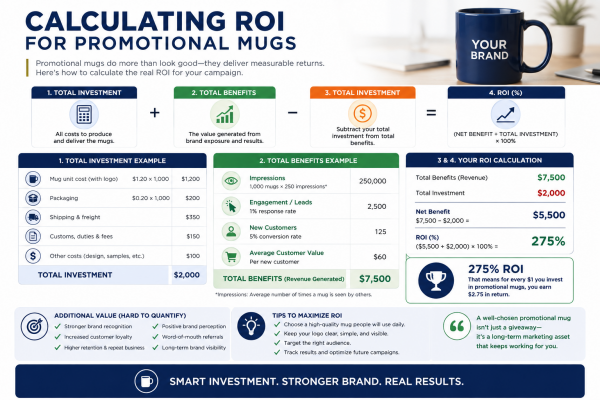
To measure the ROI of promotional mugs accurately, you must shift your metric from "Unit Cost" to "Cost Per Impression" (CPI). A durable, well-loved mug that's used daily for years delivers thousands of impressions, making its CPI incredibly low and its long-term value incredibly high.
Dive Deeper: The Simple Math of Cost Per Impression
Let's break this down with a realistic example. Imagine you're choosing between two options for your company's next promotional campaign.
Option A: The "Cheap" Mug This mug costs you $2.50 per unit. It's lightweight, the handle is a bit small, and the printing is a simple surface application that might not hold up in a dishwasher. Because of its low perceived quality, the recipient uses it once or twice, then it gets pushed to the back of the cupboard.
- Cost: $2.50
- Uses (Impressions): 5
- Cost Per Impression: $2.50 / 5 = $0.50 per impression
Option B: The "Keeper" Mug This mug costs you $5.00 per unit. It has a satisfying weight, a comfortable handle, a durable, high-temperature decal firing for the logo, and is certified dishwasher and microwave safe. The recipient loves it and integrates it into their daily coffee routine.
- Cost: $5.00
- Uses (Impressions): Used daily on workdays (approx. 250 days/year) for 3 years = 750 impressions.
- Cost Per Impression: $5.00 / 750 = $0.006 per impression (less than a penny!)
Here is the comparison in a table:
| Metric | Option A: Cheap Mug | Option B: Keeper Mug |
|---|---|---|
| Unit Cost | $2.50 | $5.00 |
| Perceived Quality | Low | High |
| Estimated Lifetime Uses | 5 | 750+ |
| Cost Per Impression | $0.50 | $0.006 |
| True ROI | Very Low | Extremely High |
As you can see, the "cheaper" mug is actually exponentially more expensive from a marketing perspective. Its Cost Per Impression is nearly 100 times higher. The real value of promotional mugs comes from this long-term, daily brand exposure. When someone uses your mug at their desk, everyone who walks by sees your logo. When they use it in a Zoom meeting, your brand gets screen time. You're not just giving a gift; you're placing a miniature, long-term billboard on your most valuable customer's desk for pennies.
What Questions Should I Ask a Supplier to Ensure My Promotional Mugs Get Used?
You've bought into the "keeper mug" philosophy and secured the budget. Now comes the critical step: procurement. How do you look at a supplier's catalog and distinguish a future cupboard-dweller from a future daily-driver?
You need to ask questions that go beyond the basics of "How much?" and "What's the lead time?". Smart buyers ask user-experience questions that directly impact whether the mug will be loved or left behind. Your job is to be the advocate for the end-user.
Dive Deeper: A Buyer's Checklist for "Keeper" Mugs
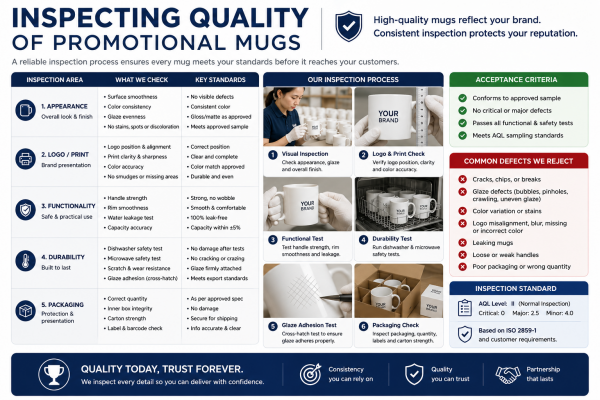
Over the last 15 years supplying wholesalers who serve thousands of businesses, we've learned what separates a successful order from a disappointing one. The most successful projects begin with the buyer asking smart questions. Here is a checklist to use when speaking with any potential supplier.
1. Questions about Material & Safety
- "What type of ceramic do you use (e.g., stoneware, porcelain)?"
- "Is the mug certified lead and cadmium-free according to FDA, California Prop 65, or relevant EU standards?"
- "Can you provide copies of the testing certificates for the specific mug body and glaze?"
Why this matters: This is non-negotiable. You are giving someone an item to eat or drink from. Ensuring its safety is your primary responsibility and protects your brand's reputation.
2. Questions about Durability & Longevity
- "Is this mug certified dishwasher and microwave safe?"
- "What method do you use for branding (e.g., decal firing, sublimation printing)? Will the logo fade, peel, or scratch off after 50 dishwasher cycles?"
- "What is the firing temperature of the ceramic and the decal? High-temperature firing leads to a more durable, vitrified product.
Why this matters: A mug that can't withstand daily life is useless. An office mug must be dishwasher safe. A logo that vanishes after a month defeats the entire purpose of the investment.
3. Questions about User Experience
- "What is the liquid capacity in ounces or milliliters?"
- "What is the weight of a single mug? Can I get a sample to feel the 'heft'?"
- "Could you describe the handle? Is it a C-shape, D-shape? What are its dimensions? Is it comfortable for an average-sized hand?"
- "Is the base wide and stable, or is it narrow and easy to tip?"
Why this matters: These are the details that determine if a mug becomes a "favorite." A 10oz mug might be too small for most coffee drinkers. A wobbly base is an annoyance. An uncomfortable handle guarantees the mug stays on the shelf. Getting a physical sample is the best way to answer these questions.
By asking these questions, you demonstrate that you are an educated buyer focused on value, not just price. It forces the supplier to move beyond sales talk and provide concrete facts about their product's performance, ensuring your investment in promotional mugs pays dividends for years to come.
Frequently Asked Questions
What's the minimum order quantity (MOQ) for custom promotional mugs?
For a factory like ours, the MOQ typically starts around 1,000 to 3,000 pieces per design. This is because the setup for screen printing, decal production, and kiln firing is complex and costly. Lower quantities are often handled by distributors who decorate stock mugs.
How long does it take for a logo to wear off a promotional mug?
This depends entirely on the decoration method. A high-temperature fired decal melts a thin layer of glass over the logo, fusing it permanently to the mug's glaze. It will not peel, fade, or scratch off and will last the lifetime of the mug. Cheaper methods like sublimation or UV printing are less durable and can fade or scratch over time, especially with repeated dishwashing.
Are ceramic promotional mugs better than metal travel mugs?
They serve different purposes. A ceramic mug is the undisputed king of the desk, office, and home. It provides a superior drinking experience for hot beverages (no metallic taste) and feels substantial. A metal travel mug is designed for portability and temperature retention on the go. For creating a daily habit at a stationary location, a ceramic mug is often more effective.
What are the most popular styles and colors for promotional mugs?
Classic white or black C-handle mugs (around 12-15oz / 350-450ml) are timeless and provide a great canvas for any logo. However, we're seeing a trend towards mugs with a colored interior or a matte exterior/glossy interior finish. These subtle design choices can make a mug feel more premium and unique without being overly trendy.
Conclusion
The evidence is clear: the remarkable ROI of promotional mugs is not a myth, but it’s not automatic either. It is earned by making a conscious choice to invest in quality and user experience. By reframing the decision from "what's the cheapest gift?" to "what's the most useful tool?", you change the entire equation. A well-made mug becomes a cherished part of a daily routine, turning a one-time cost into a continuous marketing asset. The key is to stop thinking about unit cost and start focusing on the long-term, ultra-low cost-per-impression that only a "keeper mug" can deliver.
As you evaluate your next promotional campaign, use these insights to guide your conversations with suppliers. If you're looking for a partner with 15 years of experience creating high-quality promotional mugs that deliver real value for the international market, we would be happy to share our expertise.