Sourcing ceramic mugs feels risky. You worry that a large order will be low-quality, delayed, or arrive broken. This uncertainty can cost you money and damage your brand's reputation.
A reliable wholesale mug supplier is one who proves their value beyond a low price. They offer production consistency, transparent quality control systems, proactive communication, and robust packaging solutions. Their goal is to reduce your sourcing risks before they become costly problems.
Over my 15 years of exporting ceramic mugs from our factory in Liling, I've noticed that many buyers focus on the final price tag. While price is important, it doesn't tell you if a supplier can deliver what you need, when you need it. A truly reliable partner helps you succeed by being dependable from the very first conversation to the final delivery. Finding that partner means knowing what questions to ask. Let me walk you through what really matters based on what we've learned.
How Can You Judge a Factory's Production Consistency?
You receive a beautiful sample mug. But can the factory produce 10,000 more exactly like it? Inconsistent production can lead to a final shipment full of defects and unhappy customers.
The best way to judge production consistency is to ask about their kiln firing stability. Stable and even temperature control during firing is what ensures the mug's final durability, glaze quality, and safety. A good supplier can explain their kiln management process in detail.
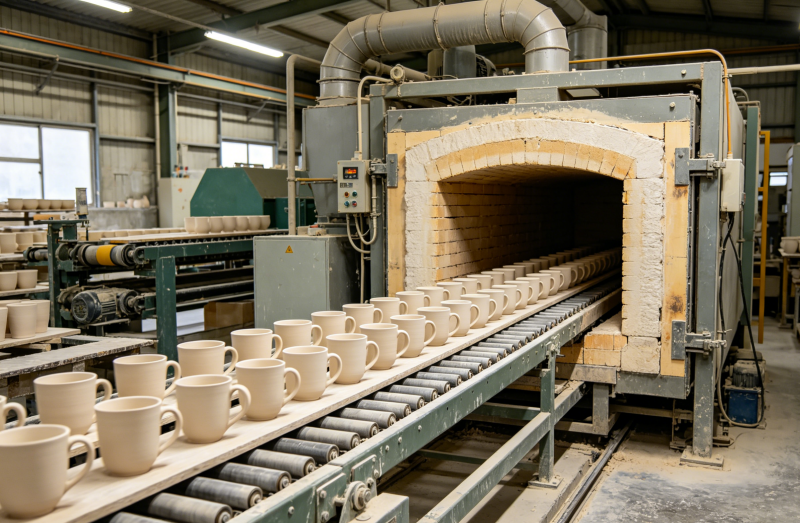
The kiln is the heart of any ceramics factory. It’s where a soft piece of clay becomes a hard, durable mug. This transformation requires incredible heat, often over 1200°C (2192°F). If that heat is unstable, problems appear. We get questions about this all the time. A buyer will ask why one mug in a batch seems slightly different. The answer is almost always rooted in the firing process. Consistent firing ensures the clay body fully vitrifies, making it strong and non-porous. It also allows the glaze to melt and fuse to the surface correctly, preventing crazing (tiny cracks) and ensuring food safety by sealing the product. In our factory, we invested in a computer-controlled tunnel kiln. This allows us to maintain a precise temperature curve for every single mug that passes through. Ask your potential supplier what kind of kiln they use and how they monitor temperatures. Their answer will reveal a lot about their consistency.
| Firing Aspect | Stable Firing (Reliable Supplier) | Unstable Firing (Risky Supplier) |
|---|---|---|
| Strength | Mugs are strong and durable, resistant to chipping. | Mugs are brittle and may crack with thermal shock. |
| Glaze Finish | Smooth, even glaze coverage with consistent color. | Pinholes, crazing, or color variations in the glaze. |
| Safety | Harmful substances are burned off; glaze is sealed. | Potential for unsealed surfaces or incomplete firing. |
| Consistency | High uniformity across thousands of units. | High variation in size, color, and quality per batch. |
Are Their Samples Too Good to Be True?
You get a perfect sample, so you confidently place a large order. But when the container arrives, the quality is a huge letdown. You’ve likely been sent a "golden sample."
A reliable supplier provides a sample that truly represents their mass production quality. You should always ask if the sample was made on the main production line or in a special sampling room. This tells you if the quality can be repeated at scale.
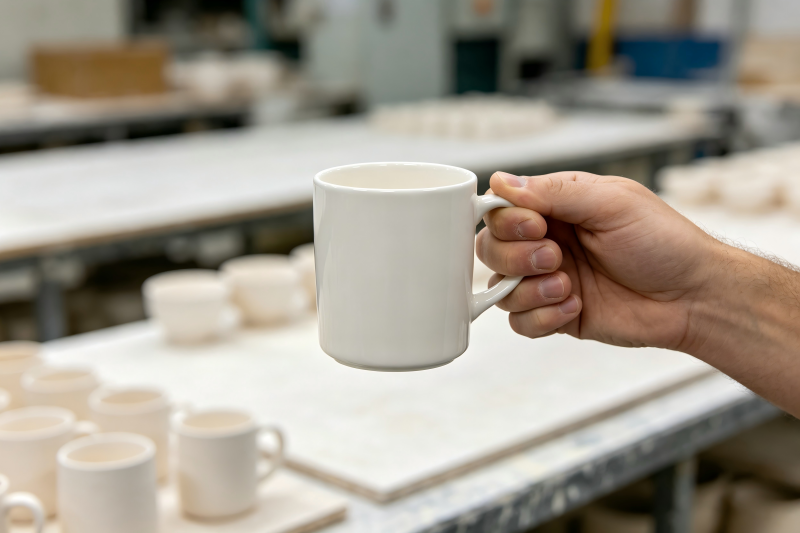
A "golden sample" is a common industry trick. It’s a single, flawless piece often made by the most skilled technician using the best materials, with no time pressure. It is not an honest representation of what a factory can produce by the thousand. We have seen many new buyers fall into this trap. They approve a stunning sample, only to receive a bulk order with obvious defects. A good partner is honest about capabilities. The most important question you can ask is, "Was this sample made using the same machines, workers, and processes that my bulk order will use?" If the answer is "no," you need to be careful. The sample you are holding is an ideal, not a promise. At our factory, we create pre-production samples directly on our main lines. We are also upfront about production tolerances—the small, acceptable variations in color, size, or decal placement that can occur in any large-scale manufacturing process.
| Sample Type | Golden Sample (High Risk) | Production-Line Sample (Low Risk) |
|---|---|---|
| Origin | Made in a separate lab by a top artisan. | Made on the actual mass production line. |
| Purpose | To impress the buyer and win the order. | To show the buyer the real, achievable quality. |
| Repeatability | Very low. The quality cannot be replicated at scale. | Very high. Represents the final product accurately. |
| Supplier Honesty | Hides the reality of mass production limitations. | Openly discusses production tolerances and variations. |
What Do Certifications and Communication Really Tell You?
A supplier sends you a list of certifications like ISO9001 and BSCI. It looks impressive, but you’re not sure what it means for your order. These documents can be meaningless without transparency.
Certifications show a supplier has systems in place, but true reliability is revealed through proactive communication. A good partner will openly share material safety reports (for lead/cadmium) and give you honest updates on production, both good and bad.
Clients often ask us what our BSCI and ISO9001 certifications mean for them. It's a great question. Think of them as a baseline for professionalism.
- ISO9001 (Quality Management System): This means we have a documented, repeatable process for everything from sourcing raw materials to final inspection. For you, it means less risk of random quality failures because there is a system to follow.
- BSCI (Business Social Compliance Initiative): This shows we adhere to ethical labor standards. For you, it protects your brand from the risk of being associated with an unethical factory.
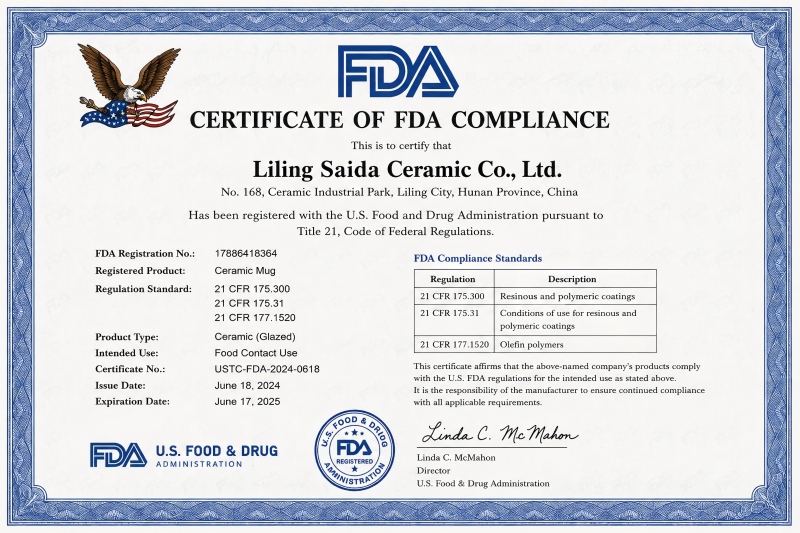
However, these certificates are only the starting point. The real test is how a supplier communicates. A reliable partner is transparent. When shipping to Europe or the Americas, compliance with food safety standards like FDA and California Prop 65 is non-negotiable. A trustworthy supplier will provide recent lead and cadmium test reports without you even having to push for them. More importantly, they communicate proactively. If there’s a small delay with raw materials, they will tell you immediately. We’ve learned over 15 years that bad news delivered early is manageable. Bad news delivered late is a crisis.
Will Your Mugs Survive the Long Journey?
You've approved a fantastic production run of mugs. But they have to travel thousands of miles by sea to reach your warehouse in Europe or South America. Broken mugs cost you money and cause stockouts.
A great product is worthless if it arrives in pieces. You must evaluate a supplier's packaging expertise and ask about their damage rate for shipments to your region. A reliable partner has already developed and tested solutions for long-distance shipping.
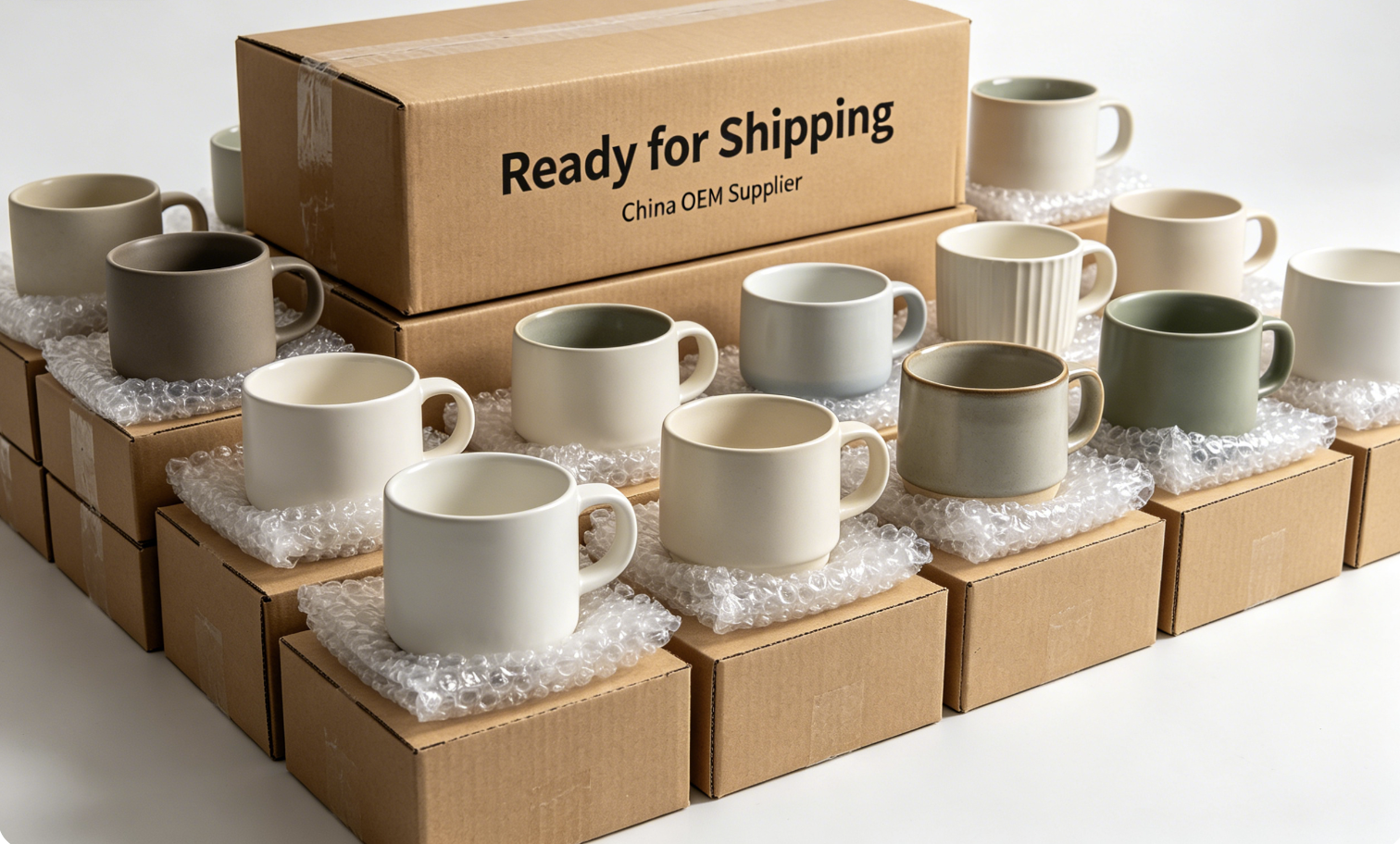
Shipping fragile ceramics across the ocean is a science. A container on a ship experiences constant vibration, impacts during loading, and immense pressure from stacking. A simple cardboard box is not enough. One of the first things we discuss with new clients, especially e-commerce sellers, is packaging. The right packaging depends on how the product will be sold. Are you selling mugs in a retail store, or shipping them directly to individual customers? The requirements are completely different. For our B2B clients who sell online, we have developed mail-order boxes that pass a 1.5-meter drop test. This ensures the mug can withstand the rough handling of local courier services. Don't just accept "standard export carton" as an answer. Ask specific questions: "What is your recommended packaging for sea freight followed by individual parcel shipping?" "What is your average damage rate on shipments to my country?" After 15 years of shipping to the Americas and Europe, we have refined our methods to keep our damage rate well below 1%.
| Packaging Type | Best Use Case | Level of Protection |
|---|---|---|
| Bulk Layer Pack | Retail stores where mugs are unboxed in bulk. | Basic (Protects in transit to warehouse). |
| Individual White/Brown Box | Retail or gifting, basic individual protection. | Medium (Good for shelf display). |
| Mail-Order Box (Drop-Tested) | E-commerce, direct-to-consumer shipping. | High (Designed to survive courier systems). |
| Custom Gift Box | Premium products, corporate gifts. | Varies (Can be designed for high protection). |
Conclusion
Choosing the right supplier isn't about finding the lowest price. It's about finding a partner you can trust. Focus on production consistency, sample honesty, transparent communication, and proven packaging expertise.