Finding the right packaging solutions for retail mug sales can feel like a balancing act. You need to protect your fragile ceramic mugs from the rough world of shipping, but you're also under constant pressure to keep costs down. Unfortunately, I've seen too many new e-commerce sellers fall into a trap by choosing the cheapest box, only to face a nightmare of broken products, angry customers, and a tanking brand reputation. The real solution isn't about spending more; it's about spending smarter.
The best packaging solutions for retail mug sales are not simply the cheapest boxes, but rather intelligently designed systems that minimize your total cost of ownership. This means focusing on structural engineering, such as custom corrugated mug inserts, to drastically reduce breakage rates, customer returns, and negative reviews, ultimately protecting your profit margins and brand reputation.
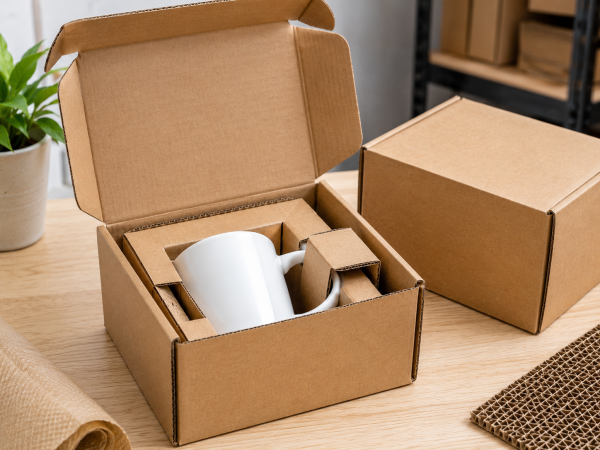
This might sound counterintuitive, especially when you're focused on unit cost. But let me share a story from my 15 years in this business that perfectly illustrates why a slightly higher investment in smart packaging is one of the best financial decisions an e-commerce mug seller can make.
Why Does the Cheapest Mug Packaging End Up Costing You More?
You're sourcing products and every cent counts. You get a quote for packaging, and one option is $0.20 cheaper per box than the other. It seems like a no-brainer, right? But this is often the single most expensive mistake you can make when selling fragile goods online.
The cheapest box leads to higher breakage rates, which means more returns, negative reviews, lost inventory, and brand damage. These hidden costs quickly add up, completely erasing any initial savings you thought you were getting on your e-commerce mug packaging.
Dive Deeper: A Cautionary Tale of "Saving Money"
A few years ago, I was working with a new client—let's call him Alex. He was launching a new line of beautiful ceramic mugs on his Amazon FBA store. He was sharp, ambitious, and extremely focused on his budget. When we got to the topic of packaging, his directive was clear: "Just find me the cheapest white box that fits the mug. No frills."
I tried to guide him, explaining the risks of shipping fragile items through the FBA system. I showed him designs for protective packaging for mugs that were only slightly more expensive but offered exponentially more protection. He was polite but firm. He wanted the cheapest option. Against my better judgment, we proceeded with his choice: a simple, thin, single-wall cardboard box.
The first two months were a disaster.
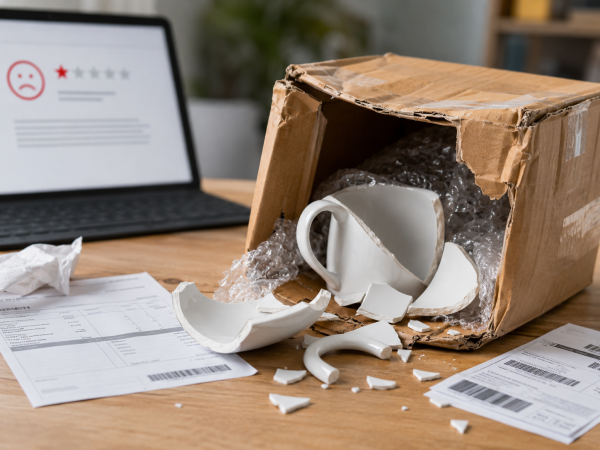
His product reviews, which had started strong at 4.8 stars, plummeted to 3.2. The comments were brutal: "Arrived shattered," "Box was crushed and mug was in pieces," "Beautiful mug, too bad it's broken."
Alex's emails to me became frantic. His return rate was over 15%. For every $0.20 he had "saved" on the box, he was losing a $15 sale, paying for return shipping, and dealing with unsellable FBA inventory. Worse, the constant 1-star reviews were killing his product's ranking on Amazon. The algorithm was burying his listing, and his sales velocity stalled. The money he thought he was saving on packaging was turning into significant losses and damaging his new brand's reputation before it even had a chance.
This is the hidden cost of "cheap." It's not just the price of the returned item; it's the lost sale, the return processing fees, the negative social proof, and the long-term damage to your store's rating.
How Can Smart Design Improve Your Retail Mug Packaging and Save Money?
You're worried about breakage after hearing that story, but your budget is still tight. You can't afford military-grade crates for every mug. So, what's the solution? The magic isn't in using more expensive materials, but in using materials more intelligently.
The key to cost-effective protection is smart structural design. By focusing on engineering, you can use standard, affordable materials like corrugated cardboard to create incredibly effective packaging solutions for ceramic mugs. A precisely designed insert can outperform generic, expensive foam every time.
Dive Deeper: The Power of Corrugated Mug Inserts
When Alex came back to me, defeated, we didn't just switch to a thicker, more expensive box. We re-engineered his ceramic mug packaging from the inside out. The solution was a system that cost only a fraction more than his original "cheap" box but provided premium protection.
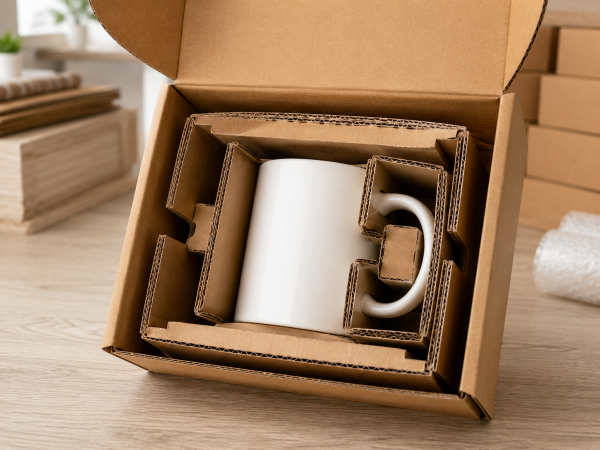
The hero of this new design was the corrugated mug insert.
Think of it like a suspension system for your car. The goal is to stop the mug from moving and to create crumple zones that absorb impact. A well-designed insert achieves several things:
- Immobilization: It locks the mug in place, securing the handle, base, and rim. Movement inside the box is a primary cause of breakage during shipping.
- Suspension: It "floats" the mug in the center of the box, creating an air gap between the mug and the outer walls. If the box is dropped, the insert and the air gap absorb the shock, not the ceramic.
- Consistency: Unlike bubble wrap or packing peanuts, which rely on the person packing the box to do a good job, an insert is foolproof. It provides the same level of protection every single time.
We created a simple, die-cut corrugated insert that folded to create a secure cradle for the mug. This insert then slid into a slightly more robust mailer box. The total unit cost was higher than the original cheap box, but the results were transformative.
Here’s a breakdown of the before and after:
| Feature | "Cheapest" Box Strategy | Smart Design Strategy |
|---|---|---|
| Packaging Cost | $0.35 / unit | $0.60 / unit |
| Breakage Rate | ~15% | < 1% |
| Avg. Customer Rating | 3.2 stars | 4.9 stars |
| Return-Related Costs | High (returns, fees) | Negligible |
| True Cost per Sale | High and unpredictable | Low and stable |
Alex’s breakage rate dropped to almost zero. His reviews shot back up. His Amazon listing regained its momentum. He learned a critical lesson: a smart investment in custom mug packaging boxes isn't an expense; it's insurance that pays for itself many times over.
What's the Right Mug Shipping Packaging for Your Sales Channel?
You now understand the importance of smart design, but not all shipping is created equal. The journey a mug takes to an Amazon FBA warehouse is very different from the one it takes when you ship it directly from your home. Does the packaging need to change?
Absolutely. The right mug shipping packaging is tailored to the specific rigors of its supply chain. A one-size-fits-all approach can leave you either over-spending on protection you don't need or, worse, under-protected where it counts the most.
Dive Deeper: Tailoring Packaging to the Channel
As a consultant, one of the first questions I ask a client is, "How are you selling and shipping this?" The answer dramatically influences our packaging strategy.
H3: Packaging for Amazon FBA
The Amazon FBA (Fulfillment by Amazon) network is notoriously tough on products. Think about the journey your mug takes:
- Packed at the factory in a master carton.
- Loaded onto a truck, then a container ship.
- Unloaded at the destination port, trucked to an Amazon fulfillment center.
- Unloaded, scanned, and stored on a warehouse shelf.
- Picked by a worker (or a robot) when an order comes in.
- Placed in a larger Amazon box with other items.
- Sent through a network of conveyor belts and sorting machines.
- Delivered to the customer's doorstep.
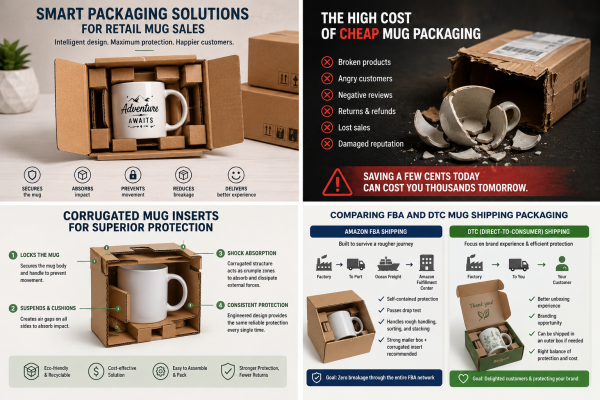
At every single step, there's a risk of the package being dropped, tossed, or compressed. This is why Amazon has strict packaging guidelines, including requirements for passing a drop test. For FBA, your retail mug packaging must be a self-contained fortress. This is where the mailer box with corrugated inserts shines. It's designed to survive this entire journey independently.
H3: Packaging for Direct-to-Consumer (DTC) and Wholesale
If you're selling from your own website (e.g., Shopify) and shipping directly to customers, you have more control. You are the last person to touch the package before the carrier gets it. In this scenario, you might be able to use a slightly less robust individual box if you are placing it inside a well-padded outer shipping box.
However, for DTC, another factor becomes critical: the unboxing experience. This is a powerful marketing opportunity. Here, custom mug packaging boxes with your brand's logo, colors, and a thank-you message can create a memorable moment for the customer, encouraging repeat business and social media shares.
For wholesale clients who will be selling the mugs in a physical retail store, the requirements are different again. The individual box might be more focused on shelf appeal—a window to show the mug, for example—and less on shipping protection, as the mugs arrive at the store in durable master cartons.
The key is to match the packaging to the journey. Don't pay for FBA-level protection if you're a local artisan selling at a craft market. But don't ever send a flimsy shelf-display box into the Amazon FBA system.
Frequently Asked Questions
What is the difference between a mailer box and a standard product box?
A mailer box is designed for shipping and is typically made from corrugated cardboard for strength. A standard product box is often made from thinner paperboard and is designed for retail shelves, not for surviving the postal system on its own.
How much should I budget for e-commerce mug packaging?
Instead of a fixed amount, think in terms of value. A good rule of thumb is that your packaging cost should be a small fraction of the cost you'd incur from a single return. Investing in packaging that reduces your breakage rate from 10% to less than 1% provides a massive return on investment.
Can I use the same packaging for all my different mug shapes?
It's risky. The most effective packaging, especially with inserts, is designed to fit a specific mug shape snugly. Using a one-size-fits-all box for different mugs often creates gaps, allowing the mug to move and increasing the risk of breakage. It's better to invest in custom solutions for each unique shape.
What is a "drop test" and why is it important for protective packaging for mugs?
A drop test is a standardized procedure where a packaged product is dropped from specific heights onto various surfaces and edges to simulate the hazards of shipping. Passing a drop test is the best way to verify that your protective packaging for mugs is genuinely effective before you ship thousands of units.
Conclusion
When it comes to packaging solutions for retail mug sales, the cheapest price is a siren's song that leads directly to the rocks of customer returns and brand damage. The smartest and most profitable e-commerce sellers I know have all learned the same lesson: effective packaging is a profit center, not a cost center. By shifting your focus from the price of the box to the intelligence of its design—embracing solutions like corrugated mug inserts—you protect your product, your reputation, and your bottom line. It's about designing a system that ensures your beautiful mug arrives safely every single time.
As a 15-year veteran in ceramic manufacturing, I help clients navigate these decisions every day. If you're looking for a partner who understands the total picture of e-commerce success—from manufacturing quality to shipping strategy—let's connect. We can discuss not just mugs, but the entire system to get them to your customers safely and profitably.