What Does 'SGS Tested' Really Mean for Your Ceramic Mugs?
You need safe products, but the testing process is confusing. This uncertainty creates risk for your business, leaving you unsure if your mugs truly meet legal standards for your market.
"SGS Tested" is not a single, universal approval. It means a mug was tested against a specific standard that you, the buyer, must choose. You must tell your supplier which test is needed for your target market, such as FDA standards for the US or LFGB[^1] for Germany.
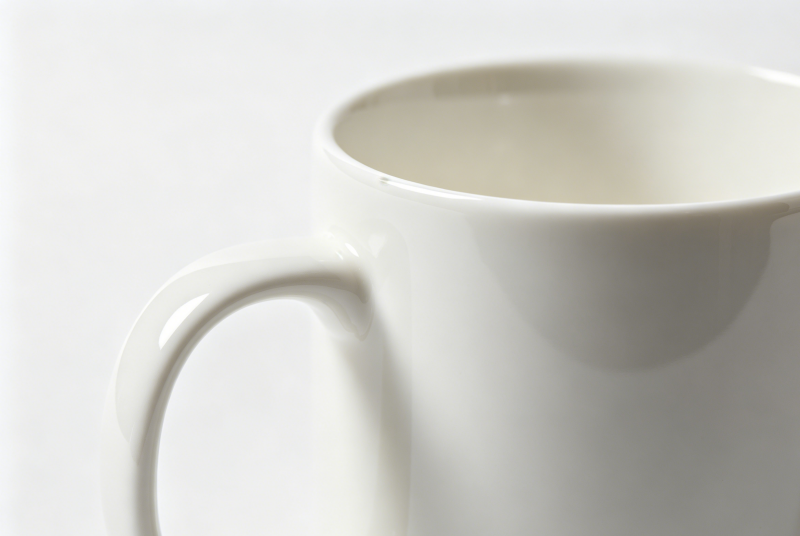
As a manufacturer with 15 years of export experience, one of the most common questions we get from buyers is, "Are your mugs SGS tested?". I understand why you ask this. You want a simple "yes" to check a box for safety and compliance. But a good supplier knows that a simple "yes" doesn't actually protect your business. To make a smart sourcing decision and truly manage your risk, we need to dig a little deeper together. The real conversation starts when you understand what specific questions to ask.
Why Can't I Just Ask for a General SGS Test Report?
You want to confirm product safety without getting lost in details. But asking for a generic report can mean you miss critical regulations, exposing your business to recalls and fines.
A "general" SGS report for ceramic mugs does not exist because safety rules change from country to country. A report proving a mug is safe for Germany (LFGB) does not prove it is safe for sale in California (Proposition 65[^2]). You must match the test to the law.

A mistake we often see new buyers make is asking for "any SGS report" just to have a document on file. This approach is risky. Think of SGS not as a single test, but as a testing company[^3] that can perform thousands of different tests. It's like going to a doctor and asking for "a test." The doctor will immediately ask, "A test for what?". We have to do the same for your products. The specific test you need is completely dependent on where you will sell the mugs. A professional supplier’s first question back to you should always be: "For which market and which standard do you need testing?".
Market Regulations Dictate the Test
Your business risk is tied directly to the laws of your end market. Selling mugs in the US that were only tested to EU standards could have major legal consequences. It’s not about just passing a test; it’s about passing the right test.
Here is a simple breakdown:
| Target Market | Key Regulation/Test | What It Checks For |
|---|---|---|
| USA (General) | FDA CPG Sec. 545.450[^4] | Leachable lead and cadmium from surfaces that touch food. |
| USA (California) | Proposition 65 | Much stricter limits on lead and cadmium, requiring warning labels if exceeded. |
| European Union | Regulation (EC) 1935/2004[^5] | The main framework for all food contact materials in the EU. |
| Germany | LFGB | One of the strictest European standards; passing is often seen as a mark of high quality. |
So, when a supplier says, "Yes, we are SGS tested," your follow-up question should be, "Great, can you show me the report for Prop 65 compliance, tested within the last 12 months?". That is how you turn a vague claim into a verifiable fact that protects you.
Does a 'Pass' on an SGS Report Guarantee All My Mugs are Safe?
You received a passing test report and feel secure. But that report only tested a single sample, and you're ordering thousands of units produced months later. How do you know they're all safe?
No, a single SGS report is just a snapshot in time[^6]. It proves that the specific sample sent to the lab passed the test. It does not guarantee that every mug in every future production run will be safe. Consistent safety comes from the manufacturer's internal quality control systems.
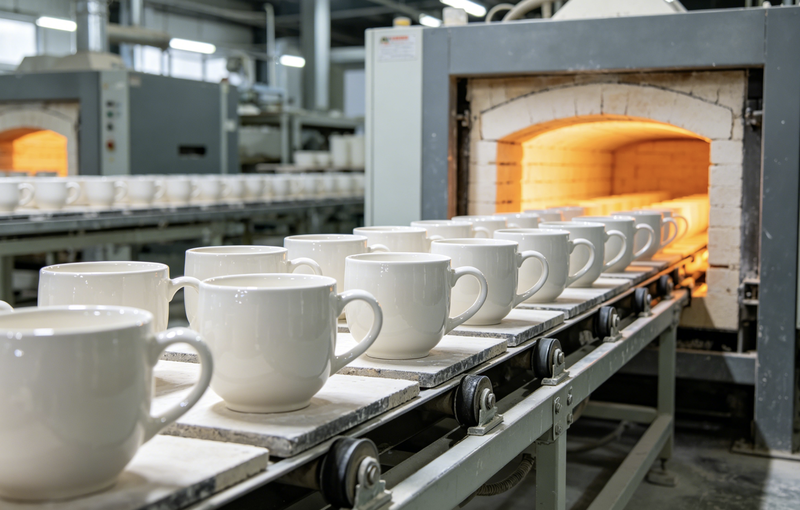
I remember a client years ago who was very happy with a passing SGS report on their first order. They placed a second, larger order six months later without asking any more questions. Unfortunately, a small change in a glaze pigment from a new supplier caused the second batch to fail a random customs inspection. This could have been avoided. The client focused on the one-time report, not the ongoing process. A test report is an outcome; a quality management system is the process that ensures good outcomes every time.
The Role of a Quality Management System (QMS)[^7]
This is why certifications like ISO 9001[^8] are so important. An ISO 9001 certificate isn’t about one product; it’s proof that the factory has a reliable system in place. This system includes strict procedures for:
- Incoming Material Inspection: We check all raw materials, like the clay and glazes, before they ever enter production. We need to know their composition to ensure consistency.
- In-Process Controls: We monitor factors like kiln temperature and production line speed. These variables can affect whether heavy metals are properly sealed into the glaze[^9].
- Final Product Checks: We perform our own internal checks on finished products before they are packed.
This system is designed to prevent problems, not just catch them at the end. It ensures that the mugs we make in June are just as safe as the ones we made in January.
Better Questions to Ask Your Supplier
Instead of only asking for a test report, you can get a much better sense of a supplier's reliability by asking about their process.
- "What are your internal quality checks for raw materials like clay and glaze?"
- "How do you ensure consistency between different production batches?"
- "Can you share your valid ISO 9001 and BSCI certifications[^10]?"
These questions shift the conversation from a one-time transaction to a long-term partnership built on repeatable quality and trust.
How Do I Balance Testing Costs with My Budget?
You know testing is important, but it adds cost to your order. You worry about your budget, but skipping tests could lead to massive fines or a product recall later.
View testing not as a cost, but as an insurance policy. The cost of a recall, a lawsuit, or a damaged brand reputation is thousands of times higher than the cost of a proper test[^11]. The key is to work with your supplier to build a smart, cost-effective testing strategy.

Sourcing managers often look at a testing fee of $500 or $1,000 and want to avoid it. I understand the pressure to keep costs down. This is where we, as your manufacturing partner, can help you think about the Total Cost of Ownership, not just the upfront price. A failed product doesn't just cost the price of the mugs; it costs you your reputation and market access. A smart testing plan minimizes this risk without breaking your budget. You don't always need every possible test for every single shipment.
Creating a Smart Testing Strategy
A good supplier will help you develop a plan that makes sense for your business. Here is a common strategy we recommend to our large wholesale clients:
- Initial Qualification: For the very first order of a new mug design, we recommend a full suite of tests for your primary market (e.g., FDA and Prop 65 for the US). This establishes a baseline and qualifies the product.
- Ongoing Production: For repeat orders of the exact same mug (no changes in design, materials, or glaze), you can rely more on the manufacturer's QMS. You might decide to do a new third-party test once a year as a spot check, rather than on every order.
- Any Product Change: If you change anything—the glaze color, the clay body, or even the decal design—you should invest in a new test. Different pigments in glazes and decals can contain different elements[^12], so a change in color requires a new verification.
This strategic approach lets you manage risk intelligently.
| Option | Upfront Cost (Example) | Potential Downstream Cost | Risk Level |
|---|---|---|---|
| No Third-Party Testing | $0 | $100,000+ (Recalls, Fines) | Extremely High |
| Wrong Test (e.g., EU test for US market) | ~$800 | $100,000+ (Recalls, Fines) | High |
| Strategic Testing Plan | ~$1,200 (initial) + ~$800 (annual) | Minimal | Low |
The goal is to build a partnership. A good supplier wants your business for the long term. That means helping you succeed safely and protecting your brand.
Conclusion
SGS testing is a specific, market-driven choice, not a general stamp of approval. It's a risk management tool. A strong, transparent partnership with your manufacturer is key to creating a safe product.
[^1]: "[PDF] Detailed explanation: BfR recommendations on food contact materials", https://www.bfr.bund.de/cm/349/frequently_asked_questions_and_answers_concerning_the_bfr_recommandations_on_food_contact_materials.pdf. A source from a testing institution or legal expert explaining Germany's Lebensmittel-, Bedarfsgegenstände- und Futtermittelgesetzbuch (LFGB), noting that its requirements for food contact materials are often more comprehensive than the general EU framework, making compliance a recognized mark of quality. Evidence role: definition; source type: institution. Supports: The citation should explain what the LFGB is and why it is considered a high standard..
[^2]: "Cadmium - OEHHA - CA.gov", https://oehha.ca.gov/proposition-65/chemicals/cadmium. A source from California's Office of Environmental Health Hazard Assessment (OEHHA) explaining the requirements of Proposition 65 (the Safe Drinking Water and Toxic Enforcement Act of 1986), including the list of regulated chemicals and rules for warning labels. Evidence role: definition; source type: government. Supports: The citation should link to the official California government source explaining Proposition 65..
[^3]: "SGS S.A. - Wikipedia", https://en.wikipedia.org/wiki/SGS_S.A.. A source, such as the company's official website, describing SGS S.A. as a multinational inspection, verification, testing, and certification company that offers a broad portfolio of services across numerous industries, rather than a single, standardized test. Evidence role: definition; source type: other. Supports: The citation should describe the nature and scope of SGS's business..
[^4]: "CPG Sec 545.450 Pottery (Ceramics); Import and Domestic - FDA", https://www.fda.gov/regulatory-information/search-fda-guidance-documents/cpg-sec-545450-pottery-ceramics-import-and-domestic-lead-contamination. A source from the U.S. Food and Drug Administration (FDA) outlining the specific defect action levels for lead and cadmium leaching from ceramic food-contact surfaces. Evidence role: definition; source type: government. Supports: The citation should provide the official text of the FDA's Compliance Policy Guide for leachable lead and cadmium in ceramicware..
[^5]: "Legislation - Food Safety - European Commission", https://food.ec.europa.eu/food-safety/chemical-safety/food-contact-materials/legislation_en. An official European Union source, such as EUR-Lex, providing the text of Regulation (EC) No 1935/2004, which establishes the general principles for the safety of materials and articles intended to come into contact with food. Evidence role: definition; source type: government. Supports: The citation should provide the official text of the EU regulation for food contact materials..
[^6]: "Testing & Certification | CPSC.gov", https://www.cpsc.gov/Business--Manufacturing/Testing-Certification. A source from a quality control organization or academic text explaining that third-party testing reports typically apply only to the specific sample provided, and do not guarantee the quality of the entire production batch or future batches without a comprehensive quality management system. Evidence role: mechanism; source type: education. Supports: The citation should explain the principle that sample testing has limitations and does not guarantee 100% compliance for an entire production lot..
[^7]: "Quality management system - Wikipedia", https://en.wikipedia.org/wiki/Quality_management_system. A source from a standards organization or business management resource defining a Quality Management System (QMS) as a formalized system that documents processes, procedures, and responsibilities for achieving quality policies and objectives, including controls for materials, processes, and final products. Evidence role: definition; source type: institution. Supports: The citation should provide a formal definition of a Quality Management System..
[^8]: "ISO 9001 explained", https://www.iso.org/home/insights-news/resources/iso-9001-explained.html. A source from the International Organization for Standardization (ISO) or a national standards body defining ISO 9001 as the international standard that specifies requirements for a quality management system (QMS), demonstrating an organization's ability to consistently provide products and services that meet customer and regulatory requirements. Evidence role: definition; source type: institution. Supports: The citation should define the ISO 9001 standard and its purpose..
[^9]: "Art Safety: Ceramics | Facilities Planning and Operations", https://www.kent.edu/facilitiesplanning/art-safety-ceramics. A paper or technical article on ceramics explaining the process of vitrification, noting that improper firing temperatures or durations can result in an incomplete chemical bond, increasing the potential for heavy metals like lead and cadmium to leach from the glaze. Evidence role: mechanism; source type: paper. Supports: The citation should explain how firing conditions impact the chemical stability of ceramic glazes..
[^10]: "BSCI - Wikipedia", https://en.wikipedia.org/wiki/BSCI. A source from amfori, the organization that runs BSCI, explaining that the Business Social Compliance Initiative is a system for monitoring and improving social standards in the global supply chain, focusing on worker rights, occupational health and safety, and ethical business practices. Evidence role: definition; source type: institution. Supports: The citation should define the Business Social Compliance Initiative (BSCI).. Scope note: This source would clarify that BSCI is focused on social and ethical compliance, which is distinct from the product safety and quality management topics discussed elsewhere in the article.
[^11]: "[PDF] The financial impact of product recall announcements in China", https://scholarworks.indianapolis.iu.edu/bitstreams/b954b36b-0f91-4650-9172-3ba32aa13c5e/download. A report or study analyzing the financial impact of product recalls, which typically include direct costs for logistics and replacement products, as well as indirect costs from legal fees, regulatory fines, and brand damage, often totaling in the millions of dollars. Evidence role: statistic; source type: research. Supports: The citation should provide data on the high costs associated with product recalls.. Scope note: The exact multiplier ('thousands of times') is illustrative and varies by case; the source supports the general principle that recall costs far exceed testing costs.
[^12]: "GLAZE COMPOSITION - Glendale Community College", https://www.glendale.edu/academics/academic-divisions/visual-performing-arts-division/ceramics/study-guides/glaze-composition. A technical resource on ceramics or chemistry explaining that colors in glazes and decals are produced by various metal oxides and chemical compounds (e.g., cobalt for blue, iron for brown, cadmium for red), meaning a change in color constitutes a material change that requires new safety verification. Evidence role: mechanism; source type: education. Supports: The citation should explain that different colors in ceramic glazes come from different chemical compounds..