You're a professional buyer, and you see "lead-free" on a spec sheet. But this simple term hides complex risks. A wrong assumption can lead to recalled products and damage your brand.
"Lead-free" for ceramic mugs does not mean zero lead. It means the amount of lead that can leach into a beverage is below the strict legal limits set by the FDA or California's Prop 65. The focus is on safety during use, not the absolute absence of lead in the material.

So if "lead-free" isn't a guarantee of zero lead, what should you actually focus on? It's easy to get lost in technical details. But after 15 years of manufacturing mugs for major wholesalers and retailers, I've learned the key risks aren't always where you think they are. It comes down to asking better questions. Instead of just asking "is it lead-free?", you need to ask "how do you prove it's safe?". Let's look at where the real risks are found.
Is the Real Risk in the Materials or the Manufacturing Process?
You ask suppliers if they use "lead-free glaze," which seems logical. But what if the factory's firing process is flawed? Your mugs could still be unsafe, even with the right materials.
The biggest risk is often in the manufacturing process, not just the raw materials. Inconsistent firing temperatures, contaminated equipment, or low-quality decorative decals can all cause lead to leach from the final mug. Strong process control is more important than material claims alone.
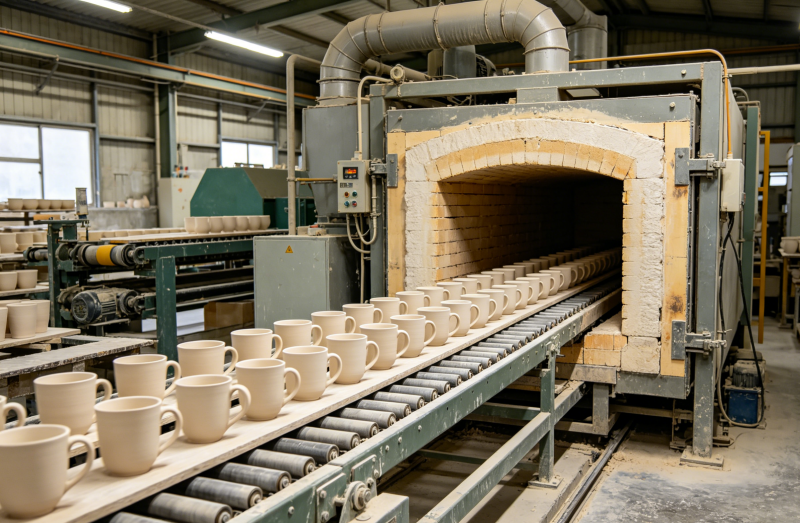
Over my 15 years in this business, I’ve seen this firsthand. A supplier can buy the best lead-free glaze, but that's only step one. The real challenge is controlling every step that follows. For example, the firing temperature is critical. If a kiln runs too cool, even by a small margin, the glaze won't mature and seal properly. This can create pathways for lead to leach out, even if the glaze formula itself is safe. Another common issue is cross-contamination. If a factory produces both leaded and unleaded products on the same equipment without strict cleaning protocols, contamination is a serious risk. The most overlooked risk, however, comes from third-party decals. A factory might produce a perfectly safe white mug, but then apply a brightly colored logo from another supplier. If that decal contains lead, the entire product is compromised. This is why a buyer's focus should shift from materials to processes.
| Buyer's Question | Surface-Level Answer (Material-Focused) | The Deeper Risk (Process-Focused) |
|---|---|---|
| Do you use lead-free glaze? | Yes, we buy lead-free glaze. | Was it fired at the correct temperature to seal it? |
| Is this mug lead-free? | Yes, it is a lead-free product. | Was the equipment properly cleaned to prevent cross-contamination? |
| Is the decoration safe? | The mug is safe. | Was the third-party decal independently tested for lead? |
How Can You Really Trust a Supplier's Safety Certificate?
A supplier sends you a folder full of certificates like ISO 9001 and BSCI. You see a test report and feel secure. But is that report for the exact product you're buying?
Don't just collect certificates; learn to read them. A factory audit like BSCI or ISO 9001 proves the supplier has good systems. But for product safety, you must demand a recent, third-party lab test report that is specific to your product and your production batch.

When a new buyer asks me for our certificates, I know what they are really asking: "Can I trust you?" A certificate is just a piece of paper. You need to know what it truly represents. Factory audits are a great starting point. Our ISO 9001 certification shows we have a quality management system. Our BSCI report shows we meet social compliance standards. These tell you we are an organized and ethical company. They are strong indicators that we have the processes in place to produce a safe product consistently. However, they do not test the product itself. The single most important document for a buyer is the batch-specific, third-party lab report from a reputable lab like SGS, Intertek, or TUV. When we prepare a shipment for a US client, we know they will check this report for several key things: the product description must match exactly, the test date must be recent, and the results must pass the required standard, like FDA or Prop 65.
| Document Type | What It Proves | What It Does NOT Prove |
|---|---|---|
| BSCI / ISO 9001 | The factory has mature management and process systems. | That your specific mug is lead-safe. |
| Supplier's Self-Declaration | The supplier is making a claim. | Anything, without a valid test report to back it up. |
| Batch-Specific Test Report | Your exact product passed a specific safety test recently. | That the next untested batch will also pass. |
Does the Color and Design of a Mug Affect Its Safety Risk?
You're choosing between a simple white mug and a brightly colored one. You make your decision based on design and market appeal. But that choice has hidden safety and cost implications.
Yes, color and design directly impact risk. Plain white or single-color mugs are generally the lowest risk. Brightly colored mugs, especially those with red, orange, or yellow, and those with complex on-glaze decals, historically used lead compounds and require much stricter testing.

This is a practical tip I give to all my clients. The visual appeal of a mug is directly tied to its potential risk profile. The reason is simple chemistry. Historically, lead compounds were the easiest way to produce brilliant and stable red, orange, and yellow pigments for ceramics. While modern, safe alternatives exist today, they are more expensive. A supplier cutting corners might source cheaper, lead-based pigments, especially for on-glaze decorations. An on-glaze decal is applied on top of the final glaze layer, making it more exposed than a decoration that is sealed under the glaze. This makes the quality and safety of the decal itself extremely important. As a manufacturer, we categorize risk this way:
- Low Risk: Plain white mugs. The materials and processes are simple and highly controllable.
- Medium Risk: Mugs with a single, stable color (like blue or green) applied under the glaze.
- High Risk: Mugs with bright red or orange colors, or large, complex decals applied on top of the glaze.
I often advise buyers who are working with a new factory to start with lower-risk designs. It simplifies the sourcing process and builds confidence. Once a strong, trusting relationship and a clear testing protocol are established, we can then confidently move on to more complex and colorful designs.
Conclusion
To ensure your ceramic mugs are safe, you must look beyond the "lead-free" label. Focus on your supplier's process controls, demand batch-specific lab reports, and understand that design complexity increases risk.