What's Really on a Professional Ceramic Mug Inspection Checklist?
Sourcing ceramic mugs seems simple, until a bad shipment arrives. A weak checklist can lead to huge financial losses and damage your reputation. Use a professional framework to prevent disaster.
A professional ceramic mug inspection checklist is a risk management tool that goes far beyond visual checks. It is a structured framework that assesses surface quality, structural integrity, material safety compliance, supplier certifications, and suitability for the product's final use case to protect your business.

From our 15 years of exporting mugs, the most common oversight we see from new buyers is focusing only on what they can see. A crack is obvious, but the biggest risks are often invisible. A real inspection is about protecting your investment, your brand, and your access to the market. It's a conversation you should be having with your supplier. If you want to source mugs like a professional and avoid costly mistakes, you need to think beyond a simple to-do list. Let's break down what a comprehensive inspection framework truly involves.
Is Inspecting Surface Appearance Just About Finding Cracks?
You know to look for cracks and chips. But subtle flaws can be just as damaging to your sales and brand. You need to know which minor defects are actually critical failures.
No, it’s not just about cracks. A professional inspection differentiates between minor issues, like a small pinhole on the base, and critical failures, like a pinhole on the lip, which is a hygiene risk[^1]. It is about understanding the business impact of each defect.
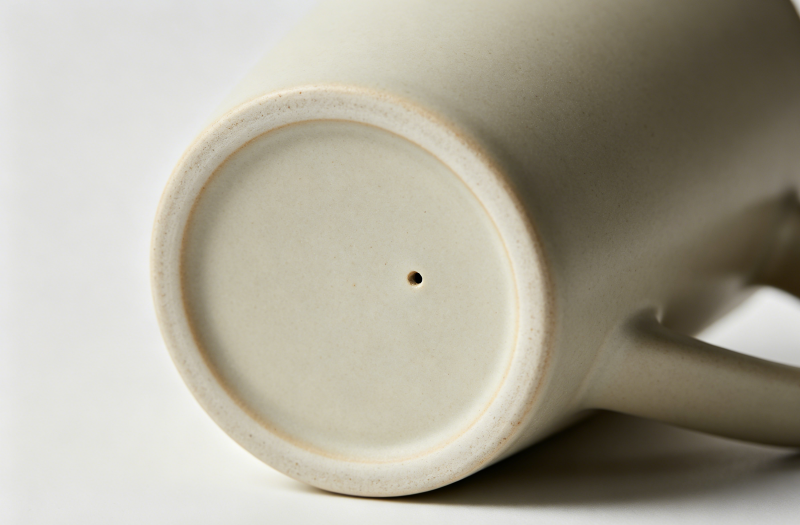
When a buyer for a large retail chain reviews samples, they aren't just looking for broken products. They are evaluating every mug through the eyes of their final customer. A tiny black spot on the handle might be acceptable for a cheap promotional giveaway, but on a premium mug for a department store, it's a reason for a customer return. This is why a detailed appearance check is so important. It protects your brand's perceived value. As a manufacturer, we categorize these defects to align with your business needs.
Differentiating Defect Types[^2]
We break down surface defects into categories based on their impact. This helps prioritize what matters.
| Defect Type | Location | Business Impact | Example |
|---|---|---|---|
| Critical | Food-contact surfaces (inside, lip) | Health and safety risk; potential for recall. | Pinhole or crack on the rim. |
| Major | Highly visible areas (handle, main body) | Affects product value and brand image; high chance of customer returns. | Uneven glaze, smeared decal, large black spot. |
| Minor | Less visible areas (bottom, under handle) | Low impact on usability or main appearance; unlikely to cause a return. | Small color spot on the base, slight texture. |
Understanding this helps you create clear standards with your supplier. It moves the conversation from "is it perfect?" to "does it meet the quality standard for my specific market and price point?" This is a much more productive and professional approach.
Why Are Structural Integrity and Durability a Hidden Risk?
The mug looks perfect on the shelf. But then your customers complain that handles are breaking or the mugs chip in the dishwasher. This hidden risk can destroy your brand's credibility.
A mug's structural integrity determines its lifespan and safety. Inspections must verify handle strength, chip resistance, and dishwasher or microwave safety. These factors directly impact customer satisfaction and your reputation, especially for wholesale to restaurants or retailers.

When we work with a new client who supplies restaurant chains, our first conversation is about durability. A beautiful mug that chips after three wash cycles is not a good product; it's a liability. The end use of the mug must define the inspection criteria. A mug given away at a trade show has a very different life expectancy than one used hundreds of times in a busy café. A professional buyer knows this and specifies the durability requirements upfront. This allows us, the manufacturer, to select the right materials and production processes to meet those needs. Ignoring this step is one of the easiest ways to end up with a product that fails in the real world.
Matching Durability to Use Case
You cannot apply a one-size-fits-all standard. The key is to match the structural requirements to the product's final destination.
For High-Volume Use (Restaurants, Hotels)
Durability is the number one priority. The two main concerns here are:
- Chip Resistance: Mugs will be stacked, knocked around, and put through industrial dishwashers. We often recommend using a stronger porcelain body or adding a rolled edge to the rim, which significantly improves chip resistance[^3]. The inspection should include checking the rim for any weaknesses.
- Thermal Shock Resistance[^4]: Mugs go from holding hot coffee to being washed in hot water. They must withstand rapid temperature changes without cracking. A simple lab test involves cycling mugs between hot and cold water to simulate this stress.[^5]
For Retail and Home Use
Here, a balance of aesthetics and function is key.
- Handle Strength: The handle is the most common point of failure. A proper inspection process includes periodic destructive testing in the factory, where we measure the force required to break the handle off[^6]. This data ensures the handles are attached correctly and can withstand normal use.
- Dishwasher & Microwave Safety: If you claim a mug is dishwasher or microwave safe, you must test it. This involves running samples through hundreds of dishwasher cycles to check for decal fading or glaze damage. For microwave safety, we test to ensure the mug doesn't get dangerously hot[^7].
Discussing these points with your supplier shows you understand the product lifecycle, not just the initial appearance.
How Do Material Safety and Certifications Protect Your Business?
You found a very cheap supplier who can deliver quickly. But their products get stopped at customs for containing lead, and your whole shipment is lost. This is not a hypothetical risk.
Certifications are not a bonus; they are your ticket to your target market. Verifying material safety (lead and cadmium levels)[^8] and supplier audits (BSCI, ISO 9001[^9]) prevents your shipment from being rejected, fined, or recalled. It’s the single most important financial risk to mitigate.
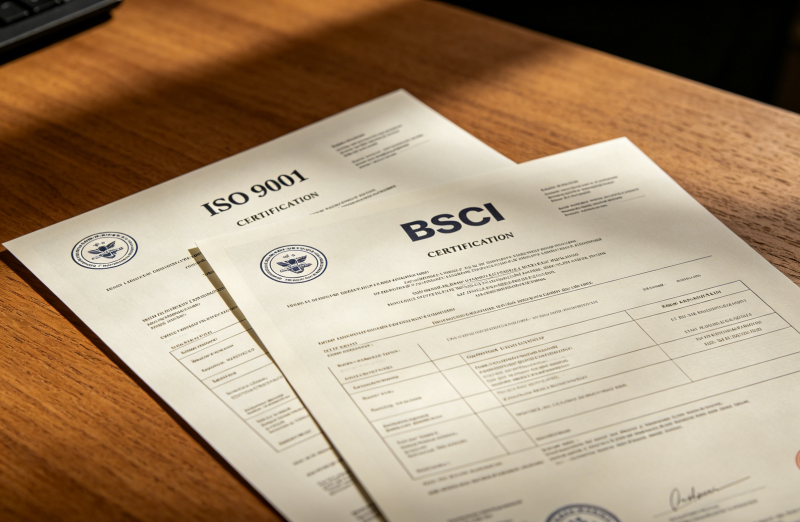
From our 15 years of exporting to Europe and the Americas, I can tell you that the most expensive mistake is a compliance failure. A container of mugs with minor glaze defects might require a discount. A container of mugs that fails a lead test at the port is worthless. You may not even be able to get it back. This is why the first questions a professional buyer should ask are about compliance and certifications. These documents are proof that the supplier understands and meets the legal requirements of your country. As a manufacturer holding ISO 9001 and BSCI certifications, we see these not as expenses, but as essential tools that protect both us and our clients.
Understanding Key Certifications and Standards
Navigating international regulations can be confusing. Here is a simple breakdown of what you should be looking for.
| Certification / Standard | What It Means for You (The Buyer) | Why It's Critical |
|---|---|---|
| ISO 9001 | The factory has a documented and audited Quality Management System. This shows they have consistent processes to control quality. | It demonstrates reliability and a professional approach to production, reducing your risk of errors. |
| BSCI (or similar)[^10] | The factory is audited for social compliance (fair wages, safe working conditions). | Protects your brand's reputation. Most large retailers will not work with non-compliant factories. |
| FDA / EU Food Grade[^11] | The mugs are tested for lead and cadmium leaching and are certified safe for contact with food. | This is a legal requirement for market access in the USA and Europe. Non-compliance means rejection. |
| California Prop 65[^12] | The mugs meet the stricter chemical safety standards required for sale in California. | If you sell in California, this is non-negotiable and requires specific testing and labeling. |
When you request these documents, don't just accept a PDF. Ask the supplier to explain their process. For example, "How do you ensure every batch is tested for lead and cadmium?" Their answer will tell you if the certificate is just a piece of paper or part of a living quality system.
Can Your Inspection Process Actually Vet the Supplier?
You send your checklist to three different suppliers. All of them say "no problem." But how do you know which one is truly reliable and which one is just telling you what you want to hear?
Yes. A great supplier should be able to discuss your inspection needs using this same framework. Ask them about their controls for appearance, structure, and compliance. Their answers reveal their expertise and partnership potential. A low price means nothing if they can't protect you from risk.

Your inspection checklist shouldn't be a secret test. It should be the foundation of your conversation with a potential manufacturing partner. When we onboard a new wholesale client, we don't start by talking about our lowest price. We start by asking, "Who is your customer?" and "What market are you selling in?" The answers tell us which inspection points are non-negotiable. A supplier who just gives you a low price without asking these questions is not a partner; they are a risk. Your goal is to find a manufacturer who thinks like you do—in terms of quality, compliance, and long-term success.
Using the Checklist as a Discussion Tool
Turn your inspection framework into a set of questions to interview potential suppliers. Their ability to answer them demonstrates their experience and reliability.
Questions to Ask a Potential Supplier:
- On Appearance: "How do you ensure color consistency across a 50,000-piece order? Can you show me your boundary samples for acceptable vs. non-acceptable defects?"
- On Structure: "Based on my need for restaurant-grade mugs, what specific raw materials and firing processes do you recommend to improve chip resistance?"
- On Compliance: "Can you walk me through your process for batch testing for lead and cadmium for EU regulations? Can I see a recent test report?"
- On Their System: "Could you show me your internal quality control checklist? How do your inspectors use it on the production line?"
A strong supplier will welcome these questions. They will have clear, confident answers because these processes are part of their daily operations. They will show you their BSCI audit report, explain their ISO 9001 system, and discuss defect classifications with you. A weak supplier will hesitate, give vague answers, or try to steer the conversation back to price. The one who can confidently guide you through this framework is the partner who will protect your business.
Conclusion
Your inspection checklist is not just a list of defects. It is a powerful business tool to manage risk, ensure compliance, and choose the right manufacturing partner for long-term success.
[^1]: "Sanitizing equipment and food contact surfaces | UMN Extension", https://extension.umn.edu/food-safety-basics/sanitizing-equipment-and-food-contact-surfaces. A source from a food safety authority, such as the FDA or a public health institution, can explain that porous, cracked, or pitted food-contact surfaces are difficult to clean and sanitize, potentially allowing for the entrapment and growth of harmful bacteria. Evidence role: mechanism; source type: government. Supports: The claim that imperfections like pinholes on food-contact surfaces can be a hygiene risk..
[^2]: "[PDF] ISO 2859-1 - UNT Chemistry", https://chemistry.unt.edu/~tgolden/courses/iso2859-1.pdf. A source describing Acceptance Quality Limit (AQL) inspection, such as the ISO 2859 standard, can explain the common practice of classifying product defects as 'critical' (posing a safety risk), 'major' (affecting usability or saleability), and 'minor' (a small deviation from standards), which guides the acceptance or rejection of a production lot. Evidence role: definition; source type: institution. Supports: The concept of classifying defects into critical, major, and minor categories..
[^3]: "Post-fatigue fracture load, stress concentration and mechanical ...", https://pmc.ncbi.nlm.nih.gov/articles/PMC10336509/. A source in materials science or ceramic engineering can explain that a rolled or beaded rim distributes impact forces over a wider area and avoids the stress concentrations found on sharp corners, thereby increasing the object's resistance to chipping. Evidence role: mechanism; source type: education. Supports: The claim that a rolled edge improves chip resistance..
[^4]: "Thermal shock - Wikipedia", https://en.wikipedia.org/wiki/Thermal_shock. An encyclopedia or materials science resource can define thermal shock as a type of mechanical stress that occurs when an object undergoes a rapid change in temperature, causing different parts of the object to expand or contract at different rates, which can lead to cracking in brittle materials like ceramics. Evidence role: definition; source type: encyclopedia. Supports: The definition of thermal shock and its relevance to ceramic materials..
[^5]: "Thermal shock - Digitalfire", https://digitalfire.com/glossary/thermal+shock. A source from a standards organization like ASTM International can describe standard test methods for determining the thermal shock resistance of ceramic materials, which often involve quenching a heated specimen in a cold medium (like water) and inspecting for damage. Evidence role: general_support; source type: institution. Supports: The description of a thermal shock test for ceramics..
[^6]: "An Assessment of the Strength and Physical Properties of Edible ...", https://pmc.ncbi.nlm.nih.gov/articles/PMC11595841/. A paper on materials testing or a standard from an organization like ASTM can describe the use of mechanical tests, such as pull tests or three-point bend tests, to quantify the attachment strength of components like ceramic handles, providing objective data on product durability. Evidence role: general_support; source type: paper. Supports: The use of mechanical force testing to evaluate the strength of ceramic components.. Scope note: The source may describe the general method for testing materials rather than a specific standard for mug handles.
[^7]: "Ceramic material revs up microwaving | Penn State University", https://www.psu.edu/news/research/story/ceramic-material-revs-microwaving. A scientific source can explain that some ceramic clays or glazes contain metallic oxides or water molecules that absorb microwave energy through dielectric heating, causing the mug itself to become hot, sometimes to a dangerous degree. Evidence role: mechanism; source type: education. Supports: The reason why some ceramic mugs become hot in a microwave..
[^8]: "Guidance on Imported Traditional Pottery Intended for Use with Food", https://www.fda.gov/regulatory-information/search-fda-guidance-documents/guidance-industry-safety-imported-traditional-pottery-intended-use-food-and-use-term-lead-free. Regulations from bodies like the U.S. Food and Drug Administration (FDA) and the European Commission set specific, legally enforceable limits on the amount of lead and cadmium that can leach from ceramic food-contact articles, making compliance a prerequisite for market access. Evidence role: general_support; source type: government. Supports: The existence of regulations for lead and cadmium in ceramicware..
[^9]: "ISO 9000 family - Wikipedia", https://en.wikipedia.org/wiki/ISO_9000_family. The International Organization for Standardization (ISO) defines ISO 9001 as the international standard that specifies requirements for a quality management system (QMS), helping organizations to consistently provide products and services that meet customer and regulatory requirements. Evidence role: definition; source type: institution. Supports: The definition and purpose of the ISO 9001 standard..
[^10]: "What is amfori BSCI – the audit requirement, benefits and ... - Eurofins", https://www.eurofins.com/assurance/resources/articles/what-is-amfori-bsci-audit-requirement-benefits-and-process/. A source from amfori, the organization that runs the Business Social Compliance Initiative (BSCI), can confirm that it is a system to help companies monitor and assess workplace standards across the global supply chain, based on a code of conduct that covers topics like fair remuneration and occupational health and safety. Evidence role: definition; source type: institution. Supports: The definition and purpose of the Business Social Compliance Initiative (BSCI)..
[^11]: "CPG Sec 545.450 Pottery (Ceramics); Import and Domestic - FDA", https://www.fda.gov/regulatory-information/search-fda-guidance-documents/cpg-sec-545450-pottery-ceramics-import-and-domestic-lead-contamination. The U.S. FDA's Compliance Policy Guide (e.g., CPG Sec. 545.450) and the EU's Regulation (EC) No 1935/2004 on food contact materials provide the legal framework and specific migration limits for lead and cadmium from ceramicware, making testing a legal necessity for market entry. Evidence role: case_reference; source type: government. Supports: The legal requirement in the US and EU for testing lead and cadmium in food-contact ceramics..
[^12]: "Proposition 65 Warnings Website - Your right to know - CA.gov", https://www.p65warnings.ca.gov/. A source from California's Office of Environmental Health Hazard Assessment (OEHHA) can confirm that Proposition 65 requires businesses to provide warnings to Californians about significant exposures to chemicals that cause cancer, birth defects or other reproductive harm, including lead, which is often relevant for ceramic products. Evidence role: definition; source type: government. Supports: The requirements of California's Proposition 65..