Sourcing ceramic mugs for your brand can feel like a frustrating price war. You're constantly balancing quotes, worried that a seemingly small price difference will eat into your margins. But the real danger isn't paying a few cents more; it's the catastrophic cost of a bad batch. This is why understanding what happens inside a ceramic mug manufacturing factory is the most critical skill for any serious importer.
A ceramic mug manufacturing factory is a complex system of controlled processes designed to transform raw materials like clay and glaze into durable, finished products. The key function isn't just production, but the rigorous application of quality control at every stage—from clay mixing to final inspection—to manage defect rates and ensure the final product meets brand and safety standards.
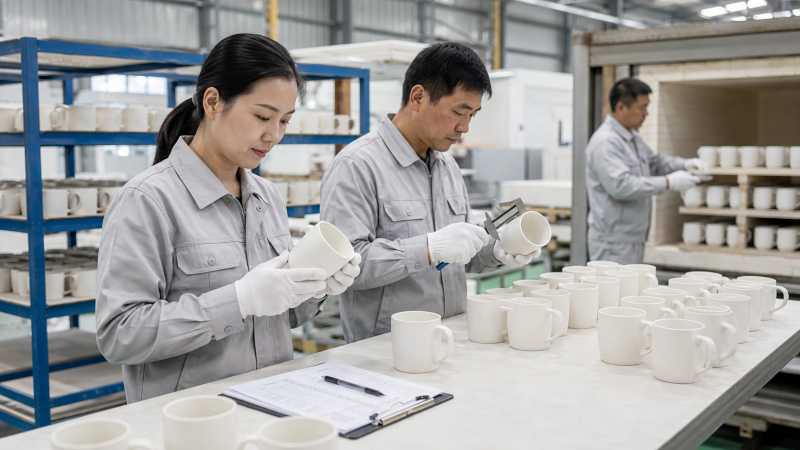
That definition might sound a bit academic. But what do those "controlled processes" and "quality control" systems actually mean for your business, your brand reputation, and your bottom line? Let's go beyond the assembly line tour and look at the critical decisions that separate a reliable supplier from a business risk.
Why is a Cheaper Mug Often a More Expensive Mistake?
Are you tempted by that rock-bottom quote that seems too good to be true? The immediate savings can feel like a smart business move. However, I've seen this decision lead to disaster, turning potential profits into a costly lesson in brand management.
A cheaper mug is often a more expensive mistake because the low price is frequently achieved by cutting corners on essential ceramic mug quality control. This results in a higher percentage of defects in your shipment, leading to customer complaints, negative reviews, and costly returns that damage your brand's reputation.
Dive Deeper: A Real-World Sourcing Story
I remember a client a few years back, an ambitious e-commerce seller launching their first branded homeware line. They were sharp, had great marketing instincts, and were understandably focused on managing their startup costs. We provided a quote, but they found another supplier offering a 15% lower price. They saw it as a straightforward win for their budget.
Six months later, they called me. The conversation was one I've had too many times. Their first container had arrived, and while the "hero" samples looked perfect, the bulk production was a nightmare.
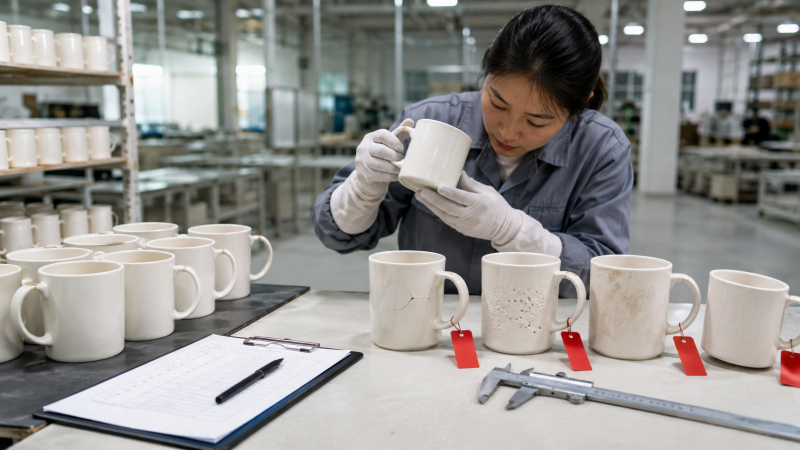
- About 20% of the mugs had visible pinholes in the glaze, some right on the lip where a customer would drink.
- A significant number had color inconsistencies, making their carefully designed branding look cheap and unprofessional.
- Worse, they started getting customer emails with photos of mugs cracking in the dishwasher.
The initial 15% savings evaporated instantly. They had to deal with a flood of returns, issue refunds, and manage a torrent of one-star reviews. The "cheap" mugs ended up costing them thousands in lost revenue, freight costs for unsellable goods, and—most painfully—the trust of their new customer base. They learned the hard way that the true cost of a product isn't its FOB price; it's the price plus the cost of failure. When they came back to us, the conversation wasn't about price. It was about reliability and protecting their brand. This experience is a stark reminder that when you source, you're not just buying a product; you're buying a result.
How Does a Factory's Quality Control Reduce Your Business Risk?
When you see a slightly higher price from one ceramic mug manufacturing factory compared to another, it's easy to assume it's just a higher margin. But what are you actually paying for? You're paying for a lower business risk, and that investment is made on the factory floor.
A factory’s ceramic mug quality control system directly reduces your business risk by implementing a strict scrap rate. This means they intentionally discard mugs with unacceptable flaws during the production process, ensuring that a higher quality, more consistent product is what ultimately gets packed and shipped to you.

Dive Deeper: The Power of a High Scrap Rate
The "scrap rate" is one of the most important, yet least discussed, metrics in our industry. It's the percentage of products a factory willingly throws away because they don't meet quality standards.
- A low-cost factory might operate with a 2-3% scrap rate. They achieve their low price by maximizing yield, meaning they allow borderline-defective products to pass inspection. They are essentially transferring the risk of defects from their P&L to yours.
- A quality-focused
ceramic mug supplierlike us might have a scrap rate of 8-15%, or even higher for complex designs. That higher price you pay is directly funding the cost of us identifying and discarding a flawed mug before it ever gets near your customer.
You are paying for us to take the loss, so you don't have to.
H3: Defining Quality: A-Grade vs. Critical Defects
Not all flaws are created equal. A key part of professional sourcing is understanding the difference between a minor, acceptable imperfection and a critical defect that will trigger a customer return. As a mug manufacturer in China with 15 years of export experience, we classify these very clearly. Here is a typical breakdown you should discuss with any potential supplier:
| Defect Type | A-Grade (Acceptable for Premium Brands) | Critical Defect (Unacceptable) |
|---|---|---|
| Pinholes | Max 1-2 tiny spots (<0.5mm), not on the drinking lip or prominent on the handle. | Multiple pinholes, any size on the lip, or clusters of spots on the body. |
| Black Spots/Dirt | One tiny spot (<0.5mm) on the lower body or bottom. | Any visible spots on the upper half, inside the mug, or on the handle. |
| Glaze Unevenness | Very slight pooling on the bottom foot ring, not visible when upright. | Visible drips, bare spots, or uneven color on the main body of the mug. |
| Chips & Cracks | Zero tolerance. Any chip or crack is a critical defect. | Any chip or crack is a safety hazard and an immediate rejection. |
| Handle Alignment | Appears straight to the naked eye; slight (<1mm) deviation only visible upon close measurement. | Visibly crooked or slumped handle. |
When you evaluate a ceramic mug supplier, ask them for their defect classification guide. A professional factory will have one and be happy to discuss it. If they can't define their A-Grade standard, it's a major red flag.
What Happens During the Ceramic Mug Production Process?
A ceramic mug seems simple, but its journey from clay to your warehouse is a multi-stage gauntlet where things can easily go wrong. Why should you, the buyer, care about the ceramic mug production process? Because each step is a quality checkpoint and a cost driver.
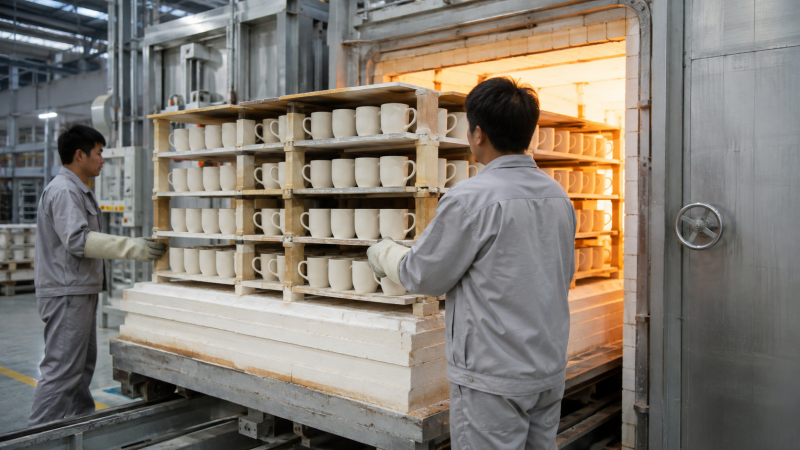
The ceramic mug production process is a sequence of stages including clay preparation, forming, firing, glazing, and decoration. Each step requires precise control over variables like temperature and timing, as any deviation can introduce flaws that compromise the final product's quality, durability, and safety.
Dive Deeper: Key Stages and Their Impact on Quality
Instead of a generic tour, let's look at the process through the lens of risk and quality. This is what we monitor inside our ceramic mug manufacturing factory every day.
- Clay Preparation & Forming: It starts with mixing kaolin, feldspar, and quartz. If the mix is inconsistent or has air bubbles, it can cause cracks during firing. The forming (either by press or casting) determines the mug's shape and wall thickness. Inconsistent thickness is a primary cause of stress fractures.
- Bisque Firing: The formed "greenware" is fired at a relatively low temperature (~800°C) to harden it into a porous state called "bisque." This makes it strong enough to handle for glazing. Rushing this stage or uneven heat can lead to hidden weaknesses.
- Glazing: The bisque mug is dipped in a liquid glaze suspension. The thickness of the glaze application is critical. Too thin, and the color is weak; too thick, and it can run or blister during the final firing. This is where we ensure a smooth, even coat.
- Glost Firing: This is the high-temperature firing, typically from 1200°C to 1300°C. This firing vitrifies the clay body (making it non-porous and strong) and melts the glaze into a hard, glassy layer. This is the most crucial step for durability. Mugs fired at lower temperatures to save energy are more prone to chipping and are often not fully dishwasher or microwave safe.
- Decoration & Final Firing: For
custom ceramic mugswith decals, a third firing is required. The decal is applied, and the mug is fired again at a lower temperature to fuse the design permanently to the glaze.
H3: The Hidden Risk of Customization
Let's talk about that third firing for decals. From a buyer's perspective, it's just adding a logo. From a manufacturing perspective, it's adding another major risk point. Every time we fire a mug, we risk losing it. A complex, multi-color decal might require a very precise temperature curve. A slight deviation can cause colors to brown or fade. For a decal run, we often budget for an additional 3-5% scrap rate on top of the normal production losses.
This is why custom ceramic mugs cost more. It's not just the price of the decal or the labor to apply it. It's the factory's cost to cover the increased risk of failure to ensure your final product is perfect. When you see that higher cost, you're seeing a supplier who understands the risks and is pricing responsibly to deliver a quality outcome.
How Can You Turn Production Details into a Marketing Advantage?
So you've chosen a reliable supplier who uses high-quality processes. You've paid a fair price for a lower-risk product. Now what? The best brands don't just pocket the quality—they sell it.
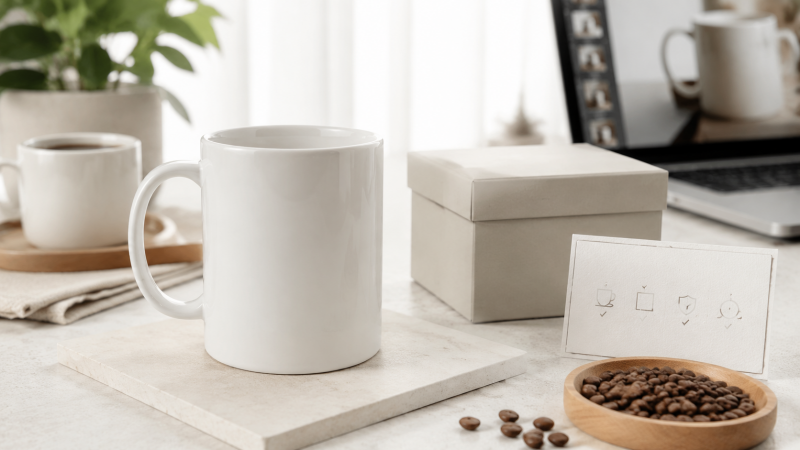
You can translate the technical production details from your ceramic mug manufacturing factory into powerful, benefit-driven marketing stories. This helps you justify a premium price to your customers by clearly communicating the superior quality, durability, and safety of your product.
Dive Deeper: Translating Factory Specs into Customer Benefits
Your customers don't care about glost firing temperatures, but they do care about having a favorite mug that lasts for years. Your job is to connect the dots for them. As an experienced ceramic mug supplier, I often help my clients build this bridge.
Here’s how to turn our factory facts into your marketing copy:
| Factory Fact | Your Marketing Angle | Customer Benefit |
|---|---|---|
| Fired at 1300°C | "Our mugs are high-fired for maximum durability." | "This mug is built to withstand daily use, resisting chips and cracks. It's fully microwave and dishwasher safe." |
| Lead-Free, Food-Safe Glaze | "Crafted with non-toxic, lead-free glazes." | "Sip with peace of mind. Your health and safety are our top priority." |
| Strict A-Grade Inspection | "Each mug is individually inspected to ensure a flawless finish." | "You're receiving a piece of artisanal quality, free from the imperfections you'd find in mass-produced alternatives." |
| Vitrified Ceramic Body | "Made from professional-grade, fully vitrified ceramic." | "The non-porous finish won't absorb odors or stains, keeping your coffee tasting pure and your mug looking new." |
Don't just say your mug is "high-quality." Prove it. Tell the story of its creation. By explaining why your product is better, you move the conversation away from price and toward value. You're not just selling a mug; you're selling durability, safety, and a superior user experience.
Frequently Asked Questions
How do I find a reliable mug manufacturer in China?
Look for a mug manufacturer in China with a long history of exporting to your target market (e.g., Europe, North America). Ask for certifications like ISO9001 (for quality management) and BSCI (for social compliance). Most importantly, engage them in a deep conversation about their quality control processes and defect standards.
What is a typical minimum order quantity (MOQ) for custom ceramic mugs?
MOQs vary greatly depending on the factory and the complexity of the design. For simple one-color mugs, MOQs might be around 1,000 to 3,000 pieces per design. For custom ceramic mugs with complex decals or unique shapes, the MOQ could be higher to justify the setup costs and increased scrap rate risk.
What does a BSCI certificate mean when choosing a supplier?
A Business Social Compliance Initiative (BSCI) audit indicates that a factory is committed to ethical and socially responsible practices, including fair wages, safe working conditions, and no child labor. For brands concerned with ethical sourcing, choosing a supplier with a valid BSCI report is a critical step in protecting your brand's reputation. Always ask for the report to verify its validity.
How are mugs packed to prevent breakage during shipping?
Mugs are typically packed in individual cardboard dividers within a larger, 5-ply master carton. For e-commerce sellers, we often develop custom mail-order boxes (MOB) with reinforced structures that pass a 1-meter drop test. Discussing your specific sales channel (retail vs. online) with your supplier is key to getting the right packaging solution.
Conclusion
Choosing a supplier is one of the most consequential decisions you will make for your brand. The tour inside a ceramic mug manufacturing factory reveals that the sticker price is only a tiny part of the story. The real value lies in the unseen systems: the meticulous quality control, the willingness to accept a higher scrap rate, and the deep understanding of how material science and process control create a product that delights customers instead of disappointing them. A lower price is not a saving if it costs you your brand's reputation.
By focusing on a supplier's quality process, you aren't just buying a mug; you are investing in a low-risk, high-reward partnership. You are acquiring a product with a built-in story of quality that you can pass on to your customers.
If you're ready to build a reliable supply chain with a partner who prioritizes your brand's long-term success, our team is here to help. Contact us for a consultation on your next project.