Struggling to lower the cost of ordering wholesale mugs without sacrificing quality? Many buyers focus only on the unit price, but then get hit with unexpected fees, high breakage rates, and costly delays. To truly reduce your expenses and protect your profit margins, you need to look at the total cost of ownership, not just the price tag on a single mug.
To reduce costs when ordering wholesale mugs, you must strategically optimize your order across four key areas: 1) choosing standard mug shapes to avoid mold fees, 2) selecting cost-effective decoration methods for your design and volume, 3) investing in protective packaging to minimize breakage, and 4) partnering directly with an experienced manufacturer to get expert cost-saving advice. This approach minimizes your total landed cost, not just the per-unit price.
Now that you know the secret isn't just finding the cheapest price, let's explore how these strategic decisions work in practice. I'll share some insights from my 15 years of experience helping buyers from Europe and South America make smarter sourcing choices.
How Does Mug Shape Affect the Cost of Wholesale Mugs?
You have a vision for a completely unique mug that will make your brand stand out. But when you get a quote, the high upfront mold fee is a shock to your budget. The key is understanding when a custom shape is a wise investment versus when a standard shape is the more profitable choice.
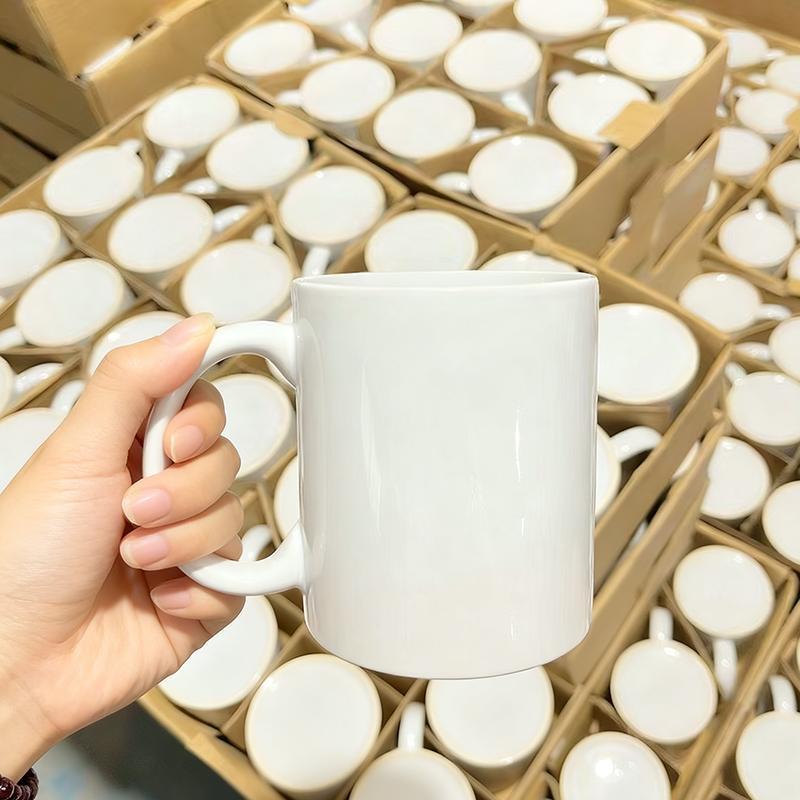
The most significant way to control costs is by choosing a mug shape. A custom shape requires a new, expensive production mold, while a standard shape uses an existing one, completely eliminating this high upfront cost and often lowering the minimum order quantity (MOQ).
Dive Deeper: The Mold Cost vs. Customization Trade-Off
As a manufacturer, one of the first questions we ask a new client is about the shape of their desired mug. This single decision has the biggest impact on the initial investment required.
What buyers often don't realize is the complex process behind a custom mold. It’s not just one piece of metal. The process involves:
- 3D Design & Prototyping: Creating a digital model and then a physical master sample for approval.
- Master Mold Creation: Crafting a high-precision master mold from which all production molds will be made.
- Production Mold Casting: Using the master mold to create dozens or even hundreds of plaster production molds. These plaster molds wear out over time and need to be replaced.
This entire process involves skilled labor and significant material costs, which is why a new mold can cost several thousand dollars. This investment only makes financial sense for buyers with a very large, committed order—typically tens of thousands of units—or for established brands where a unique shape is a core part of their identity.
For most wholesalers and e-commerce sellers, the smarter financial move is to use one of our existing, standard mug shapes. Here’s why:
- Zero Mold Fee: This is the most obvious and immediate saving.
- Lower MOQ: Because the molds already exist, we can accommodate smaller production runs, which is perfect for testing a new design or for businesses with limited capital.
- Faster Lead Times: We can skip the entire mold creation process, which can take several weeks, and move directly to production.
"Standard" doesn't have to mean "boring." You can create a highly unique product using a standard shape by getting creative with glazes, decoration, and handle colors.
Here’s a simple breakdown of the trade-offs:
| Feature | Standard Shape Mugs | Custom Shape Mugs |
|---|---|---|
| Upfront Cost | $0 (No mold fee) | High (Thousands for new mold) |
| Unit Price | Standard | Standard |
| Minimum Order (MOQ) | Lower (e.g., 1,000–3,000 pcs) | Higher (e.g., 10,000+ pcs) |
| Lead Time | Faster | Slower (add 3-4 weeks for mold) |
| Uniqueness | Achieved via decoration/glaze | Shape is completely unique |
| Best For | Most e-commerce sellers, wholesalers, promotional campaigns | Large, established brands with high volume needs |
A common mistake is assuming a custom shape is necessary for branding. In my experience, a compelling design on a classic mug shape almost always delivers a better return on investment.
What's the Most Cost-Effective Way to Decorate Wholesale Mugs?
You've spent time creating a beautiful, multi-color logo for your brand. However, you discover that printing this design on a ceramic mug is surprisingly expensive, threatening your budget. The solution is to choose a decoration method that matches both your design's complexity and your order quantity.
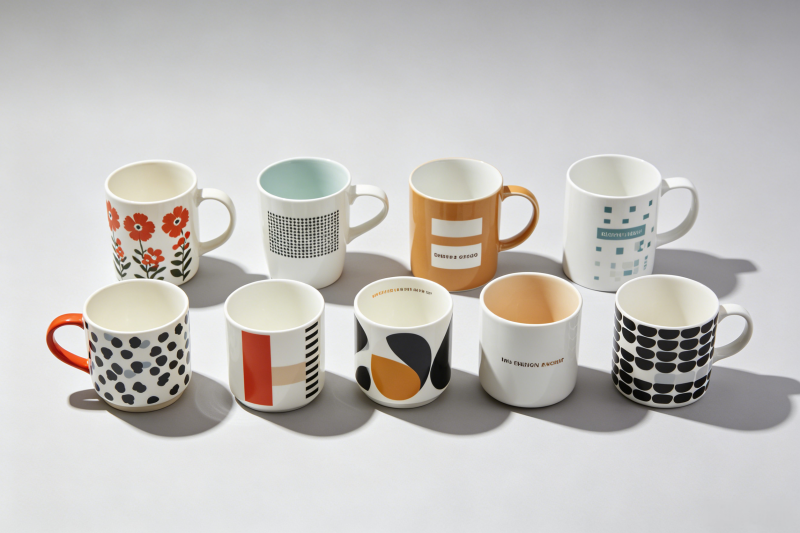
For most orders, decal printing is the most versatile and cost-effective method for logos with multiple colors or fine details. For very simple, one or two-color designs at high volumes, direct screen printing can be cheaper. It's a balance between visual complexity and production efficiency.
Dive Deeper: Choosing the Right Decoration for Your Budget
The cost of decorating wholesale mugs can vary dramatically. A simple one-color logo will be far cheaper than a full-wrap photographic image. As a manufacturer, we help our clients select the best method to achieve their look without overspending.
Here are the most common methods and their cost implications:
H3: Decal Printing
This is our most frequently used method for export orders. The process involves screen-printing the design onto special decal paper, which is then manually applied to the mug. The mug is then fired in a kiln, which fuses the design permanently onto the glaze.
- Pros: Excellent for multi-color, detailed, and tightly registered logos. High durability and dishwasher safe.
- Cons: Application is labor-intensive, so the cost per unit doesn't drop as dramatically at massive volumes compared to automated methods.
- Best for: Most B2B orders with standard company logos (2-5 colors) in quantities of 1,000 to 50,000 pieces. It offers the best balance of quality and price for the majority of our clients.
H3: Direct Screen Printing
In this method, ink is pushed through a screen mesh directly onto the mug's surface. A separate screen is needed for each color.
- Pros: Very cost-effective for simple, one or two-color designs at very high volumes (over 10,000 units) because the process can be automated.
- Cons: Not suitable for complex, multi-color designs that require precise alignment. The print is less crisp than a decal.
- Best for: Large promotional giveaways with a simple logo or text.
H3: Sublimation Printing
Sublimation uses heat to transfer special dye onto a mug with a polyester coating. It allows for vibrant, full-color, photographic images that can wrap around the entire mug.
- Pros: Perfect for photorealistic images and complex, colorful patterns. Low setup cost makes it good for smaller runs.
- Cons: The print is only on the surface coating, which can be less durable against scratches over a long time compared to a fired decal. It requires a special poly-coated mug.
- Best for: Personalized gift mugs, e-commerce sellers specializing in print-on-demand, or designs with gradients and photos.
Here is a comparison to help you decide:
| Method | Best for Design Complexity | Cost-Effectiveness | Durability |
|---|---|---|---|
| Decal Printing | High (Multi-color, fine detail) | Excellent for most volumes | Very High (Kiln-fired) |
| Direct Screen Print | Low (1-2 solid colors) | Best for very high volumes | High |
| Sublimation | Very High (Photographic, full-wrap) | Good for small to medium volumes | Medium to High |
A frequent question we get is, "Can you make my 8-color logo cheaper?" Sometimes the answer isn't about changing the printing method but simplifying the design to 4 colors. This simple change can reduce costs by 15-20% without losing brand impact. This is the kind of practical advice a manufacturing partner can provide.
Can Better Packaging Actually Lower Your Wholesale Mugs Order Cost?
To save a few cents per unit, you opt for the cheapest bulk packaging available. But when your shipment arrives, you discover that 10% of the mugs are broken, wiping out your profit on the entire order and leaving you out of stock. Smart packaging is not an expense; it's an investment that protects your bottom line.
Yes, investing in better packaging directly lowers your total cost. It drastically reduces the breakage rate, which prevents lost inventory, avoids the cost of replacing goods, and eliminates lost sales from being out of stock. The small extra cost per box is easily offset by the value of the goods it saves.
Dive Deeper: The True Cost of Breakage
Ceramics are fragile. This is an unavoidable fact. The cost of a wholesale mugs order isn't just what you pay us; it's the cost of the goods that arrive safely and are ready to sell. Focusing only on minimizing the packaging cost is a classic rookie mistake.
Let's do some simple math. Imagine you order 3,000 mugs at $2.00 per mug. Your total product cost is $6,000.
-
Scenario A: Cheap Packaging
- Packaging cost: $0.10 per mug = $300
- Breakage rate: A realistic 8% for cheap bulk packaging.
- Mugs lost: 3,000 * 8% = 240 mugs
- Value of lost goods: 240 * $2.00 = $480
- Total Cost: $6,000 (mugs) + $300 (packaging) + $480 (loss) = $6,780
- Effective Cost Per Usable Mug: $6,780 / 2,760 = $2.46
-
Scenario B: Smart Packaging
- Packaging cost: $0.30 per mug (e.g., individual box + master carton) = $900
- Breakage rate: A safe <1% for good packaging. Let's say 0.5%.
- Mugs lost: 3,000 * 0.5% = 15 mugs
- Value of lost goods: 15 * $2.00 = $30
- Total Cost: $6,000 (mugs) + $900 (packaging) + $30 (loss) = $6,930
- Effective Cost Per Usable Mug: $6,930 / 2,985 = $2.32
As you can see, the "more expensive" packaging option resulted in a lower effective cost per sellable mug. This calculation doesn't even include the cost of shipping replacements, damage to your brand reputation, or lost sales from stock-outs.
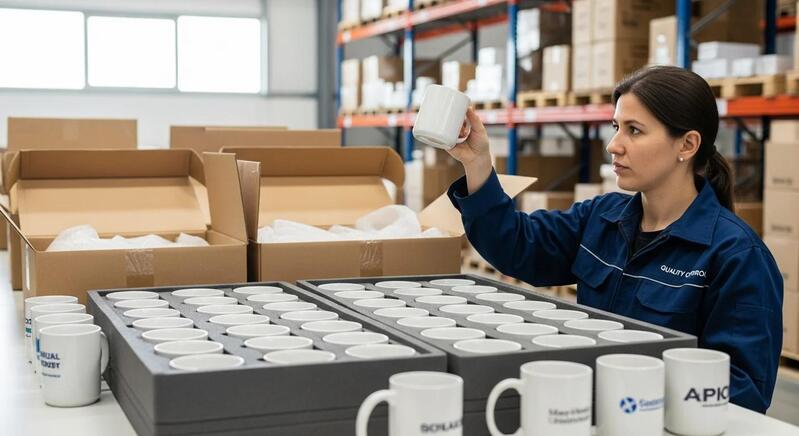
For our e-commerce clients, we always recommend "mail-order safe" packaging. This often means a 3-ply or 5-ply individual box that has passed a drop test. It costs more upfront, but it ensures the product reaches the end consumer intact, which is critical for online sellers. Our experience as a BSCI and ISO9001 certified factory means we have standardized processes for testing and recommending the right packaging for your distribution channel.
How Does Your Supplier Choice Impact Wholesale Mug Costs?
You're comparing quotes for wholesale mugs and find one that is 15% cheaper than all the others. It's tempting, but the quote comes from a trading company that can't answer basic production questions. Choosing the cheapest quote without vetting the supplier can lead to costly communication errors, quality failures, and delays.
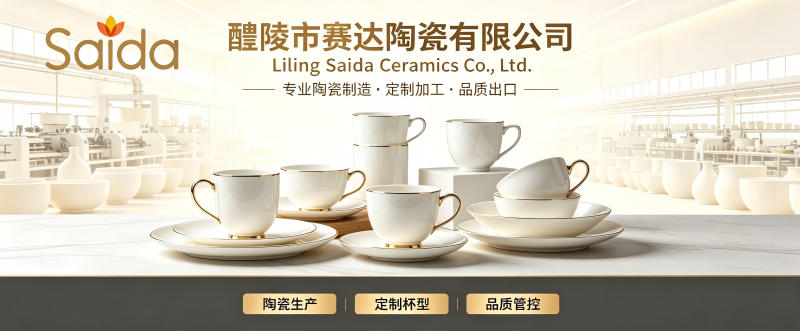
Your supplier choice is a powerful cost-management tool. Working directly with an experienced manufacturer gives you access to on-the-ground expertise. They can provide actionable advice on material choices, design tweaks, and process optimizations to lower your total cost in ways a trading agent or middleman simply cannot.
Dive Deeper: Partnering for Profitability
In our industry, there are two main types of suppliers: manufacturers (like us) and trading companies.
-
Trading Companies are middlemen. They find a factory to produce your order and add their own margin. They can be useful for sourcing a wide variety of different products, but they lack deep product knowledge. They can't advise you on how to make your mug design more cost-effective to produce because they aren't the ones producing it. Communication is often slower as they have to relay messages back and forth.
-
Manufacturers are the source. When you work with us, you are speaking directly to the people who will be making your product. This has huge cost benefits:
- No Middleman Margin: You aren't paying an extra layer of commission.
- Expert Advice: This is the most important part. We can look at your design and say, "If you reduce the number of colors from 6 to 4, you can save $0.15 per unit." Or, "This handle shape is difficult to produce and will have a higher defect rate. We suggest this similar, more reliable alternative." This proactive, expert advice saves you money and prevents problems.
- Process Transparency: As an ISO9001-certified factory, our production and quality control processes are standardized and documented. This reduces the risk of costly errors and ensures consistent quality from order to order.
- Relationship & Trust: Building a long-term relationship with a manufacturer leads to better service, more flexible terms over time, and a partner who understands your business needs. We want your business to succeed so you continue to place orders with us.
A common issue we see is a buyer bringing us a design from a trading company that is needlessly complex and expensive to make. We often have to re-engineer the product with the client to make it commercially viable. By starting with a manufacturing partner, you get this optimization for free, right from the beginning.
Frequently Asked Questions
What is a typical MOQ for wholesale mugs?
For standard-shaped ceramic mugs using our existing molds, the MOQ is typically between 1,000 and 3,000 pieces per design. For a fully custom shape that requires a new mold, the MOQ is much higher, often starting at 10,000 pieces to justify the high upfront mold investment.
How long does a custom production mold last?
The plaster production molds used in slip casting have a limited lifespan. Each mold can typically be used for about 80-100 cycles before it loses its detail and needs to be replaced. A single master mold, however, can be used to create hundreds of these production molds over time.
Is it cheaper to source wholesale mugs from China?
Yes, sourcing from a direct manufacturer in China, especially from a ceramic hub like Liling where we are based, is generally more cost-effective due to economies of scale, specialized labor, and a mature supply chain. The key is to account for shipping, tariffs, and to partner with a reliable, certified factory to ensure quality.
What is the difference between ceramic and porcelain?
Porcelain is a type of ceramic, but it is fired at a higher temperature, making it less porous and more durable than standard earthenware or stoneware ceramics. Porcelain is often thinner, whiter, and more translucent. For wholesale mugs, stoneware is the most common material as it offers an excellent balance of durability and cost.
Conclusion
Reducing the cost of your wholesale mugs is a game of strategy, not just a race to the bottom on unit price. The most successful importers I've worked with understand that true cost savings come from a holistic view. By choosing standard shapes, selecting efficient decoration methods, investing in protective packaging, and—most importantly—partnering with an experienced manufacturer, you can significantly lower your total landed cost. This approach not only saves you money but also reduces risk, ensuring you receive a high-quality product that you can sell with confidence.
If you are a wholesaler or e-commerce seller in Europe or South America looking for a reliable partner to help navigate these decisions, our team is here to help. Contact us today to discuss your next project and get a quote based on cost-effective, high-quality production.