You need custom mugs, but the process is full of hidden traps. A small mistake can ruin your budget and delivery timeline. I'll guide you through the critical decision points.
To successfully order custom logo mugs, you must provide detailed specifications, choose the right printing method for your needs, request the correct sample type, and submit a comprehensive RFQ. This ensures you get accurate quotes, avoid costly errors, and receive the product you expect.
Ordering from a manufacturer like us shouldn't feel like a gamble. Over my 15 years in this business, I've seen where things go wrong for buyers. It usually happens when a small detail is missed early in the process. My goal here isn't just to give you a checklist. It's to show you how to think about each step. By making informed decisions, you can avoid the common pitfalls and build a great partnership with your supplier. Let's break down the process to ensure your next order is a success.
What Mug Specifications Really Matter Beyond Just Capacity?
You sent a request for an "11oz mug" and got a wild range of prices back. Inaccurate quotes waste time and can lead to a final product that feels cheap. Understand the key specs that truly define a mug.
Beyond capacity, you must specify the material (e.g., stoneware, porcelain), glaze type (matte vs. glossy), and handle shape. These details directly impact the mug's quality, feel, and final cost, ensuring you receive an accurate quote from a manufacturer like us.
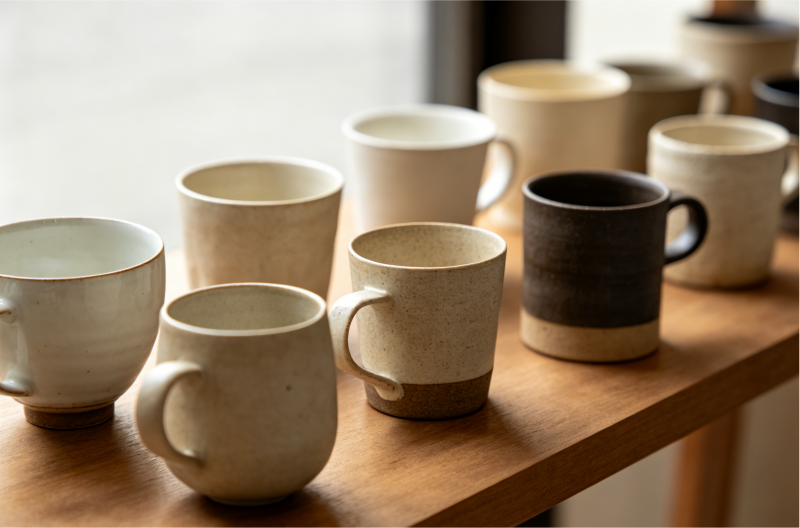
In my experience, the single biggest point of failure happens right at the beginning: the specifications. A request that only mentions capacity is incomplete. It forces manufacturers to guess, which leads to inaccurate pricing and mismatched expectations. To get a quote you can rely on, you need to be more specific. The material is the foundation of your mug's quality and price. Stoneware is sturdy and affordable, while porcelain offers a more premium, delicate feel. The glaze finish—whether glossy or matte—not only affects the look but also how the logo appears and how the mug feels in your hand. Finally, the handle shape is crucial for user experience. An uncomfortable handle can ruin an otherwise perfect mug. Providing these details upfront shows you're a serious buyer and allows us to price your project accurately from day one.
| Specification | Key Options | Impact on Product |
|---|---|---|
| Material | Stoneware, Porcelain, New Bone China | Affects weight, durability, and perceived value. |
| Glaze | Glossy, Matte | Changes the final look, feel, and logo appearance. |
| Handle | C-Shape, Custom Shapes | Determines user comfort and overall aesthetic. |
Which Logo Printing Method is Truly Best for Your Mugs?
You want the "best" logo for your branded mugs but don't know what that really means. Choosing the wrong method can result in a logo that fades after a few washes or costs far more than necessary. Match the printing method to your specific needs.
The "best" printing method depends on your design's complexity, budget, and durability needs. Decal printing is excellent for complex, multi-color logos and is very dishwasher safe. Screen printing is more cost-effective for simpler, one- or two-color designs but offers less durability.
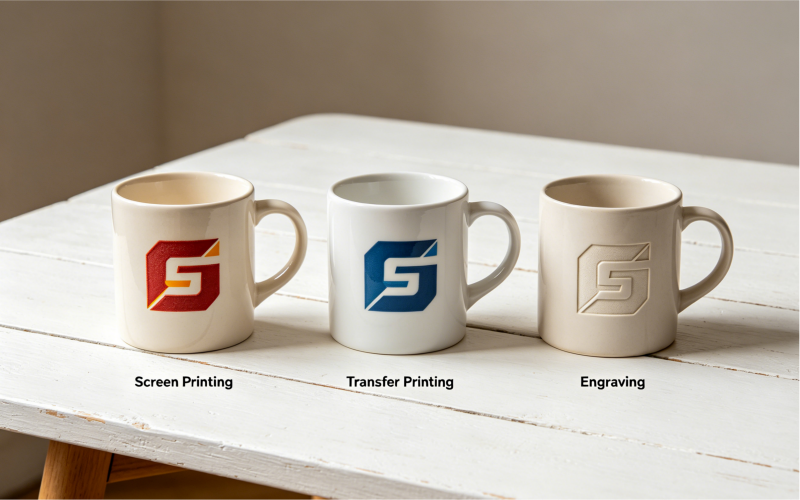
A common question from first-time buyers is, "What's the best and cheapest way to print my logo?" The truth is, you usually have to prioritize one over the other. The right choice is a trade-off. Your decision should be based on what your end-user needs. If the mugs are for a corporate giveaway and need to last for years, durability is key. In that case, decal printing is the superior choice. We print your logo onto special paper, apply it to the mug by hand, and then fire it in a kiln. This process melts the design into the glaze, making it permanent and safe for hundreds of dishwasher cycles. If your budget is tight and the logo is a simple one-color design, screen printing can be a good option. It's faster and cheaper, but the logo is printed on the surface and may not withstand repeated, harsh washing. It's about aligning the method with the mission.
| Printing Method | Best For | Durability (Dishwasher) | Cost |
|---|---|---|---|
| Decal Printing | Complex, multi-color designs | High (500+ cycles) | Medium-High |
| Screen Printing | Simple, 1-2 color designs | Low-Medium | Low |
| Sublimation | Photographic, full-color images | Medium | High |
Are You Requesting the Right Kind of Sample?
You asked your supplier for a "sample" and it caused delays or didn't prove the final quality. Requesting the wrong sample wastes time and money, and you might approve a product you can't ultimately sell. Know the different sample types and their purpose.
Don't just ask for "a sample." Specify if you need a factory random sample to check general quality, or a pre-production sample to approve your exact design before mass production. Each serves a different, critical purpose in the ordering process.
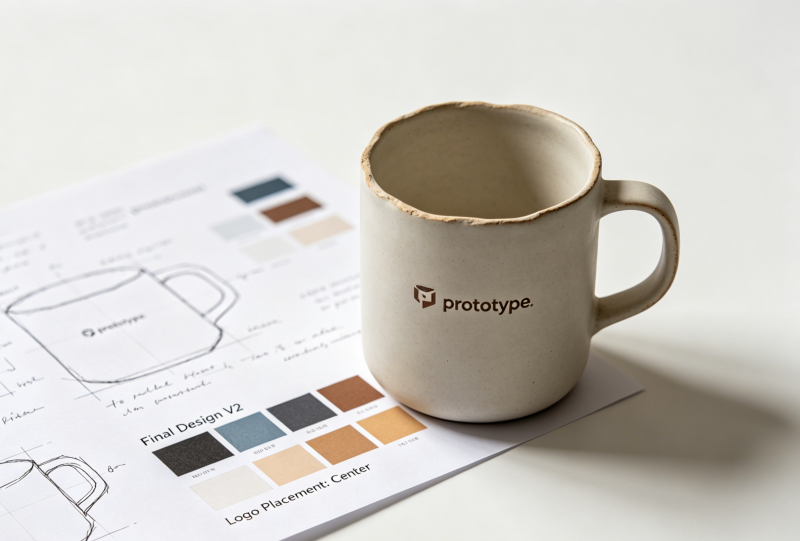
Not all samples are created equal, and misunderstanding their purpose is a frequent source of delay. When you request a sample, you need to know what you are trying to verify. If you just want to feel the weight and quality of a manufacturer's work, ask for a factory random sample. We can ship this out immediately because it’s a mug from a previous order. It’s a fast, low-cost way to vet a potential partner. However, the most critical sample is the pre-production sample (PPS). This is a sample of your exact mug, with your material, your glaze, and your logo printed on it. It takes time and money to create because it requires setting up the entire production process just for one piece. But it is your only true chance to approve the final product before we make thousands. Skipping the PPS to save a week is the biggest gamble a buyer can take. A problem that is easy to fix at the sample stage becomes an expensive disaster once the full order is complete.
| Sample Type | Purpose | Time to Receive | Cost |
|---|---|---|---|
| Digital Mockup | Visual layout check | < 24 Hours | Free |
| Factory Random Sample | Check general factory quality | 1-2 Weeks | Low (shipping cost) |
| Pre-Production Sample | Final approval of your exact mug | 2-4 Weeks | Medium |
What Must Your RFQ Include to Avoid Hidden Costs?
You received your final invoice and were surprised by unexpected charges for packaging or shipping. A vague Request for Quotation (RFQ) leads to disputes, delays, and blown budgets. Make your RFQ a document of total clarity.
A strong RFQ goes beyond price. It must detail packaging requirements (e.g., individual box), required certifications (like BSCI or ISO9001), and specific shipping terms (Incoterms like FOB). This prevents unexpected costs and ensures a smooth process.
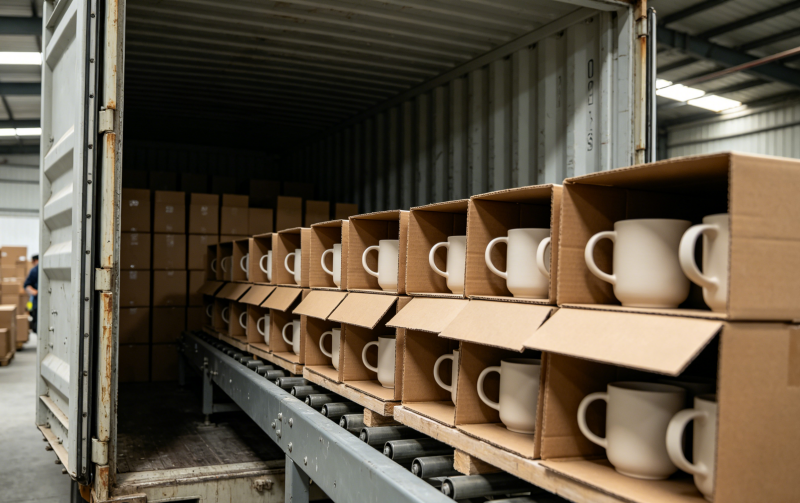
Your RFQ is the final and most important document you will send before committing to an order. Its job is to eliminate assumptions. In our 15 years of exporting, the most common disputes arise from details left out of the RFQ. For example, packaging. Do you need each mug in a custom-printed gift box, a plain white box, or just packed in bulk with cardboard dividers? Each option has a very different cost and level of protection. If you don't specify it, we will quote the cheapest option: bulk packing. Another key detail is certifications. As a factory that is BSCI and ISO9001 certified, we can provide these documents. But we need to know that your company requires them. Finally, specify the Incoterms. FOB (Free On Board) is the most common, where we handle costs until the goods are on the ship at our local port. Stating these things clearly in your RFQ turns it from a simple price request into a precise project plan, protecting you from hidden costs and ensuring we are fully aligned.
Conclusion
Ordering custom mugs is a partnership. Success depends on clear communication about specifications, printing, samples, and logistics. This focus on detail ensures you get the exact product you want.
👉 Contact us today to request free samples or receive a quotation within 24 hours