Trying to import mugs from China but worried about hidden costs and quality issues? A low price can quickly become a nightmare of failed inspections and damaged goods.
Successfully importing ceramic mugs from China means managing risk. Focus on defining your product's technical details, vetting suppliers beyond their certificates, calculating the total landed cost (not just the FOB price), and understanding the full pricing structure, including all potential fees.
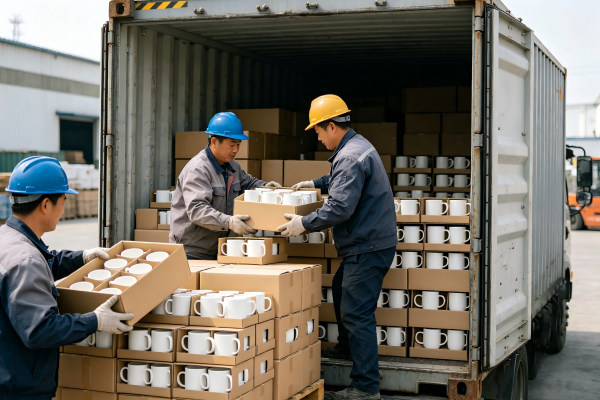
After 15 years of manufacturing ceramic mugs here in Liling, I've seen hundreds of importers succeed and fail. The successful ones don't just follow a simple checklist; they ask the right questions to protect their investment. They understand that importing isn't just a transaction, it's a process of risk management from start to finish. Let's break down what those critical questions are and how they will help you build a profitable business.
Is Your Product Definition Actually Your Biggest Risk?
You have found a beautiful mug design and are ready to order. But did you know the material and glaze choices could make your entire shipment unsellable in your market?
Yes, your product definition is a major risk factor. Choices about materials like stoneware versus porcelain, the type of glaze, and firing temperature directly impact the mug's durability, safety compliance (like FDA/Prop 65), and final cost. Overlooking these details can lead to costly failures.
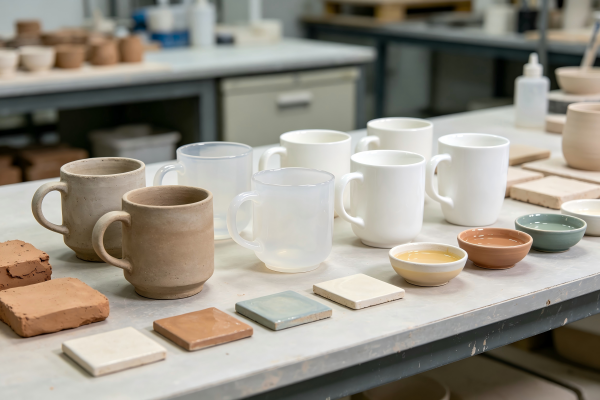
Many first-time importers focus on the look of the mug and the price per piece. This is a common mistake. In our factory, we know that the technical choices are where the real risks are. A simple decision can affect everything from safety to profit.
Material Matters More Than You Think
The body of the mug, whether it's stoneware, porcelain, or new bone china, determines its look, feel, and durability. Stoneware is often cheaper and has a rustic feel, but it can be heavier and more prone to chipping. Porcelain is much stronger, whiter, and has a high-end feel, but it costs more to produce. It's a trade-off between cost and quality.
Glaze and Firing: The Hidden Dangers
The glaze isn't just for color. It's a layer of glass that seals the mug. A poorly formulated or improperly fired glaze can leach lead and cadmium, which is a huge safety issue in markets like the US and Europe. A cheaper glaze might save you $0.10 per mug, but if it fails safety tests, your whole shipment is worthless. The firing temperature also affects how strong the mug is and how well the glaze bonds to it.
| Feature | Stoneware | New Bone China | Porcelain |
|---|---|---|---|
| Cost | Low | Medium | High |
| Durability | Good | Better | Best |
| Appearance | Rustic, Opaque | White, Translucent | Bright White, Strong |
| Common Use | Everyday Mugs | Promotional Mugs | High-End Retail |
Are Supplier Certificates Enough to Guarantee Quality?
You found a supplier with ISO9001 and BSCI certifications, which seems great. But these papers don't guarantee your mugs will be safe, durable, or even have the right color.
No, certificates alone are not enough. A reliable supplier must be able to explain how they apply these standards to your specific order. Ask for past test reports for your target market and discuss their detailed quality control (QC) process, from raw materials to final packaging.
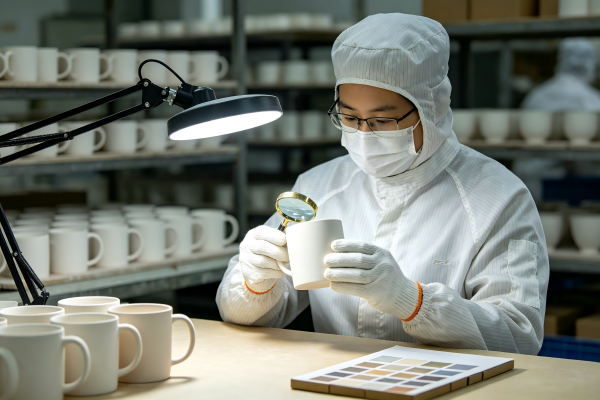
As a factory with both ISO9001 and BSCI certifications, I can tell you that these documents are a starting point, not a guarantee of quality for your specific product. They show a supplier has systems in place, but you need to know if they actually use them effectively for your order.
What Certificates Don't Tell You
An ISO9001 certificate means the factory has a documented quality management system. It doesn't mean the product itself is high quality. It just means there's a process. A BSCI audit report shows the factory meets certain social and ethical standards, which is important, but it says nothing about whether your mug will crack in the microwave. These certificates are easy to show, but true quality is in the daily work.
Questions That Reveal True Experience
Instead of just asking "Are you certified?", you need to test their experience. Here are the questions we expect good buyers to ask:
- "Can you show me a recent FDA or Prop 65 test report for a mug you shipped to the USA?"
- "What is your QC process for preventing chips and cracks during firing and packing?"
- "How do you ensure color consistency for my logo across a 10,000-piece order?"
- "What is your procedure if a batch of raw clay does not meet your standards?"
A good supplier will have clear answers. A weak supplier will give vague replies or just send you the certificate again.
Is a Low FOB Price Actually Costing You More?
You received a quote with an amazing price-per-mug. It seems too good to be true. But high damage rates, unexpected customs fees, and failed inspections can destroy your profit margin.
Often, yes. A low FOB (Free On Board) price is misleading if it leads to higher overall costs. Your focus should be the "landed cost per sellable unit"—the final price after factoring in shipping, insurance, customs duties, and potential losses from damage or quality failures.

The number one mistake we see new importers make is comparing only the FOB price from different suppliers. FOB just means the factory's responsibility ends when the goods are loaded onto a ship at the Chinese port. It is just one part of your total cost.
Beyond the Factory Gate Price
To get a real sense of your costs, you need to calculate the landed cost. This includes:
- FOB Price: The price of the product itself.
- Freight: The cost of shipping from China to your country.
- Insurance: To protect against loss or damage during transit.
- Customs & Duties: Taxes your country charges on imports.
- Local Delivery: Getting the goods from the port to your warehouse.
The Hidden Costs of a "Cheap" Mug
A supplier offering a very low price might be cutting corners on packaging. They might use a thin 3-ply cardboard box instead of a strong 5-ply one. You might save $0.10 per mug on the price, but if 10% of your mugs arrive broken, you've lost money. The true measure is the cost per sellable unit.
| Cost Component | Supplier A (Low FOB) | Supplier B (Higher FOB) |
|---|---|---|
| FOB Price/Mug | $1.50 | $1.70 |
| Packaging | Basic, 3-ply | Reinforced, 5-ply |
| Estimated Damage Rate | 8% | 1% |
| Landed Cost/Sellable Mug | ~$2.85 | ~$2.75 |
(Note: Example numbers for illustration)
As you can see, the "cheaper" supplier can end up being more expensive.
Why Is Your Final Invoice Higher Than The Initial Quote?
You agreed on a price and placed your order. But when the final invoice arrives, you see extra charges for molds, custom boxes, and testing you didn't budget for.
Your final invoice can be higher because the initial quote often only covers the price per unit. It may not include necessary costs like mold fees for custom shapes, setup charges for logos, upgraded packaging, or specific compliance testing required for your market. Clarify these costs upfront.
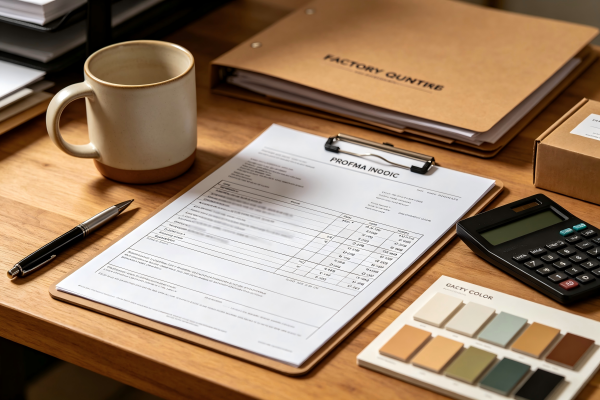
An initial quote is often just a starting point. As a manufacturer, we build the price based on many factors. A simple price per piece doesn't tell the whole story. A professional buyer knows to ask about the complete cost structure to avoid surprises.
Uncovering the "Extras"
A price is not just one number; it's a structure. We often have to ask clients about these details to provide an accurate quote. If a supplier gives you a price without asking questions, be careful. They may be leaving out costs that will appear later.
Key Costs to Clarify
Before you confirm an order, make sure you have clear answers on these potential costs:
- Mold Fees: If you want a unique mug shape, there is a one-time mold fee. This can be hundreds or even thousands of dollars.
- Decoration/Setup Fees: Is your logo one color or four colors? Is it a small logo on one side or a full wrap around the mug? Each variation has a different setup charge and unit cost.
- Packaging: Do you need a simple bulk pack for a restaurant, or a retail-ready gift box for your e-commerce store? The box can sometimes cost as much as the mug.
- Testing Fees: If you need a specific test report for your shipment (like Prop 65 for California), who pays for it? The factory or you?
A good supplier will detail all of this on a Proforma Invoice (PI). Always review the PI carefully before paying the deposit.
Conclusion
Successful importing isn't about finding the cheapest mug. It's about finding a partner who helps you manage risk, understand total costs, and deliver a quality product.