Quick Comparison
| Category | China | Vietnam |
|---|---|---|
| Manufacturing Experience | ★★★★★ | ★★★★☆ |
| Production Capacity | Excellent | Medium |
| Automation | High | Medium |
| Product Variety | Very Wide | Moderate |
| OEM/ODM Capability | Excellent | Good |
| Quality Consistency | Excellent | Good |
| Lead Time | Faster | Slightly Longer |
| MOQ Flexibility | Medium | More Flexible |
| Labor Cost | Higher | Lower |
| Pricing | Competitive | Slightly Lower for simple products |
Choosing a manufacturing country is stressful, and a wrong choice can cost you time and money. The right answer depends entirely on your specific business needs, not a simple price tag.
The best choice between China and Vietnam for mug manufacturing depends on your project's needs. China's mature supply chain excels with complex, highly customized orders. Vietnam is often more competitive for simpler, high-volume products where direct labor is the primary cost driver.
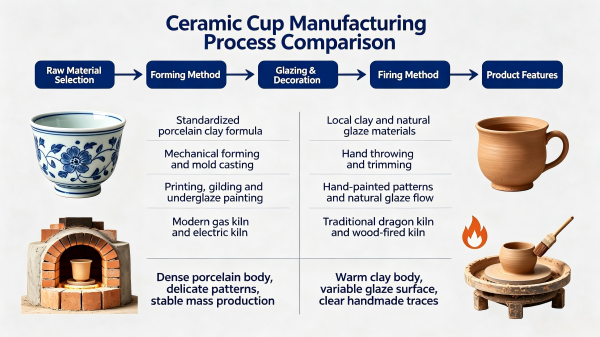
For the past 15 years, our factory in Liling has been exporting ceramic mugs. We talk to hundreds of buyers from the US, Europe, and South America every year. A common theme is the search for the "best" place to manufacture. Many people think it's a simple choice between two countries. But my experience shows it's about finding the right partner for your specific product. The question isn't "which country is better?" but "which country is the better risk-management decision for my order?" Let's break down how you can answer that for your business.
Is Vietnam Always Cheaper Than China?
You're tempted by headlines about lower labor costs in Vietnam. But hidden fees, material sourcing issues, and logistics can quickly erase those initial savings and cause major headaches.
Vietnam can be cheaper for simple, high-volume mugs where labor is the main cost. However, for complex designs needing special materials or glazes, China's integrated supply chain often results in a lower total cost and less risk.
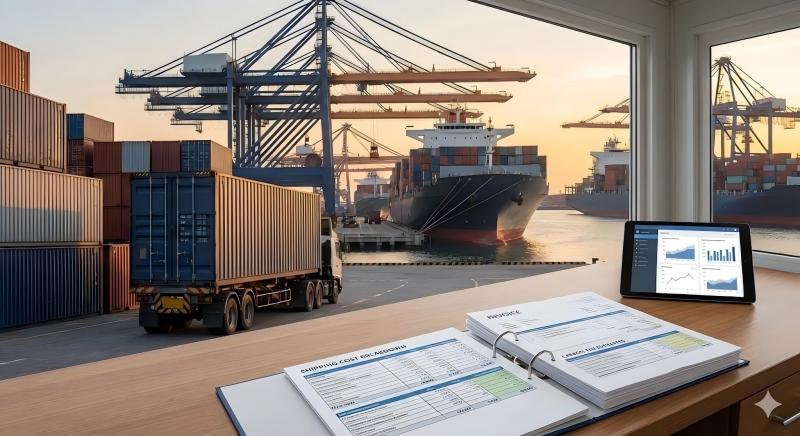
When you get a price quote, you're only seeing the factory gate price. As a professional buyer, you know the real cost is much bigger. I call this the Total Cost of Sourcing. This includes everything from sampling speed to logistics resilience. What our clients have told us is that while the per-unit labor cost might be lower in Vietnam for a basic mug, things get complicated quickly. For example, if you need a specific type of reactive glaze or a custom-printed gift box, a Vietnamese factory might have to import it, adding time and cost. In China, especially in a ceramics hub like Liling, those specialized suppliers are our neighbors. This proximity reduces costs and cuts down on project timelines. A simple comparison shows how these factors play out.
| Cost Factor | China | Vietnam |
|---|---|---|
| Direct Labor | Higher | Lower |
| Raw Materials | Lower cost & wider variety | Can be higher, may need importing |
| Customization | Very efficient and low-cost | Can be slow and expensive |
| Logistics | World-class, highly efficient | Developing, can have bottlenecks |
| Sampling Speed | Fast due to integrated suppliers | Slower if materials are not local |
Looking at this, the decision becomes clearer. If your project is a standard, high-volume mug, the lower labor cost in Vietnam might win. But for anything else, the hidden efficiencies in China's ecosystem often provide better overall value.
When Does China's Supply Chain Actually Save You Money?
You have a unique mug design with custom colors and special packaging. But coordinating multiple suppliers yourself is a logistical nightmare that leads to costly delays and mistakes.
China's mature supply chain saves you money on complex orders. Easy access to specialized glaze makers, decal printers, and packaging experts in one place reduces sampling time, minimizes errors, and ensures all components work together seamlessly.
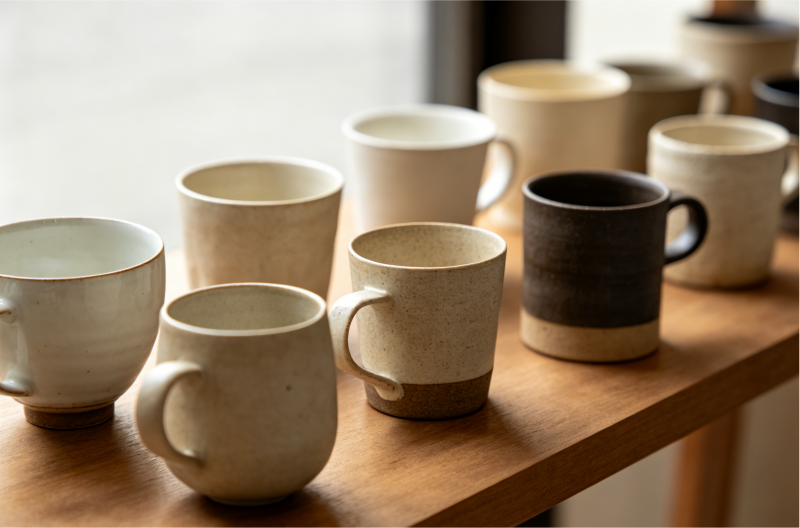
People talk about China's "mature supply chain," but what does that actually mean for you, the mug buyer? It means speed, integration, and lower risk. Let's get practical.
The Power of Integration for Custom Mugs
Imagine you want to launch a new mug for your e-commerce store. You need a specific Pantone-matched color, a delicate gold foil decal on the handle, and a beautiful, full-color printed gift box that protects the mug during shipping.
In our factory in Liling, this is a standard request. I can make three phone calls in the morning. One to the glaze specialist, one to the decal printing house, and one to the packaging factory. They are all within a few kilometers of us. We can have development samples for all three components in our hands within days. We then assemble them for final approval. Because we work with these partners every day, we know their capabilities. We know the decal will adhere correctly to the glaze, and we know the box is designed to fit the mug perfectly.
What our clients tell us about trying this in less mature markets is that it's a huge challenge. They might find a great mug factory, but that factory has no local partner for gold foil decals. So the buyer has to find one, ship samples back and forth, and hope they work. This adds weeks or even months to a project timeline and introduces significant risk. That coordination work is a hidden cost that our integrated system eliminates for you.
How Do You Guarantee Quality Consistency in Either Country?
You received a perfect sample, and you were thrilled. But when the 10,000-unit bulk order arrived, it was full of defects. Inconsistent quality can destroy your brand's reputation and profits.
Guarantee quality by vetting a supplier's process control systems, not just their samples. Look for certifications like ISO9001 and BSCI, which prove a commitment to documented procedures that ensure consistency from the first mug to the 50,000th.
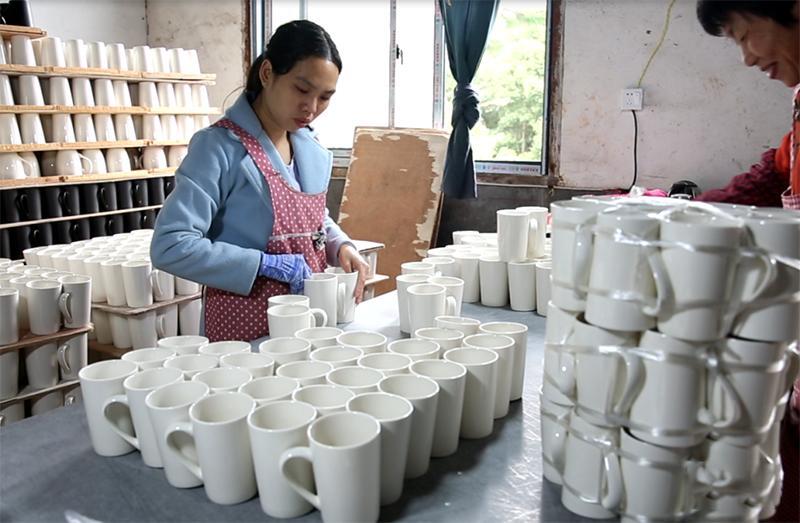
A great sample proves a factory can make one good mug. It doesn't prove they can make 20,000 identical good mugs. Quality is not about the country a factory is in; it's about the systems and processes that factory uses every single day. High-quality factories exist in both China and Vietnam. The difference is that the established industrial base in China means there is a much larger pool of factories that have invested in mature, documented quality systems. For over a decade, Western buyers have demanded certifications like ISO9001 (for quality management) and BSCI (for social compliance). This has forced experienced exporters like us to build robust, repeatable systems.
Questions to Ask Any Supplier
When you are vetting a potential partner, whether in China or Vietnam, you need to dig deeper than "do you have a QC team?". You need to understand their process. Here are questions you should ask:
- Can you show me your current ISO9001 and BSCI certificates and audit reports? This shows a commitment to external verification of their systems.
- What is your documented process for inspecting incoming raw materials like clay and glazes? Quality starts with good ingredients.
- How do you ensure color and decal placement consistency across a large production run? Ask to see their production work instructions.
- What is your standard procedure for handling defects found during inline inspection? Do they just discard it, or do they find the root cause to prevent it from happening again?
In our factory, these aren't just questions we answer; they are the blueprint for our daily operations. This is why our clients, from large European wholesalers to demanding American e-commerce brands, trust us. They aren't just buying a mug; they are buying the confidence that every single mug in their order will meet their standards.
Conclusion
Neither country is universally "better"—the right choice depends on your product positioning and sourcing goals.
China is ideal for large-scale retail programs, branded promotional mugs, and projects requiring consistent quality, advanced manufacturing, and extensive customization.
Vietnam is a strong option for boutique collections, handcrafted ceramic mugs, and brands seeking natural, artisanal aesthetics with smaller production volumes.
For buyers serving supermarkets, chain retailers, promotional product companies, or established brands, China generally offers the strongest combination of manufacturing capacity, quality consistency, customization capabilities, and supply chain efficiency. Vietnam, meanwhile, remains an attractive alternative for premium handcrafted and design-focused collections where artisanal character is a key selling point.