How to identify a ceramic mug?
Struggling to tell if a ceramic mug is a good investment for your business? You worry that a bad choice could lead to thousands of flawed products and unhappy customers.
For professional buyers, identifying a ceramic mug is not about simple physical tests. It's about a risk assessment process. This means verifying the product's technical specifications, checking for certifications like ISO9001[^1] and BSCI[^2], and confirming the supplier has the proven reliability to handle large-scale orders without issues.
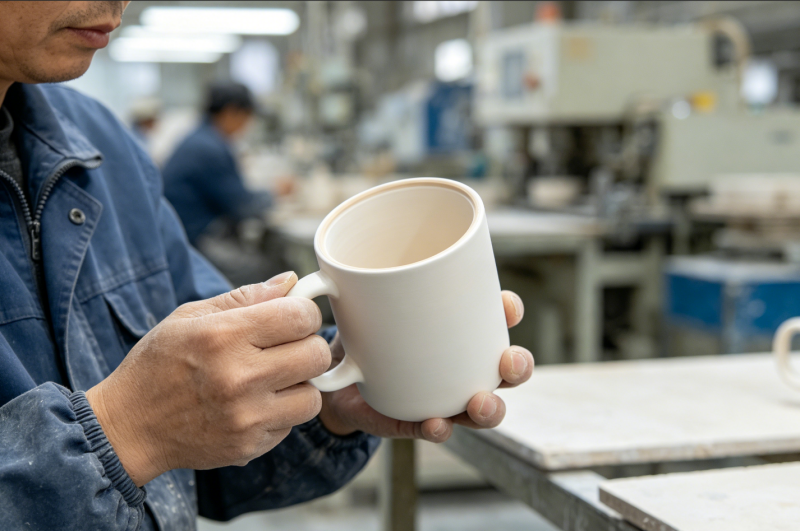
You've probably heard the common tricks for checking a mug. Tap it to hear it ring. Feel how heavy it is. Check for a smooth finish. These are fine if you’re buying one mug for your kitchen. But when you’re responsible for ordering 10,000 units for a major retail chain, these simple tests are completely useless. They tell you nothing about what really matters: consistency, safety, and durability across an entire production run. The real method is less about being a product expert and more about being a smart business investigator. Let's explore what you should really be looking for.
Are simple physical tests really enough to judge quality?
It feels productive to hold a sample mug, feel its weight, and tap it. But this subjective approach is a trap when buying in bulk, giving you a false sense of security.
No, simple physical tests are not enough for professional buyers. They can't measure production consistency, glaze durability, or safety compliance like lead and cadmium levels[^3]. For bulk orders, you need verifiable data and official reports, not subjective feelings, to avoid massive quality control issues down the line.
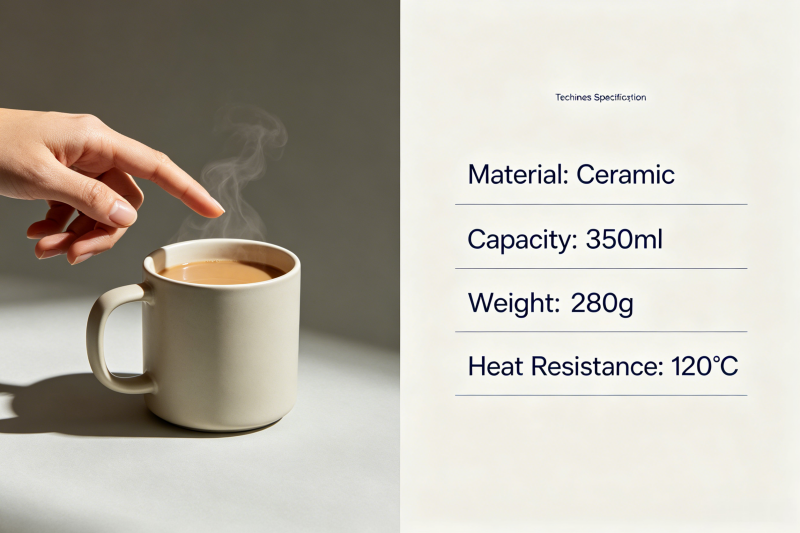
For the last 15 years, I've seen buyers try to judge a shipment of thousands of mugs based on how a single sample feels in their hand. It's a natural instinct, but it’s a critical mistake. Let me break down why these methods don't work for professional sourcing and what you should be doing instead.
Why "Feel" and "Sound" Are Misleading
The idea that you can judge quality by tapping a mug is a myth. The sound a mug makes—that "ring"—is determined by its shape, wall thickness, and the density of the ceramic body.[^4] A high-quality, thick-walled diner mug might produce a dull thud, while a thinly-made, lower-quality mug might have a higher-pitched ring. The sound tells you nothing about its durability or safety. Similarly, the weight and feel are just as misleading. A heavy mug isn't necessarily a strong mug. What you should be concerned with is whether mug #1 and mug #9,999 have the same weight, color, and capacity. That's something your hands can't tell you.
The Professional's Checklist
Smart buyers move from subjective feelings to objective data. When our clients in Europe and the Americas place an order, they aren't tapping our mugs. They're reviewing our documents. Here’s how you can shift your approach.
| Amateur Test | Why It Fails for Bulk Orders | Professional Metric |
|---|---|---|
| Weight and Feel | Subjective and impossible to apply across 10,000 units. | Specified gram weight with tolerance (e.g., 320g ±5%). |
| "Ring" Sound Test | Indicates shape and thickness, not quality or durability. | Glaze hardness test results[^5] and dishwasher cycle test reports[^6]. |
| Visual Inspection | Can't detect microscopic flaws or chemical safety issues. | Third-party inspection reports (AQL levels) and chemical safety data. |
| Price Alone | A low price might hide poor materials or unethical labor. | A comprehensive quote that includes compliance and logistics costs. |
When you start asking for a specific gram weight, a guaranteed number of dishwasher cycles, and safety test reports for lead and cadmium, you change the conversation. You are no longer just buying a mug; you are buying a promise of quality and consistency.
What does 'quality' really mean for a 10,000-unit order?
You tell a factory you want "high quality," but they hear something different than what you mean. This gap in understanding can lead to a container of mugs that are technically fine but totally wrong.
For a 10,000-unit order, 'quality' means consistency, compliance, and reliability. It’s about every mug meeting the exact same specifications for color, size, and durability. It also means the factory meets social and quality management standards, proven by certifications like BSCI and ISO9001.
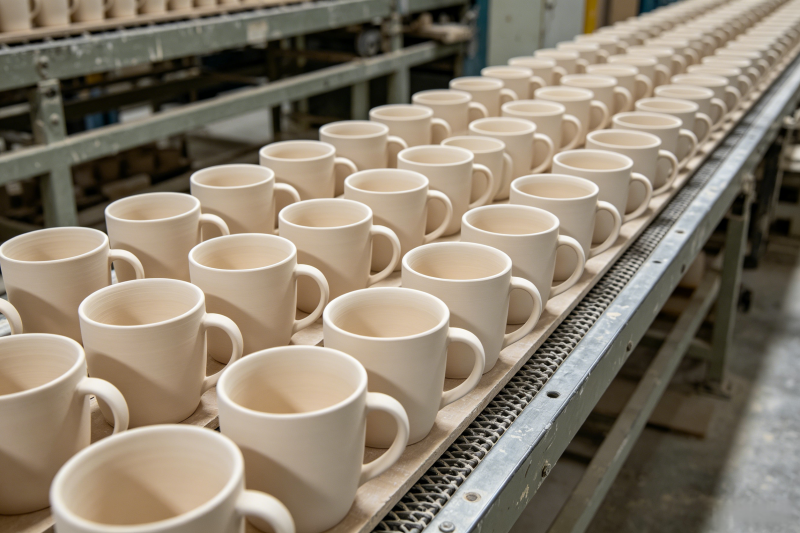
In my experience, the term "quality" is the most dangerous word in procurement if it's not defined. For a professional buyer, quality is not an abstract concept. It's a list of specifications and standards that protect your investment, your customers, and your brand's reputation. Let's break down what quality should mean to you.
Quality as Consistency
Imagine opening a shipment and finding that the color of the mugs varies from light blue to dark blue, or that some hold 11 ounces while others hold 12. This is a consistency failure. For large orders, quality means every single piece is as identical as possible. At our factory, we don't start production until we agree on these points with our client:
- Color: We use specific Pantone codes[^7] to ensure the glaze color is exactly right, batch after batch.
- Capacity: We define the liquid capacity with a clear tolerance, like 350ml +/- 5%.
- Defects: We agree on an Acceptable Quality Limit (AQL)[^8]. This is a statistical tool that defines how many minor defects are acceptable per 10,000 units. It’s an honest acknowledgment that perfection is impossible, but we can control the standard.
Quality as Compliance
Compliance is a huge part of quality that is invisible in the product itself. When we work with large supermarket chains, they are just as concerned with our factory's paperwork as they are with our mugs.
- ISO 9001 (Quality Management System): When you see this, it doesn't just mean we make good mugs. It means we have a documented, repeatable system for everything from taking your order to packing the container. For you, the buyer, this is your insurance policy against random, costly mistakes. It means we have a process for everything, and that process is audited by a third party.
- BSCI (Business Social Compliance Initiative): This certification tells you that our factory operates ethically. It means we treat our workers fairly and provide a safe working environment. For a major retailer, this is non-negotiable. It protects your brand from the massive risk of being associated with unethical labor practices[^9].
These certifications aren't just logos on a website. They are proof that a supplier understands the business and brand risks of their clients.
Why is vetting the supplier more important than the mug itself?
You found a picture of the perfect mug online. The price is incredible. It seems easy to just click and buy. But this is where the biggest sourcing disasters begin.
Because a good supplier is your partner in managing risk. They ensure consistent quality, handle complex logistics, and provide the necessary compliance documentation. A great mug from a bad supplier can lead to production disasters, shipping delays, and legal issues. The supplier is the system that delivers the product.

A ceramic mug is a simple object. The system required to produce 50,000 of them to the same standard and ship them across the world on time is incredibly complex. I've spent 15 years helping buyers navigate this complexity. The successful ones all have one thing in common: they focus on vetting the supplier first. A great supplier can fix a problem with a product. A bad supplier will turn a great product into a problem.
The Right Questions to Ask a Supplier
Stop asking "Is this a good mug?" Start asking questions that reveal the supplier's capability.
- "Can you share your most recent BSCI and ISO 9001 audit reports?" A confident, professional supplier will provide these immediately. Hesitation is a major red flag.
- "What is your experience exporting to my country/region?" Their answer will tell you if they understand your specific customs regulations, shipping routes, and product safety standards (like FDA[^10], LFGB[^11], or California Prop 65[^12]).
- "What is your standard process for quality control, and what AQL do you recommend for this product?" This question shows you are a professional. A good supplier will welcome it and have a clear, detailed answer.
- "Can you provide a sample Certificate of Origin and a recent raw material test report?" This tests their transparency and their ability to provide the documents you'll need for customs clearance.
What to Look for in Their Answers
It's not just what they say, but how they say it.
- Transparency and Speed: Do they provide documents quickly, or do they give excuses? A good partner is an open book.
- Relevant Experience: Do their examples and answers match your needs? When a new client from Brazil asks us a question, we know to bring up specific packaging requirements needed for the long sea voyage. This kind of proactive advice shows real expertise.
- Professional Communication: Are their emails clear? Do they answer all your questions directly? Their communication now is the best it will ever be. If it’s poor from the start, imagine how they will communicate when there's a problem.
Choosing a supplier is like hiring an employee who will be responsible for a huge part of your business. The mug is just the final result of their work. Make sure you hire the right team.
Conclusion
Ultimately, identifying a ceramic mug for your business has little to do with the mug itself. It’s about a diligent process of verifying specifications, demanding proof of compliance, and vetting your supplier.
[^1]: "ISO 9000 family - Wikipedia", https://en.wikipedia.org/wiki/ISO_9000_family. A source from the International Organization for Standardization (ISO) can define ISO 9001 as the international standard that specifies requirements for a quality management system (QMS), which helps organizations consistently provide products and services that meet customer and regulatory requirements. Evidence role: definition; source type: institution. Supports: The source should define ISO 9001 as the international standard for quality management systems.. [^2]: "Understanding BSCI Compliance | What is BSCI? - Factored Quality", https://www.factoredquality.com/resource/understanding-bsci-compliance. A source from amfori, the organization managing the initiative, can explain that the Business Social Compliance Initiative (BSCI) is a system to help companies monitor and drive social compliance and improvements within the factories and farms in their global supply chains. Evidence role: definition; source type: institution. Supports: The source should define the Business Social Compliance Initiative (BSCI) and its function in auditing and improving labor conditions in global supply chains.. [^3]: "[PDF] CPG Sec. 545.450 Pottery (Ceramics) - Lead Contamination - FDA", https://www.fda.gov/files/inspections%2C%20compliance%2C%20enforcement%2C%20and%20criminal%20investigations/published/CPG-Sec.-545.450-Pottery-%28Ceramics%29--Import-and-Domestic---Lead-Contamination.pdf. For example, the U.S. Food and Drug Administration (FDA) sets action levels for leachable lead and cadmium from ceramic foodware to protect consumers from heavy metal exposure. Evidence role: statistic; source type: government. Supports: The source should specify the safety limits for leachable lead and cadmium from ceramic foodware as set by a government agency like the FDA.. [^4]: "Speed of sound - Wikipedia", https://en.wikipedia.org/wiki/Speed_of_sound. A source in materials science or acoustics can explain that the resonant frequency of an object, which determines the pitch of the sound it makes when struck, is a function of its material properties (like density and elasticity) and its geometry (like shape and thickness). Evidence role: mechanism; source type: education. Supports: The source should explain how factors like density, stiffness, and geometry determine the acoustic properties of a ceramic object.. [^5]: "Mohs scale - Wikipedia", https://en.wikipedia.org/wiki/Mohs_scale. A materials science resource can explain that glaze hardness is often measured by its resistance to scratching, which can be evaluated using methods like the Mohs scale of mineral hardness, where a harder material will scratch a softer one. Evidence role: mechanism; source type: education. Supports: The source should describe a standardized method for testing the hardness or scratch resistance of a ceramic glaze.. [^6]: "Mechanical Dishwashing Resistance Test - Measurlabs", https://measurlabs.com/products/mechanical-dishwashing-resistance-utensils/. International standards, such as those from ASTM International, provide test methods for evaluating the resistance of ceramic decorations and glazes to detergents and mechanical action during repeated dishwasher cycles. Evidence role: definition; source type: institution. Supports: The source should describe a standardized test for determining the dishwasher resistance of ceramicware.. [^7]: "Pantone - Wikipedia", https://en.wikipedia.org/wiki/Pantone. A source on graphic design or industrial production can explain that the Pantone Matching System is a proprietary color space used in a variety of industries to ensure color consistency, allowing manufacturers to reproduce a specific color accurately regardless of the equipment used. Evidence role: definition; source type: encyclopedia. Supports: The source should define the Pantone Matching System (PMS) and its function as a standardized color reproduction system.. [^8]: "[PDF] ISO 2859-1 - UNT Chemistry", https://chemistry.unt.edu/~tgolden/courses/iso2859-1.pdf. A source on quality management can define the Acceptable Quality Limit (AQL) as the worst tolerable quality level in a production lot, often standardized by international norms like ISO 2859-1, which guides sampling procedures for inspection. Evidence role: definition; source type: institution. Supports: The source should define AQL as a statistical method used in quality control for product sampling and inspection, often governed by an international standard.. [^9]: "How Consumers Can Avoid Supporting Unethical Business ...", https://onlinegrad.syracuse.edu/blog/how-to-avoid-unethical-supply-chain/. Research in business ethics and corporate social responsibility has shown that public exposure of unethical labor practices in a company's supply chain can lead to significant reputational damage, consumer boycotts, and a decline in stock value. Evidence role: case_reference; source type: paper. Supports: The source should provide evidence or case studies demonstrating the negative impact on a company's brand and sales after being linked to unethical labor.. [^10]: "CPG Sec 545.450 Pottery (Ceramics); Import and Domestic - FDA", https://www.fda.gov/regulatory-information/search-fda-guidance-documents/cpg-sec-545450-pottery-ceramics-import-and-domestic-lead-contamination. The U.S. Food and Drug Administration (FDA) provides specific compliance policy guides, such as CPG Sec. 545.450, which detail the acceptable limits for leachable lead and cadmium from the food-contact surfaces of ceramic pottery. Evidence role: definition; source type: government. Supports: The source should describe the FDA's specific regulations and guidance concerning heavy metals in ceramicware intended for food use.. [^11]: "Food Packaging & Other Substances that Come in Contact with Food", https://www.fda.gov/food/food-ingredients-packaging/food-packaging-other-substances-come-contact-food-information-consumers. A source from a German federal agency or a testing laboratory can explain that the LFGB (Lebensmittel-, Bedarfsgegenstände- und Futtermittelgesetzbuch) is the German Food and Feed Code, which governs the safety of food contact materials sold in Germany. Evidence role: definition; source type: government. Supports: The source should define the LFGB and its role as the primary food safety regulation in Germany.. [^12]: "About Proposition 65 - OEHHA - CA.gov", https://oehha.ca.gov/proposition-65/about-proposition-65. The California Office of Environmental Health Hazard Assessment (OEHHA) explains that Proposition 65 requires businesses to provide warnings to Californians about significant exposures to chemicals that cause cancer or reproductive harm, which can include lead found in the glazes of some ceramicware. Evidence role: definition; source type: government. Supports: The source should explain the requirements of Proposition 65, particularly the need for warning labels if a product exposes consumers to certain chemicals..