What is a Ceramic Coffee Mug?
You ask "what is a ceramic mug" but get vague answers. This wastes time and leads to inaccurate quotes, risking you source the wrong product for your customers.
A ceramic coffee mug is a product defined by its material (like porcelain or stoneware), glaze, and firing process. For a professional buyer, these choices directly determine the mug's cost, durability, safety compliance, and branding potential. Understanding them is key to a successful purchase.
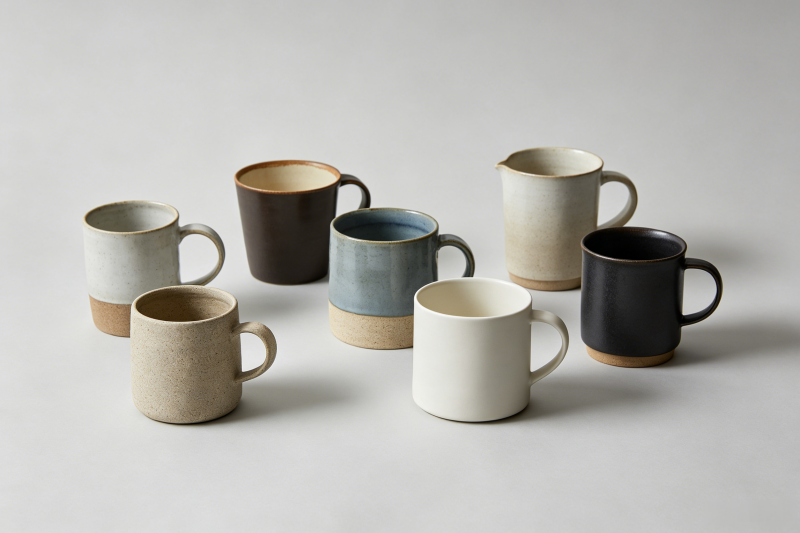
When I first started in this business 15 years ago, buyers would often ask me a simple question: "What is a ceramic mug?" I quickly learned this was the wrong question. It's like asking a car dealer, "What is a car?" The answer is too broad to be useful. For a professional buyer at a large retailer or wholesale company, the real question isn't what it is, but how to specify one to meet your business goals. Your job is to balance cost, quality, and safety for thousands of units. In this post, I will break down the key factors we discuss with buyers every day. This will help you create a clear specification, minimize your risk, and get exactly what you need from a manufacturer.
How Does the Ceramic Material Affect My Bottom Line?
Choosing between porcelain and stoneware seems like a small detail. But this single choice directly impacts your unit cost, shipping weight, and how your customers perceive the quality.
The ceramic material directly impacts your costs and product quality. Porcelain is often more expensive[^1] but offers a premium feel and durability. Stoneware is typically heavier and more budget-friendly. Your choice balances perceived value against your target price point and logistics costs.
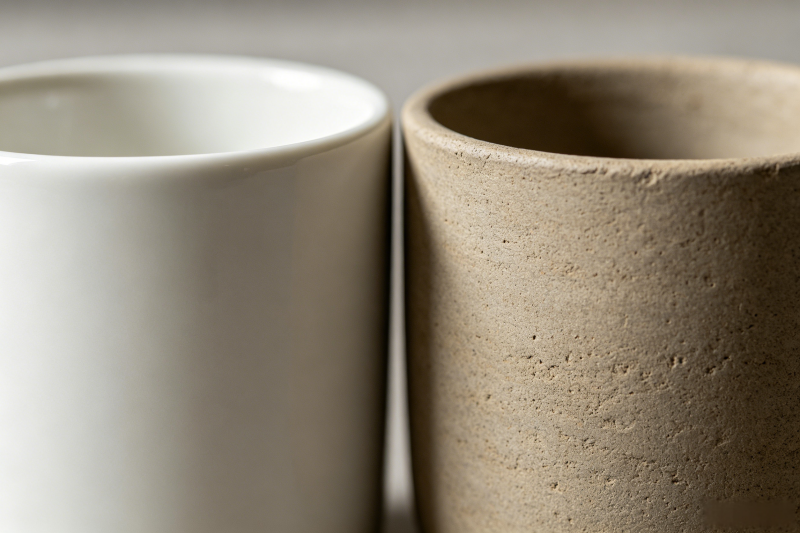
When a procurement manager for a supermarket chain contacts us, their decision-making process is all about trade-offs. The material of the mug is the first major decision point. It’s not just about looks; it has a direct financial impact on a large order. Let's break down the most common options we work with.
Understanding Material Trade-Offs
The terms stoneware, porcelain, and bone china aren't just marketing words. They represent different recipes of clay and minerals, fired at different temperatures[^2]. This results in products with very different characteristics and costs. From our manufacturing perspective, here is how they compare for a wholesale buyer.
| Material | Key Characteristics | Impact on Your Business |
|---|---|---|
| Stoneware | Opaque, thick, heavy, sturdy feel. Often has an earthy, rustic look. Fired at a lower temperature.[^3] | Cost-Effective: Generally the most affordable option for mass production. Higher Shipping Costs: Its weight can increase logistics expenses. Best for price-conscious markets. |
| Porcelain | Non-porous, thin, lightweight[^4], and has a more refined, elegant feel. Typically bright white. | Higher Perceived Value: Commands a better retail price. Lower Shipping Costs: Lighter weight can save on freight for large volumes. Good for mid-to-high-end retail. |
| New Bone China[^5] | A type of porcelain that mimics the translucency of bone china without using bone ash. | Premium Alternative: Offers a premium look and feel that is close to traditional bone china but at a more accessible price point. A great middle ground. |
When you specify a material, you are setting the foundation for your product's cost and quality. A buyer for a discount store chain might lean towards stoneware to hit a specific low price. In contrast, a buyer for a department store might choose porcelain to align with their brand's higher quality image. Your choice here is the first step to getting an accurate quote.
Why Are Glaze and Firing Critical for My Brand's Safety and Reputation?
You assume all mugs are food-safe and durable. But improper glazing or firing can lead to product recalls, and mugs that crack in the microwave, badly damaging your brand's reputation.
Glaze and firing are not just for a shiny finish. They create a non-porous, food-safe surface. A proper firing process ensures the mug is durable for dishwashers and microwaves and that toxic materials like lead and cadmium are sealed away, protecting your customers.
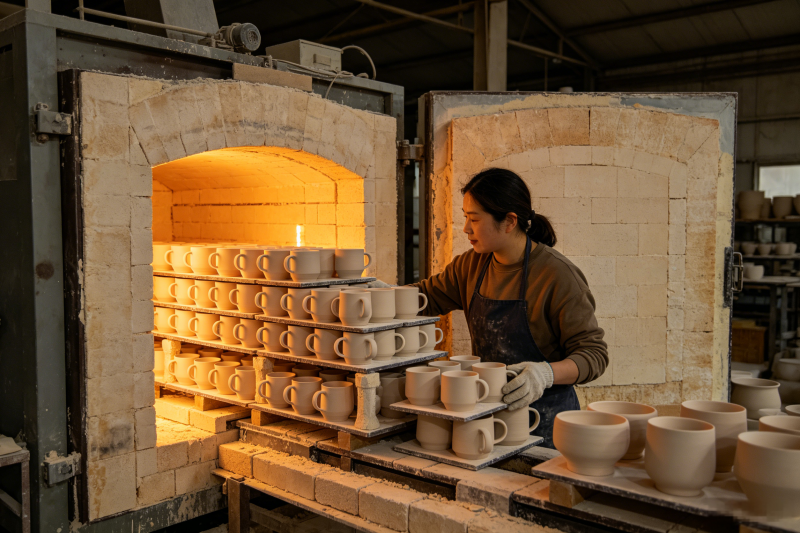
We see the glaze and firing process as a crucial risk management step. For any large retailer, a product recall is a nightmare. It costs money, damages customer trust, and can lead to legal issues. The right glaze, applied correctly and fired at the proper temperature, is what stands between a safe product and a major liability. A shiny finish is nice, but for a professional buyer, the functional and safety aspects are far more important.
The Role of Glaze in Safety and Durability
The glaze on a ceramic mug is essentially a thin layer of glass that is fused to the clay body during firing. Its primary job is to make the mug waterproof and easy to clean. But from a commercial standpoint, its two most important functions are ensuring food safety and enabling branding.
-
Food Safety Compliance: The biggest concern for any importer is heavy metals, specifically lead and cadmium. These can be present in some pigments and glazes. During firing, a proper temperature and duration will vitrify the glaze[^6], meaning it turns into a stable, glass-like state. This process locks the harmful elements in place, preventing them from leaching into a person's coffee or tea[^7]. This is non-negotiable for markets like the EU and USA, which have strict regulations like California's Prop 65[^8]. As a BSCI-certified manufacturer[^9], we conduct rigorous testing to ensure every batch we ship meets these standards.
-
Durability and Practical Use: The firing process also determines the mug's physical strength. An under-fired mug will have a porous body and a weak glaze that can easily chip or absorb liquids. An over-fired mug can warp or become brittle.[^10] A correctly fired mug is resilient enough for daily use, including being put in a dishwasher or microwave. This durability is a key quality signal to the end consumer.
-
Surface for Branding: For promotional products or branded retail items, the glaze quality is everything. A smooth, even glaze provides the perfect canvas for printing a crisp, clear logo that will not fade or peel. A poor glaze can cause the decal to apply unevenly or fail to bond properly, which reflects poorly on the brand.
How Do I Turn My Needs into a Specification a Manufacturer Understands?
You send inquiries to suppliers but get slow, inaccurate quotes back. This is frustrating and delays your sourcing timeline because manufacturers lack the details to give a real price.
To get a quick, accurate quote, move from a vague question to a clear specification. Provide the manufacturer with your desired capacity (oz/ml), material preference (e.g., porcelain), printing requirements (colors, placement), and any necessary certifications like BSCI.
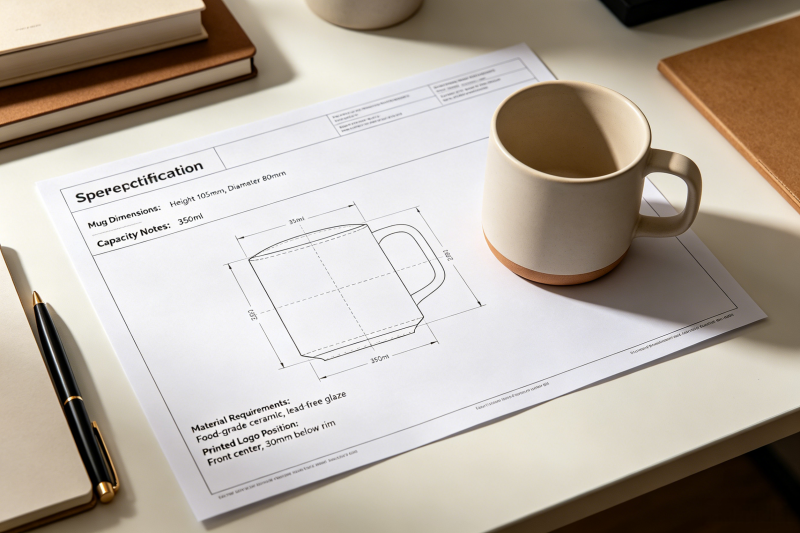
From my experience on the factory floor, the speed and accuracy of our quotation depend entirely on the quality of the buyer's inquiry. We want to give you a price quickly, but we can't do that with vague information. When a request is too general, we have to go back and forth asking questions, which wastes time for both of us. A professional buyer knows that providing a detailed specification is the fastest way to get a serious, reliable quote. This shows us you understand your product and are ready to do business.
From Vague Inquiry to Actionable Specification
Let's look at a common example of what we receive, and how it can be improved.
The Vague Inquiry:
"Hello, I need 20,000 ceramic mugs. Please send me your best price."
As a manufacturer, I cannot provide a quote based on this. I don't know the size, material, shape, or design. Is it a cheap promotional mug or a high-end retail product? Without more information, any price I give would be a wild guess.
The Professional Specification:
A serious buyer provides a list of clear requirements. This allows us to calculate the exact costs for materials, labor, printing, packaging, and testing. A great inquiry looks like this:
| Specification Point | Example Detail | Why It Matters for Quoting |
|---|---|---|
| Product & Capacity | Standard C-Handle Mug, 11 oz / 325 ml | Determines material usage and mold selection. |
| Material | White Porcelain, Grade A | The single biggest factor in the base unit cost. |
| Printing / Decoration | 2-color logo on one side. Pantone 185C and Black. | The number of colors and print locations directly affects labor and printing costs. |
| Packaging | Each mug in an individual white gift box, packed 36 per master carton. | Custom packaging adds cost. This detail helps us calculate material and labor for packing. |
| Required Certifications | Must pass FDA and Prop 65 tests[^11]. Factory must be BSCI audited. | Confirms the need for specific compliance testing and that our certifications meet your sourcing policy. |
| Quantity & Shipping | 20,000 units. FOB Port of Shanghai. | Confirms the order volume for production planning and defines the shipping terms. |
When we receive an inquiry like this, we know we are dealing with a professional. We can typically return an accurate quote within 24-48 hours because all the necessary variables are defined.
Conclusion
The question is not "what is a ceramic mug?" For a professional buyer, it is knowing how to specify one. This knowledge gives you control over cost, quality, and risk.
[^1]: "[PDF] Ceramic Raw Materials Dictionary:", https://www.valdosta.edu/colleges/arts/art/documents/ceramics-documents/CeramicsRawMaterialsSP08.pdf. Industry and materials sources indicate that porcelain's higher cost is attributable to factors including the price of its refined raw materials, such as kaolin, and the greater energy required to achieve its high firing temperatures (typically above 1,200°C or 2,200°F). Evidence role: mechanism; source type: other. Supports: The reasons why porcelain has a higher production cost than stoneware.. Scope note: Specific price comparisons can vary by manufacturer and market conditions.
[^2]: "Porcelain - Wikipedia", https://en.wikipedia.org/wiki/Porcelain. Sources in materials science and ceramics define porcelain as a high-fired, vitrified ceramic typically made from kaolin, while stoneware is a less-vitrified ceramic fired at lower temperatures, resulting in different physical properties such as porosity and density. Evidence role: definition; source type: encyclopedia. Supports: The definitions of stoneware and porcelain, including their typical composition and firing temperatures..
[^3]: "[PDF] Firing Temperatures - Bellevue College", https://www2.bellevuecollege.edu/artshum/materials/art/husby/firingtemperatures.pdf. Ceramics guides generally state that stoneware is fired at mid-to-high temperatures, typically between 1100°C and 1300°C (2012°F and 2372°F), which is lower than the temperatures required for hard-paste porcelain, which often exceed 1300°C. Evidence role: general_support; source type: encyclopedia. Supports: The typical firing temperature range for stoneware in comparison to porcelain.. Scope note: Specific firing temperatures can vary based on the exact clay body composition and desired results.
[^4]: "Porcelain - Wikipedia", https://en.wikipedia.org/wiki/Porcelain. Materials science sources confirm that fully vitrified porcelain has a very low porosity, with a water absorption rate of less than 0.5%, which contributes to its strength, stain resistance, and ability to be formed into thin, lightweight shapes. Evidence role: statistic; source type: education. Supports: The technical properties of porcelain, such as its low porosity..
[^5]: "Bone china - Wikipedia", https://en.wikipedia.org/wiki/Bone_china. Industry sources describe 'New Bone China' as a type of ceramic, often porcelain, formulated to achieve a translucency and whiteness similar to traditional bone china but without the use of bone ash, typically substituting it with other minerals like calcium oxide. Evidence role: definition; source type: other. Supports: The definition of 'New Bone China' as a synthetic alternative to traditional bone china.. Scope note: The term is primarily commercial and may lack a single, standardized scientific definition.
[^6]: "Vitrification - Wikipedia", https://en.wikipedia.org/wiki/Vitrification. In ceramics, vitrification is the process of transforming a substance into a glass-like, non-porous state through fusion by heat. During firing, clay and glaze particles melt and fuse, closing the pores and making the final product waterproof and durable. Evidence role: definition; source type: education. Supports: The definition of vitrification in the context of ceramic production..
[^7]: "[PDF] CPG Sec. 545.450 Pottery (Ceramics) - Lead Contamination - FDA", https://www.fda.gov/files/inspections%2C%20compliance%2C%20enforcement%2C%20and%20criminal%20investigations/published/CPG-Sec.-545.450-Pottery-%28Ceramics%29--Import-and-Domestic---Lead-Contamination.pdf. Public health agencies, such as the U.S. Food and Drug Administration (FDA), warn that improperly formulated or fired ceramic glazes can allow lead and cadmium to leach into food and beverages, posing a significant health risk. Evidence role: expert_consensus; source type: government. Supports: The health risk of lead and cadmium leaching from improperly glazed ceramics..
[^8]: "Proposition 65 Warnings Website - Your right to know - CA.gov", https://www.p65warnings.ca.gov/. California's Proposition 65, officially the Safe Drinking Water and Toxic Enforcement Act of 1986, requires businesses to provide warnings to Californians about significant exposures to chemicals that cause cancer, birth defects or other reproductive harm, including lead and cadmium found in some ceramicware. Evidence role: definition; source type: government. Supports: The purpose and requirements of California's Proposition 65 regarding chemicals like lead and cadmium..
[^9]: "BSCI - Wikipedia", https://en.wikipedia.org/wiki/BSCI. The Business Social Compliance Initiative (BSCI), managed by the foreign trade association Amfori, is a supply chain management system that supports companies to drive social compliance and improvements within the factories and farms in their global supply chains. Evidence role: definition; source type: institution. Supports: The definition and purpose of the Business Social Compliance Initiative (BSCI).. Scope note: The source is the organization itself, which provides a primary definition of its purpose and scope.
[^10]: "Effect of firing temperature and water exposure on crack propagation ...", https://pubmed.ncbi.nlm.nih.gov/2808866/. Ceramics literature confirms that under-firing fails to achieve full vitrification, resulting in a porous and weak body, while over-firing can cause the clay body to deform, warp, or become brittle due to excessive melting of the silica content. Evidence role: mechanism; source type: paper. Supports: The physical defects caused by under-firing and over-firing ceramics..
[^11]: "CPG Sec 545.450 Pottery (Ceramics); Import and Domestic - FDA", https://www.fda.gov/regulatory-information/search-fda-guidance-documents/cpg-sec-545450-pottery-ceramics-import-and-domestic-lead-contamination. The U.S. Food and Drug Administration (FDA) provides specific guidance on this issue, such as in its Compliance Policy Guide Sec. 545.450, which outlines the action levels for leachable lead and cadmium from ceramicware. Evidence role: case_reference; source type: government. Supports: The existence and details of FDA regulations concerning lead and cadmium in ceramic foodware..