Struggling to sell promotional products when your clients are only focused on the lowest possible price? It's a frustrating cycle that commoditizes your service and squeezes your margins. But what if you could shift the conversation from cost to long-term value? The secret lies in understanding how companies truly use branded mugs to build lasting brand awareness.
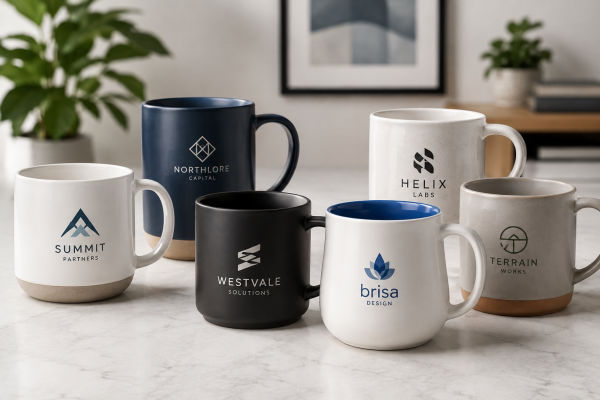
Companies use branded mugs to increase awareness by transforming them from simple giveaways into tangible, long-lasting brand ambassadors. A quality mug sits on a desk for years, creating thousands of brand impressions and reinforcing a message of quality and permanence with every use, far outlasting the fleeting impact of a digital ad or a disposable flyer.
But knowing why your clients should invest in quality is different from knowing how to convince them. As a consultant to wholesalers for over 15 years, I've developed specific strategies to help you break the "cheaper is better" mindset. Let's explore the tactics that turn you from an order-taker into a valued advisor.
How Can You Shift Client Conversations Beyond Price?
Does this sound familiar? Your client says, "Just find me the cheapest option." You know a flimsy, poorly printed mug will reflect badly on their brand, and ultimately, on you. The solution isn't to argue about price, but to change the entire frame of the discussion.
To shift the conversation beyond price, you must move from a product-focused pitch to a consultative, solution-oriented approach. You achieve this by asking strategic questions that force the client to consider the long-term business impact and brand risk associated with their choice of branded mugs.

Dive Deeper: The Art of the Consultative Question
Most clients are stuck on two fallacies: "cheaper is always better" and "all mugs are basically the same." Your job is to gently dismantle these ideas not by attacking low prices, but by revealing the hidden costs of a poor brand impression.
I once advised a wholesaler whose client, a software company, wanted the absolute rock-bottom price on logo mugs for a major tech conference. My advice was to stop talking about mugs and start talking about their business goals. I told him to ask his client two simple questions:
- "Who are the specific recipients, and in what scenario will they receive this mug?"
- "When that person is using this mug a year from now, what single word do you want to come to their mind about your brand?"
These questions are powerful because they pivot the conversation from a transactional cost to a strategic investment.
-
Question 1: The Context. Is the recipient a high-value prospect at a private dinner, or one of thousands of attendees at a trade show? Is it a new employee on their first day? The context dictates the required quality. A cheap mug might be acceptable for a mass giveaway, but it's an insult to a key partner or a new team member. This question forces the client to segment their audience and acknowledge that a one-size-fits-all approach is risky.
-
Question 2: The Long-Term Message. This is the killer question. No client will say, "I want them to think 'cheap' or 'disposable'." They'll say "quality," "innovative," "reliable," or "premium." You can then connect that desired perception directly to the physical attributes of the mug.
Your Response: "I understand. If 'reliable' is the message you want to send, a mug that feels substantial and holds its print after 100 washes is the best way to communicate that non-verbally. A lighter mug with a print that fades might send the opposite message. Let's look at options that align with that 'reliable' feeling."
By using this method, you are no longer a salesperson quoting prices. You are a brand consultant helping your client mitigate risk and achieve a marketing objective.
What Is the "Good-Better-Best" Framework for Selling Branded Mugs?
Clients have different needs and budgets, and trying to force a premium product on someone with a giveaway budget is a recipe for failure. You feel pushy, and they feel unheard. The "Good-Better-Best" framework is a sales tool that validates every budget while clearly showing a path to higher value.
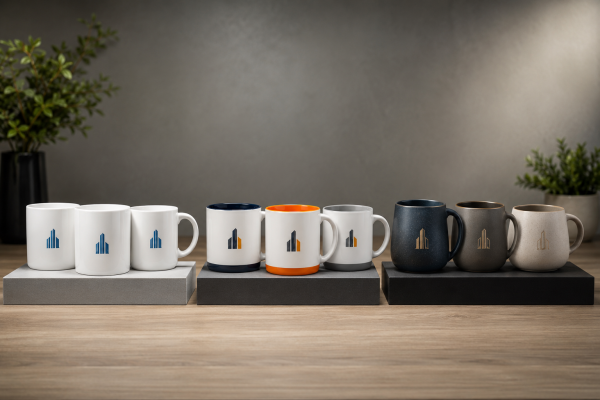
This framework involves presenting three distinct tiers of branded mugs tailored to different use cases, quality levels, and brand messages. It empowers the client to make an informed choice that aligns their budget with their marketing goals, establishing you as a strategic partner.
Dive Deeper: Structuring Your Tiers for Success
This strategy works because it respects the client's initial request for a price point ("Good") but educates them on the benefits of investing more ("Better" and "Best"). It turns a "yes/no" decision on a single price into a "which of these is the best fit?" decision.
Here's how I coach my wholesale partners to structure their offerings:
| Tier | Use Case | Quality & Feature Focus | Brand Message |
|---|---|---|---|
| Good | Mass giveaways, trade shows, high-volume promotions. | Basic ceramic, standard shape, simple one-color decal. Focus on logo visibility and cost-per-impression. | "We were here." Functional and visible. |
| Better | Employee onboarding, general client gifts, gift shop merchandise. | Heavier ceramic, durable glaze, multi-color or full-wrap decal. Dishwasher-safe print. | "We value you." A durable, daily-use item. |
| Best | VIP client gifts, executive events, holiday presents, closing gifts. | Premium porcelain or stoneware, unique shape, matte or reactive glaze, custom interior color, embossed logo. | "We are a premium partner." An exclusive, memorable keepsake. |
Putting it into practice:
When a client asks for a quote, you can respond:
"Certainly. To give you the most accurate options, we typically present three tiers. For a large-scale event like yours, our 'Good' option is a classic white ceramic mug that offers great visibility at a low unit cost. Our 'Better' option, which many clients choose for key customers, is a heavier branded ceramic mug with a high-durability print that ensures the logo looks great for years. Finally, for a truly memorable impression, our 'Best' option features a unique matte finish and shape that feels like a premium gift. Which of these roles does this mug need to fill for you?"
This approach completely reframes the sale. You are guiding them to the right solution, and very often, clients who came in asking for "Good" see the clear value in upgrading to "Better" once they understand the trade-offs.
How Do You Translate Mug Features into Brand Value?
Your client doesn't care about glaze density or ceramic composition. They care about what it means for their brand. A spec sheet is meaningless until you translate its features into tangible business value.
You do this by connecting every physical attribute—weight, finish, shape, and print quality—directly to the recipient's perception of the brand. Stop selling features; start selling the feeling and the message those features create. This is how you justify a higher price for your custom branded mugs.
Dive Deeper: Connecting Physicality to Perception
For 15 years, I've handled thousands of promotional mugs. The difference between a mug that gets used and one that gets left in the cabinet is often decided in the first five seconds of contact. It's all about the sensory experience.
The Power of Weight and Feel
A cheap, lightweight mug feels disposable. A mug with some heft feels substantial and permanent.
- Feature: Higher-density ceramic, thicker walls.
- Translation: "This heavier feel communicates substance and reliability. When you hand this to a client, they immediately feel that your brand is solid and trustworthy, not flimsy or temporary."
The Story of Glaze and Finish
The finish is the "outfit" the mug wears. A glossy glaze is classic and vibrant. A matte or satin glaze is modern, sophisticated, and tactile.
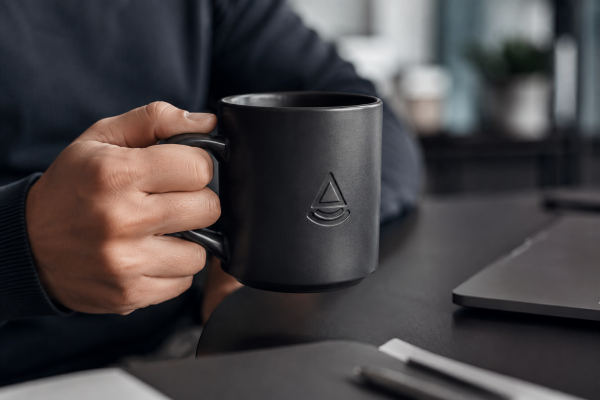
- Feature: Matte black glaze.
- Translation: "A matte finish is what you see from premium tech and lifestyle brands. It has a modern, sophisticated feel and is pleasant to hold. It positions your brand as contemporary and design-conscious, not just another company using standard corporate branded mugs."
The Impact of Shape and Design
In a sea of identical C-handle mugs, a unique shape is a beacon of memorability.
- Feature: A tapered shape or a distinctive handle.
- Translation: "While a standard mug is fine, a unique shape ensures your brand stands out in the cupboard. It becomes 'the cool mug' people reach for, which means your logo gets seen more often. It’s an investment in being memorable."
The Promise of Print Durability
The logo is the entire point. If it scratches off, the investment is wasted.
- Feature: High-temperature decal firing.
- Translation: "We use a high-temperature firing process that fuses the decal into the glaze itself. This means your logo won't fade or scratch off in the dishwasher. It guarantees your brand looks as good in year three as it does on day one, protecting your investment and your image."
By mastering this language, you equip your client to see the mug not as a cost center, but as a hard-working asset for their brand.
Frequently Asked Questions
What makes a good corporate branded mug?
A good corporate branded mug is durable, features a high-quality, long-lasting print, and has a design and feel that align with the company's brand identity. It should be an item the recipient wants to use daily, ensuring maximum brand exposure and reinforcing a message of quality.
How much do logo mugs cost?
The cost of logo mugs varies widely based on material, order quantity, complexity of the design, and printing method. A simple ceramic mug for a mass giveaway might be very inexpensive per unit, while a premium porcelain mug with a custom glaze for VIPs will cost significantly more. It's best to define the goal first, then find a mug that fits the budget.
What is the best printing method for custom branded mugs?
For maximum durability, high-temperature decal firing is the gold standard. The decal becomes a permanent part of the mug's glaze, making it highly resistant to dishwashing and scratching. For complex, full-color photographic images, sublimation is a great option, though it may be slightly less durable over many years of heavy use.
Are branded ceramic mugs dishwasher safe?
It depends entirely on the quality of the mug and the printing process. Mugs with high-temperature fired decals are typically very dishwasher safe. Cheaper mugs with on-glaze prints or stickers may fade, peel, or scratch easily. Always verify the durability specifications with your supplier.
Conclusion
Ultimately, helping companies use branded mugs for awareness isn't about finding the cheapest item; it's about making a strategic match between the product, the recipient, and the brand's core message. By shifting your client's focus from unit price to brand value, you transform your role from a simple supplier to an indispensable consultant. Using consultative questions, the "Good-Better-Best" framework, and translating features into benefits are the keys to unlocking larger orders and building stronger, more profitable client relationships. This approach secures better outcomes for your clients and better business for you.
If you are a wholesaler or e-commerce seller looking for a reliable partner for your wholesale branded mugs, I can help. With 15 years of export experience from our factory in Liling and a deep understanding of what European and South American markets demand, we can help you select and source ceramic products that your clients will love. Contact me to discuss how we can build value together.