Are you worried about opening a shipping container only to find a significant portion of your ceramic mug order shattered? This costly problem goes beyond lost inventory; it erodes your profit margins, damages customer trust, and creates logistical nightmares. The real issue is that many importers focus on the wrong solution. The key to understanding how ceramic mugs are packed for international shipping is to see it not as a box, but as a complete protective system designed from the inside out.
The most effective way ceramic mugs are packed for international shipping is by using a multi-layered "packaging system." This system prioritizes immobilizing each mug with custom-fit internal structures—like cardboard dividers or molded pulp trays—to prevent collision. This internal protection is then housed within a durable, multi-ply master carton designed to withstand the specific stresses of the entire logistics chain.
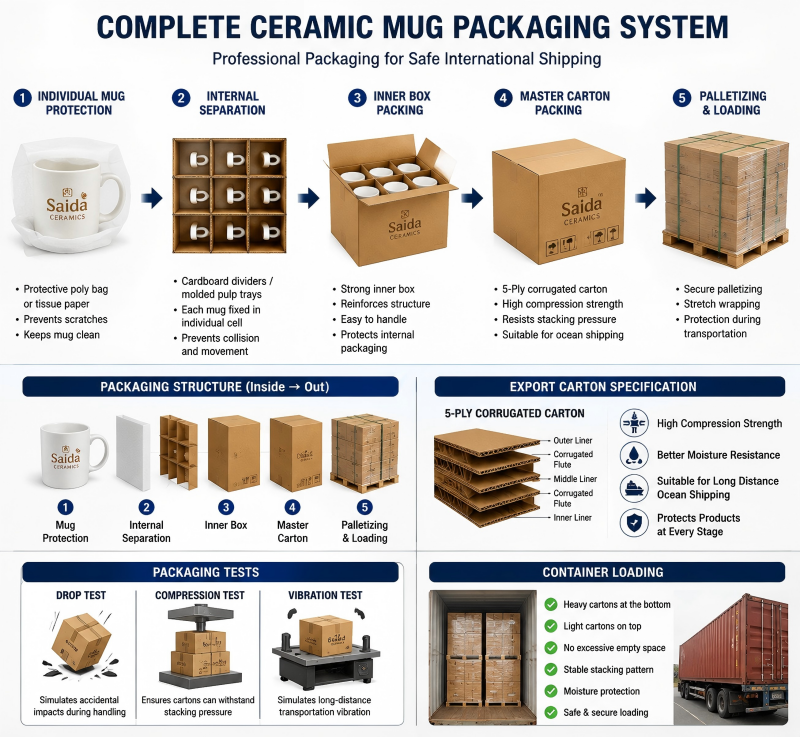
This "system" approach is a fundamental shift from simply using a thick box. It requires a deeper analysis of the product's journey. Let's explore the critical components of this system and how they work together to protect your investment.
Why is the Internal Structure More Important Than the Outer Box?
Many of my clients initially believe that a thicker, heavier outer carton is the ultimate defense against damage. They're often surprised when breakage still happens. The truth is, the greatest danger to a ceramic mug in transit is not external pressure, but collision with its neighbors inside the box.
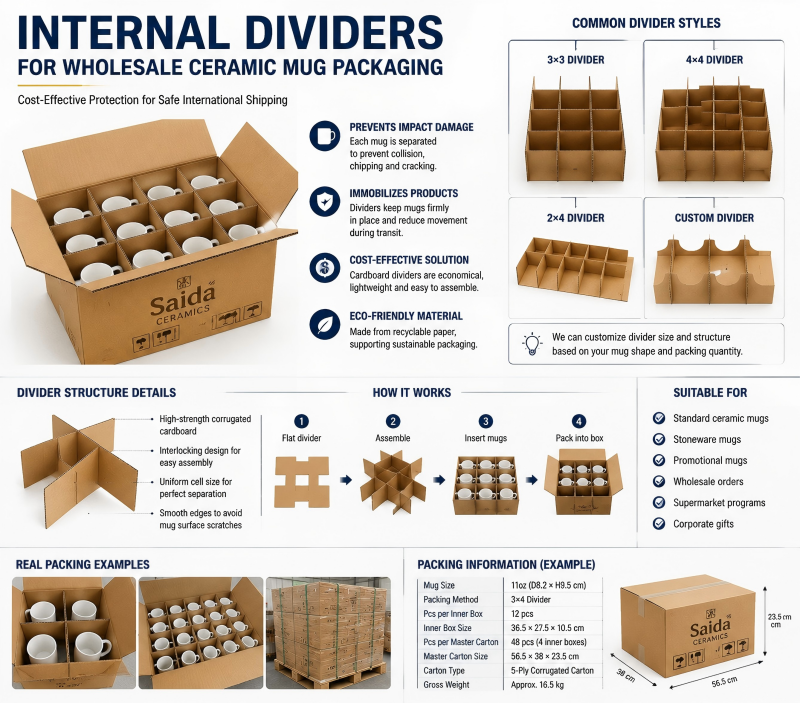
The internal structure's primary job is to immobilize each mug, creating a crucial buffer zone that absorbs shock and vibration. It's the first and most important line of defense. The outer box simply serves as the container for this carefully engineered internal system.
Dive Deeper
Over my 15 years in this industry, I've seen countless cases where expensive, heavy-duty master cartons failed because the contents were not properly secured. Thinking a strong outer box is enough is one of the most common misconceptions in ceramic mug export packaging.
The Myth of the "Indestructible" Outer Carton
Imagine placing a dozen eggs inside a steel box without any dividers and then shaking it. The box itself would be perfectly fine, but the eggs would be a complete loss. The same principle applies to ceramic mugs. The outer ceramic mug shipping box, no matter how many layers of cardboard it has, cannot prevent the mugs from clashing against each other if they can move freely. The primary forces that cause breakage during shipping are shock from drops and constant vibration during transit. An effective packaging system is designed to manage these forces, not just resist being crushed.
Designing from the Inside Out
The secret to how to prevent ceramic mug breakage during shipping is to start with the mug itself and build the protection outwards. This is where customized internal components become essential.
Here are the most common options we use when developing OEM ceramic mug packaging solutions:
- Cardboard Dividers: This is the most common and cost-effective solution for standard-shaped mugs. A grid of interlocking cardboard pieces creates an individual cell for each mug, preventing direct contact. They are simple, recyclable, and effective for many shipping routes.
- Molded Pulp Trays: Often referred to as "egg trays," these are my preferred solution for irregularly shaped mugs or high-risk shipping routes. We create a custom mold based on the mug's exact dimensions. This tray cradles the product perfectly, offering superior shock absorption and immobilization. They are also made from recycled materials and are biodegradable.
- Foam Inserts: For extremely fragile or high-value items, custom-cut foam inserts (like EPE or EVA foam) provide the highest level of protection. However, they are more expensive and less environmentally friendly, so we typically reserve them for specific, high-risk applications.
Here’s a simple comparison of these internal packaging options:
| Feature | Cardboard Dividers | Molded Pulp Trays | Foam Inserts |
|---|---|---|---|
| Protection Level | Good | Excellent | Superior |
| Customization | Moderate | High (requires mold) | High |
| Cost | Low | Medium | High |
| Eco-Friendliness | High (Recyclable) | High (Biodegradable) | Low |
Choosing the right internal structure is the first and most critical step in designing a reliable packaging system for your mugs.
How Do We Analyze a Shipping Route to Design a Packaging System?
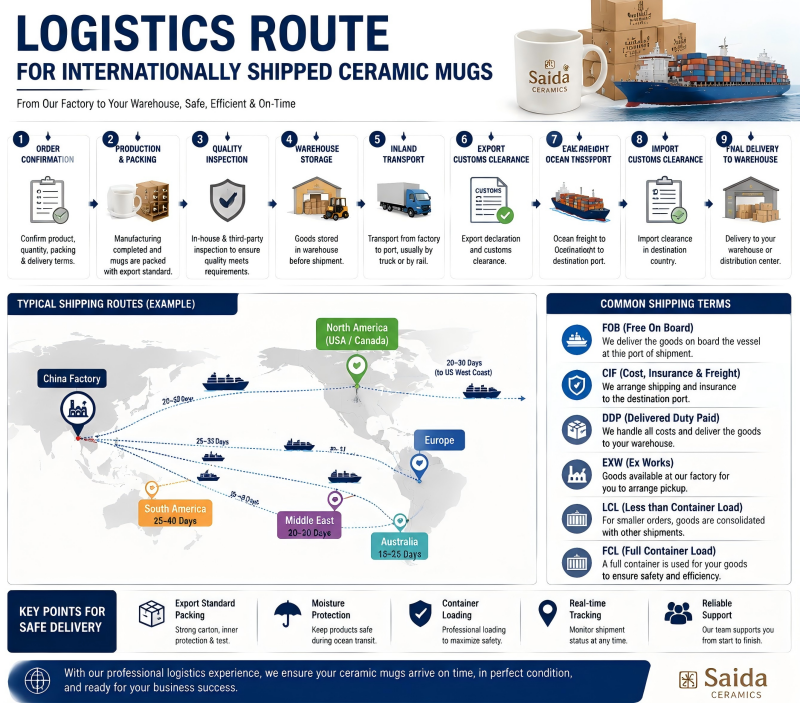
You might have the perfect internal packaging, but a system designed for a short, smooth journey to Hamburg will likely fail on a complex route to a remote city in South America. A truly professional ceramic mug supplier packaging strategy must account for the entire journey.
To do this, we analyze the complete logistics chain to identify specific stress points. These can include multiple transshipments, handling procedures at different ports, long periods of ground transit on poor roads, and even the reputation of last-mile courier services. We then engineer the packaging system to withstand these anticipated challenges.
Dive Deeper
Every shipping route has a unique "risk profile." A container ship crossing the Pacific is relatively stable, but the real damage often occurs during loading, unloading, and ground transportation. As a supplier, it's my responsibility to anticipate these risks on your behalf.
Case Study: Solving a South American Shipping Challenge
A few years ago, I started working with a new e-commerce client in Chile. They were sourcing mugs from another supplier and were experiencing devastating breakage rates of 15-20% per shipment. This was destroying their profit margin and causing inventory nightmares.
1. The Analysis: Instead of just quoting a price, I first asked for their complete shipping route. The journey was: Factory (in China) → Port of Ningbo → Transshipment in Panama → Port of Valparaíso, Chile → Customs Warehouse → Regional Distribution Center → Last-mile Courier Delivery.
I immediately identified two major risk points:
- Transshipment in Panama: The containers were being unloaded from one ship and re-loaded onto another. This process involves multiple crane lifts and movements, significantly increasing the chances of hard impacts.
- Last-Mile Delivery in Chile: Local courier networks in some regions are notorious for rough handling. Packages are often thrown, dropped, and crammed into delivery vehicles. The standard
wholesale ceramic mug packagingthey were using simply wasn't built for this level of abuse.
2. The Solution: We developed a comprehensive packaging system tailored to this high-risk route.
- Primary Protection: We designed custom-fit molded pulp trays that perfectly cradled each mug, providing exceptional shock absorption.
- Inner Box: We didn't place the mugs directly into the master carton. Instead, we grouped 4 mugs with their pulp trays into a smaller, sturdy 3-ply inner box. This added another layer of rigidity and protection.
- Master Carton: We used a heavy-duty, 5-ply master carton. Crucially, we also added reinforced corner protectors on the inside to help the carton maintain its structural integrity even if the corners were dented.
3. The Result: On their first shipment with our new packaging system, the client's damage rate dropped to below 2%. While it slightly increased the packaging cost per unit, it saved them thousands of dollars in lost product and protected their brand's reputation. This is the difference between an order-taker and a true packaging partner.
What Role Does a Supplier Play in Your Packaging Strategy?
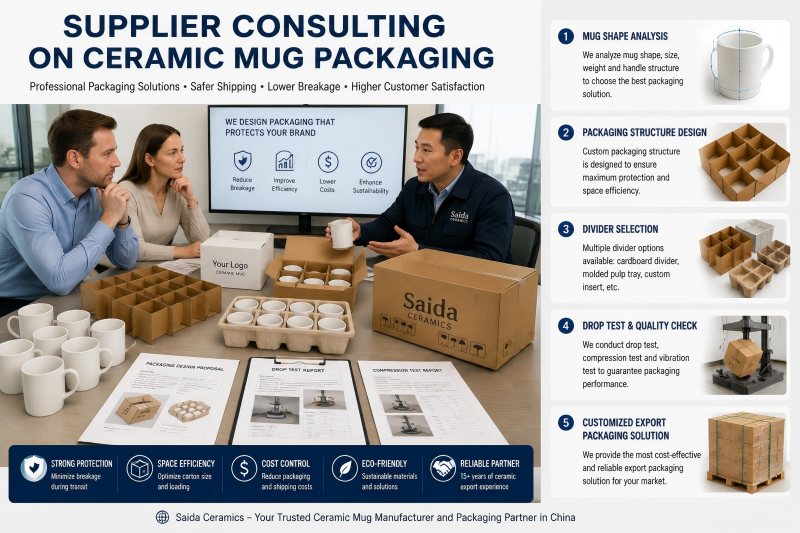
Is your supplier just a factory that takes your order, or are they a partner invested in your success? A simple order-taker might agree to any packaging you request, even if they have seen it fail before. A true partner acts as a risk consultant.
An experienced supplier leverages their deep knowledge of materials, logistics, and real-world shipping outcomes to translate your business needs into a cost-effective, protective packaging system. They understand that ensuring your ceramic mugs are packed for international shipping correctly is fundamental to a successful, long-term partnership.
Dive Deeper
My role is not to sell you the most expensive box. My role is to help you land your product safely and profitably. This requires a consultative approach that goes far beyond a simple price quote. It's about understanding the full context of your business.
Key Questions Your Supplier Should Be Asking
If a potential supplier isn't asking these questions, they are likely not thinking about your total cost of ownership. A proactive partner will want to know:
- What is the final destination? Not just the port, but the final warehouse or customer's doorstep.
- What is your sales channel? Will these mugs be shipped individually to online customers (requiring "ship-ready" packaging) or sold in brick-and-mortar stores?
- What is your acceptable damage rate? For a low-margin, high-volume wholesaler, 1-2% might be acceptable. For a high-end gift brand, anything above 0.5% could be a disaster.
- Have you experienced damage issues in the past? Understanding previous failures is the best way to design a better solution for the future.
This dialogue is the foundation of a successful ceramic mug supplier packaging strategy.
Beyond the Box: Testing and Loading
A professional packaging system is validated through testing. Before committing to mass production, we can and should perform tests to simulate the stresses of shipping.
- Drop Test (ISTA Standards): This is a standardized test where we drop a fully packed carton from various heights and on different corners, edges, and faces. A passing grade means the internal system successfully protected the mugs from the impact.
- Vibration Test: The carton is placed on a vibration table that simulates the constant jostling of a truck or container ship for an extended period. This tests the internal structure's ability to keep mugs immobilized.
Finally, the system extends to the container loading plan. Even the best-packed cartons can be compromised if they are loaded improperly. We ensure that pallets are stacked correctly, weight is distributed evenly, and empty space is filled with dunnage bags to prevent loads from shifting during the sea voyage. This holistic view is essential for wholesale ceramic mug packaging where the value of a single container is substantial.
Frequently Asked Questions
What is the most common cause of ceramic mug breakage during shipping?
The single most common cause is mugs colliding with each other inside the box. This happens when the internal packaging is inadequate and fails to immobilize each item, allowing them to shift and impact one another during transit vibrations and shocks.
Is bubble wrap a good solution for shipping wholesale ceramic mugs?
For a single mug sent by an individual, bubble wrap can be sufficient. However, for wholesale freight, it is inefficient, labor-intensive, and offers less consistent protection than structured solutions like cardboard dividers or molded pulp trays, which are designed for bulk handling.
How much does custom ceramic mug packaging cost?
The cost varies based on complexity and volume. While a custom solution like a molded pulp tray may have an initial one-time tooling fee, it can reduce damage so significantly that the total cost of ownership is much lower than using a "cheaper" standard box and absorbing the cost of broken goods.
What is a "drop test" for ceramic mug packaging?
A drop test is a quality control procedure where a fully packed carton is systematically dropped from specific heights onto its corners, edges, and flat surfaces. This simulates the rough handling it might experience during shipping and validates that the packaging system is effective at protecting the contents.
Conclusion
Ultimately, how ceramic mugs are packed for international shipping is a question of risk management. The most effective strategy is not to buy the thickest box, but to partner with a supplier who designs a complete packaging system. This system must be engineered from the inside out, starting with an internal structure that immobilizes the product and validated against the specific risks of your unique shipping route. By viewing packaging as a holistic system, you can dramatically reduce damage, protect your profits, and ensure your products arrive safely.
With 15 years of experience exporting ceramic mugs worldwide, we specialize in designing these protective systems for our wholesale and e-commerce clients. If you're looking for a partner who will work with you to protect your next shipment, contact us to discuss your specific packaging needs.