You're trying to find the best deal on mugs, but price isn't everything. Focusing only on the lowest cost can lead to products that don't sell or have hidden fees.
The best way to buy wholesale ceramic mugs is to stop chasing the lowest price and start focusing on the right product for your specific market. This means balancing material, decoration, packaging, and quantity to maximize your profit and reduce risk. It’s a game of smart trade-offs.
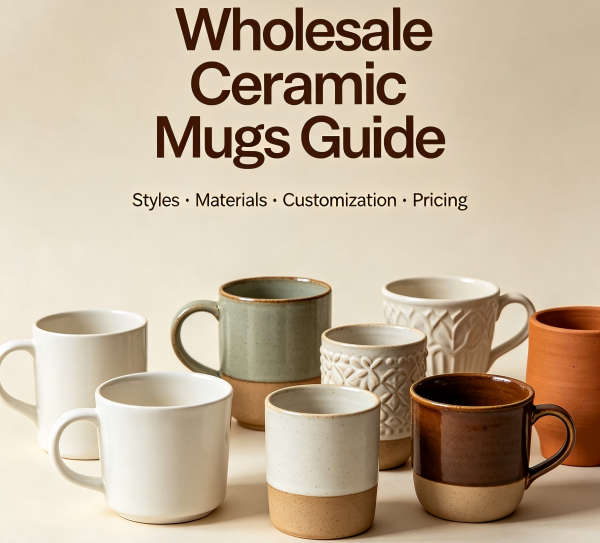
Over my 15 years exporting ceramic mugs from our factory in Liling, I've seen countless buyers make the same mistake. They start every conversation with "What's your best price?" While I understand the need to be cost-conscious, this question skips over several more important ones. A better approach is to think like a partner. When you tell me about your business, your customers, and your goals, I can help you build the perfect mug for your needs. This guide is built on that idea. I want to walk you through the decisions we make with our clients every day. We'll go beyond simple specs and talk about what really matters for your business's success. Let's start building a profitable product together.
Should You Really Be Asking for the 'Best Price'?
You need the best price to maximize your profits. But buying the cheapest mug available can backfire if it's not what your customers want, leaving you with unsold inventory.
Instead of asking for the 'best price,' tell your supplier who you are selling to. A simple, low-cost mug for a promotional giveaway has very different requirements than a unique, high-quality mug for a premium gift shop. Your market dictates the ideal price point.
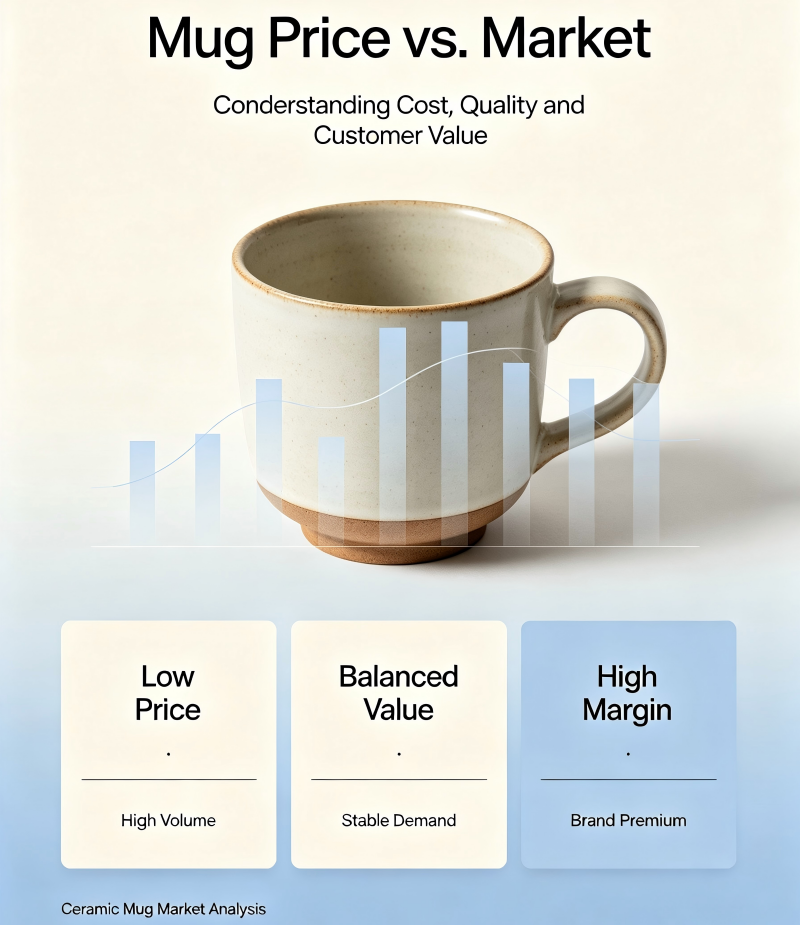
In our factory, we work with all kinds of buyers, from large European wholesalers to boutique e-commerce sellers in South America. The most successful ones don't just focus on the per-unit cost. They focus on the end customer. The "best" mug for a corporate giveaway is all about hitting a specific budget, so a simple silk-screened stoneware mug might be perfect. But for an online store selling artistic designs, the perceived value is higher. For them, a porcelain mug with a detailed decal might command a better retail price and higher profit margin, even if the initial cost is more. Understanding this relationship is the key to profitability.
Your Target Market Defines Your Mug
| Target Market | Key Requirement | Ideal Mug Characteristics |
|---|---|---|
| Promotional Giveaways | Low cost, high volume | Simple stoneware, 1-2 color silk screen logo |
| Coffee Shops / Restaurants | Durability, professional look | Thick-walled porcelain, durable decal |
| E-commerce Stores | Unique design, good margins | New bone china, full-wrap sublimation |
| Premium Gift Shops | High perceived value, quality feel | Fine porcelain or bone china, custom shape, gift box |
Which Ceramic Material is Right for Your Business?
Choosing a mug material seems confusing with all the options. Picking the wrong one can increase your costs with higher shipping fees or fail to match your brand's quality.
The right ceramic material depends on your brand's image and your budget. Porcelain feels premium but costs more. Stoneware is rustic and durable but heavier, which increases shipping costs. Your choice is a business decision, not just a technical one.
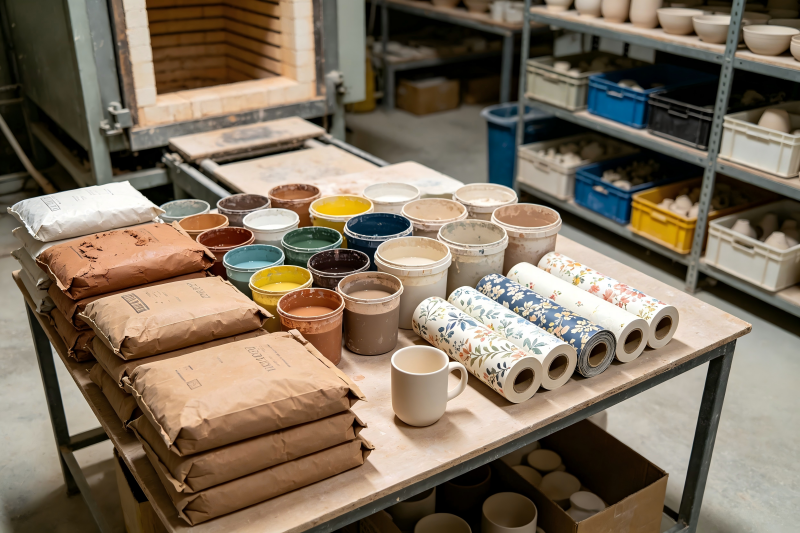
One of the first decisions to make is the material. Many new buyers don't realize how much this choice impacts their total cost. For example, stoneware is a fantastic, cost-effective, and durable option. We make a lot of them. But, it's heavier than porcelain. If you're an e-commerce seller shipping individual mugs to customers, that extra weight can add up and eat into your margins on every single order. On the other hand, if you're a wholesaler shipping pallets to a distribution center, the weight difference might be less of a concern compared to the lower unit price. It’s all about these trade-offs.
Comparing Materials as a Business Choice
| Material | The Upside | The Downside | Best For... |
|---|---|---|---|
| Stoneware | Cost-effective, durable, rustic feel | Heavier (higher shipping cost), opaque | Cafes, promotional items, rustic brands |
| Porcelain | Premium feel, white/bright, strong | More expensive than stoneware | High-end restaurants, corporate gifts |
| New Bone China | Lightweight, translucent, high-end look | More brittle than porcelain, costs more | E-commerce, gift shops, brands wanting a premium feel without the top price |
| Bone China | Highest perceived value, very light | Most expensive, most fragile | Luxury gift market, collector's items |
How Does Your Mug's Decoration Affect Your Sales?
Your design is what sells the mug. But some printing methods fade quickly in the dishwasher or are too expensive for your design, which can lead to unhappy customers or thin profits.
Your mug's decoration method impacts its durability, cost, and visual appeal. Decal printing is best for complex logos that need to be dishwasher-safe. Sublimation is great for full-color photos, and silk screening is the most cost-effective option for simple, large-volume designs.
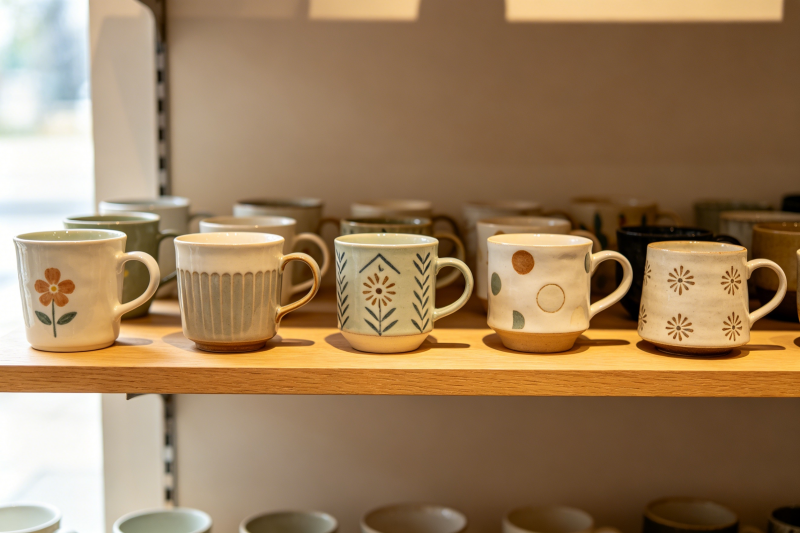
A frequent question we get is about making a design last. A customer will send a beautiful, full-color design and want the cheapest price. In this case, we have to explain the options. We could use sublimation, which looks fantastic and is great for photographic images. However, for some markets that demand extreme durability, a high-temperature decal firing is the better choice. It costs more and has some color limitations, but the design becomes part of the mug's glaze—it will never fade. For a simple one-color logo on 5,000 promotional mugs, silk screen printing is unbeatable for cost. The right choice depends entirely on your design, your budget, and how your customer will use the mug.
Matching Decoration to Market Needs
| Method | Durability & Feel | Cost Structure | Best For... |
|---|---|---|---|
| Decal Firing | Extremely durable, dishwasher safe | Higher unit cost, best for 500+ units | Corporate logos, premium brands, restaurant use |
| Sublimation | Good, but can fade with high heat/sun | Good for small batches, no setup fee | Full-color photos, personalized gifts, e-commerce |
| Silk Screen | Durable, slightly raised texture | Very low cost on high volume runs | Simple text, 1-2 color logos, promotional mugs |
What are the Hidden Costs of Importing Wholesale Ceramic Mugs?
You found a great per-unit price. But then shipping, packaging, and import fees start to pile up. Don't let these surprise costs completely erase your profit margin.
The quoted unit price is only the beginning. You must also budget for shipping-durable packaging, customs compliance documents like food safety certificates, and production lead times that can impact your seasonal sales. These 'hidden' costs are critical for profitability.

What new importers often miss are the costs beyond the factory gate. A cheap mug is no good if it arrives broken. We always discuss packaging with our clients. A basic egg-crate-style box is cheap for bulk freight, but if you're selling online, you need a more robust individual box that can survive the mail system. That adds cost. Then there's compliance. We are an ISO9001 and BSCI certified factory, so we understand the paperwork. For our European clients, we provide the necessary food-grade testing reports. For our South American clients, we help with the specific documentation they need. Not having this ready can cause long delays and fines at customs. Working with an experienced partner is crucial. This is why knowing How to Find Reliable Ceramic Mug Manufacturers in China is so important; a good partner helps you see these costs coming.
Uncovering Overlooked Expenses
- Packaging Costs: The standard bulk packaging included in a quote is often not enough for e-commerce. A sturdy mail-order box can add $0.20-$0.50 per unit, but it prevents breakage and negative reviews.
- Compliance and Testing: Selling in the EU or USA requires food safety certification (e.g., FDA, LFGB). These tests can cost hundreds or thousands of dollars if the factory doesn't already have them for the materials you're using.
- Lead Times as a Cost: Standard production is 30-45 days. Shipping by sea is another 30-40 days. If you miss your deadline for a holiday season, the cost of lost sales is far greater than the cost of the mugs.
Conclusion
Success in buying wholesale mugs comes from making smart trade-offs for your market, not just chasing the lowest price. Partner with a factory that understands your business goals.
👉 Contact us today to request free samples or receive a quotation within 24 hours