Sourcing ceramic mugs feels like a gamble. You ask the standard questions but still face delays and quality issues. The key is asking smarter questions.
To truly vet a ceramic mug supplier, go beyond surface-level inquiries. Ask about their quality control process, the drivers behind their MOQ, how they apply certifications to your specific order, and what they do to mitigate production delays. This reveals their true reliability.

Over my 15 years exporting ceramic mugs from our factory in Liling, China, I've seen many buyers make the same mistakes. They focus on a simple checklist of questions. But the most successful wholesalers and e-commerce sellers I work with dig deeper. They don't just get answers; they test a supplier's transparency and expertise. Let me share the questions they ask, so you can stop guessing and start building a reliable supply chain.
Should You Only Work With a Factory and Not a Trading Company?
You're told to avoid trading companies at all costs. But is a "factory" label a true guarantee of quality? The real risk lies in a lack of process.
The question isn't "factory or trader?" but "how mature is your operation?" A better question is: "Can you walk me through your quality control process for an order like mine?" This reveals more than their business license ever will. A great trader beats a bad factory.
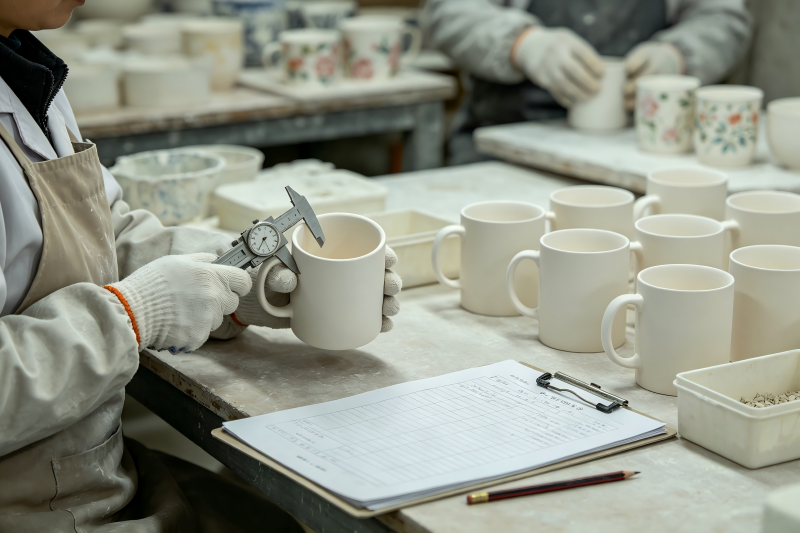
I get this question every day: "Are you a factory?" Buyers think it's a critical question. Honestly, it tells you very little about the quality you'll receive. I've seen small, disorganized factories that cause endless headaches. I've also seen well-organized trading companies with amazing quality control teams on the ground. The real issue is operational maturity. When a buyer asks me to explain our QC process, I know they're a pro. I can explain our ISO9001 system, which means we have documented procedures for everything. This isn't just a certificate on the wall; it's how we run our business day-to-day. A supplier who can clearly articulate their quality checkpoints is one you can trust, regardless of their business type. They should be able to tell you how they inspect materials, check products during production, and conduct final inspections.
How to Find Reliable Ceramic Mug Manufacturers in China
Our Typical QC Flow
- Incoming Materials: We test our clay and glazes before they even enter the production line.
- In-Process Checks: We inspect mugs after forming, after glazing, and after decal application.
- Final Inspection: We follow AQL standards for a final random inspection before packing.
This structured process is what guarantees quality, not the name on our business registration.
Expert Tip
Ask for a factory tour video. Even a simple smartphone video can show you if the workspace is clean and organized, and if they have dedicated QC staff, revealing much about their operational standards.
Is a Supplier's MOQ Just an Arbitrary Number?
You found the perfect mug, but the MOQ is too high. You try to negotiate, but the supplier won't budge. Is it a real constraint or just a policy?
Instead of just asking "What's your MOQ?", ask a more insightful question: "What factors are driving the MOQ for this specific design?" This opens a real negotiation by showing you understand their business and helps you find creative solutions together.
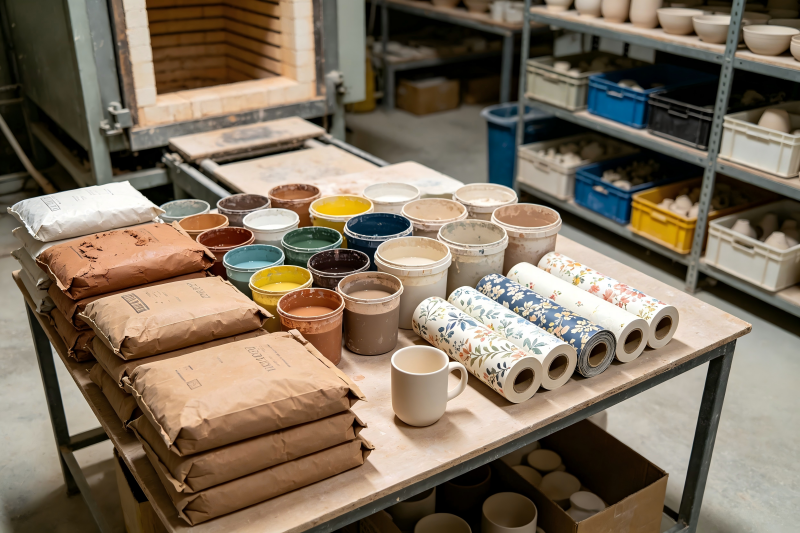
"What's your MOQ?" is a starting point, not the end of the conversation. When a buyer asks me why the MOQ is what it is, I see them as a partner, not just a customer. The answer is often technical, not just a business rule. For example, a custom-colored glaze might require us to buy a large minimum quantity of pigment from our supplier. The decal paper might be printed in large sheets, making small runs inefficient. The kiln needs to be full to operate efficiently and produce a consistent result. Understanding the driver helps you negotiate smarter. Maybe you can't lower the quantity for a custom glaze, but you could use one of our stock colors for a trial order. Asking "why" shows respect for the production process and opens the door to a more collaborative discussion.
| Customization Type | Main MOQ Driver | Potential for Flexibility |
|---|---|---|
| Custom Body Shape | Mold development costs | Low; high initial investment. |
| Custom Glaze Color | Raw material purchase minimums | Medium; ask if you can use a stock color. |
| Decal Application | Decal printing batch size | High; ask if you can split the run with another design. |
| Pad Printing | Setup and cleaning time | Medium; cost-effective at higher volumes. |
Expert Tip
If the MOQ is driven by decal printing, ask the supplier if you can combine two different designs on the same print run to meet the total minimum quantity. A flexible partner will often be willing to find a solution.
Does a Certificate on the Wall Guarantee a Safe Product for Your Customers?
The supplier's website is covered in certification logos. This feels reassuring, but does it mean your specific order is compliant and safe? Not always.
Don't just ask, "Do you have FDA and Prop 65 certification?" A smarter question is: "Can you provide a recent test report for a similar product and explain your batch testing protocol?" This proves they have an active compliance process, not just an old certificate.
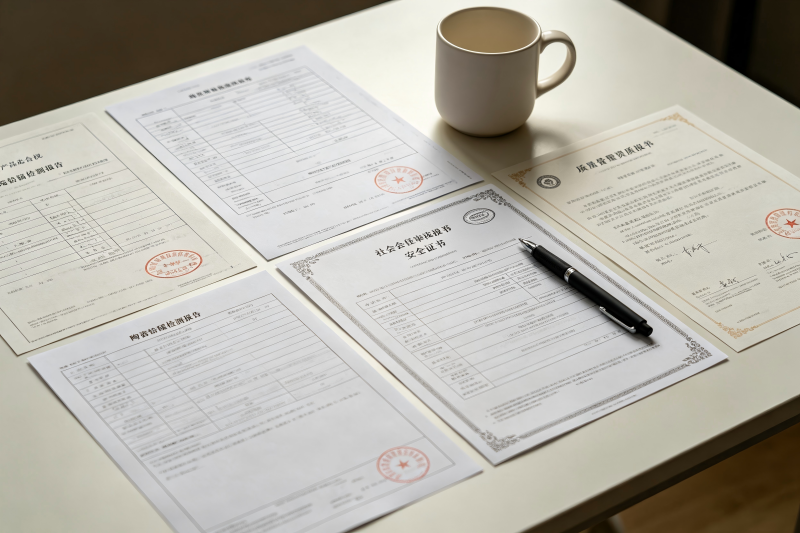
Many buyers see our BSCI and ISO9001 certifications and feel secure. These are very important. BSCI shows we treat our workers well, and ISO shows we have strong management systems. But these don't guarantee the mug in your customer's hand is free from lead and cadmium. That's where product-specific testing like FDA, LFGB, or California Prop 65 comes in. A certificate from two years ago is meaningless. Raw materials can change. A different color of glaze can have different chemical properties. A professional buyer asks to see a recent report and, more importantly, asks about our process for ensuring their specific batch is compliant. We explain that we use tested raw materials and can arrange for batch-specific testing with labs like SGS or TUV at the buyer's cost. This transparency is key to protecting your business and your customers.
Expert Tip
Differentiate between social compliance audits (like BSCI) which assess factory ethics, and product safety test reports (like FDA/Prop 65) which assess the physical product. You need to verify both to ensure you are working with a truly responsible supplier.
How Can You Know if a Quoted Production Lead Time Is Actually Realistic?
You get a lead time of 45 days. It fits your schedule perfectly. But past experience has taught you that these dates are often just optimistic guesses.
Stop asking, "What's your lead time?" and start asking a risk assessment question: "What were the top 3 causes of production delays in your factory last year, and what have you done to mitigate them?" Their answer reveals their honesty and problem-solving skills.
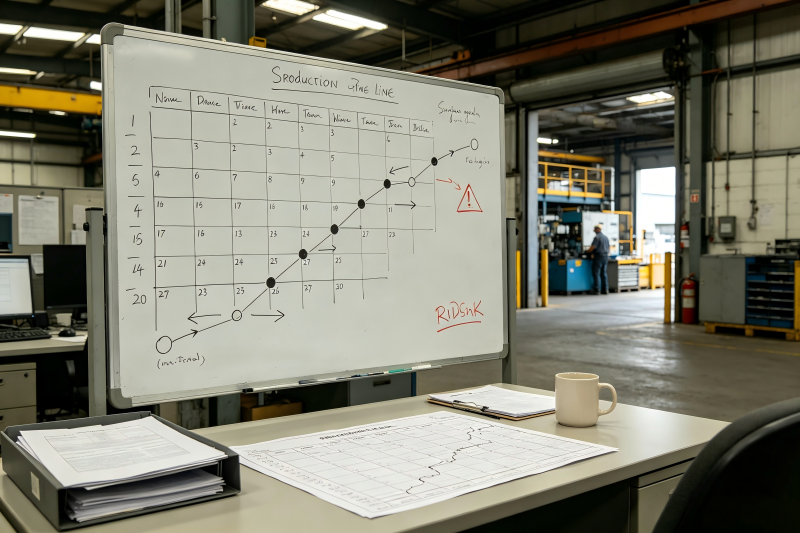
A simple number for lead time is one of the biggest points of failure in sourcing. A supplier who just gives you a number without context is either inexperienced or hiding something. When a buyer asks me about past delays, I'm impressed. It shows they understand that things can go wrong in manufacturing. It's an opportunity for me to be transparent and build trust. I can explain that last year, a new environmental inspection policy caused some delays, and now we build that buffer time into our schedule. Or maybe a specific type of complex decal had a higher-than-normal failure rate, so we've improved our application process and added buffer time for those orders. A good supplier has faced problems and learned from them. Their ability to talk about these issues openly is the best indicator that your quoted lead time is based on reality, not just wishful thinking.
Expert Tip
Ask for a production schedule for your order. A simple timeline showing key milestones (material arrival, sample approval, mass production start, packing, final inspection) shows they have a real plan, not just a date.
Conclusion
Asking better questions turns you from a simple customer into a valued partner. It helps you avoid risk and builds a foundation for a long-term, profitable relationship.
Frequently Asked Questions
What is the difference between ISO9001 and BSCI?
ISO9001 is a quality management certification. It means the factory has documented, repeatable processes for production and quality control. BSCI (Business Social Compliance Initiative) is a social audit. It ensures the factory meets standards for worker rights, safety, and ethical treatment. You should look for both for a reliable and ethical supplier.
If a supplier's MOQ is too high, is it ever possible to negotiate a smaller trial order?
Often, yes. The key is to understand what's driving their MOQ (as we discussed). If it's a technical constraint, offer to pay a surcharge for a smaller run or choose a product variation (like a stock color) that has a lower minimum. Showing you're willing to be a partner in finding a solution goes a long way.
How much should I expect to pay for third-party lab testing for FDA or Prop 65?
This can vary widely, from a few hundred to over a thousand dollars, depending on the number of items and specific tests required (e.g., lead, cadmium, microwave safety, dishwasher safety). Ask your supplier if they can get a quote from their preferred lab partner, like SGS, Intertek, or TUV.
Conclusion
Asking better questions turns you from a simple customer into a valued partner. It helps you avoid risk and builds a foundation for a long-term, profitable relationship.
Need Help Evaluating a Ceramic Mug Supplier?
If you're sourcing ceramic mugs from China, our team can help you evaluate product quality, review factory capabilities, and provide samples before mass production.
With over 15 years of ceramic mug manufacturing experience and exports to Europe, North America, and other global markets, we support retailers, wholesalers, supermarkets, and promotional brands with reliable OEM and ODM production.