Are you confused by suppliers' claims about mug transparency and quality? Making the wrong choice means you could overpay for low-quality products. Understanding this one detail helps you assess quality and value accurately.
No, ceramic mugs are not transparent. The vast majority are opaque. A small number of high-end mugs, like those made from bone china, are translucent. This translucency is a key sign of superior quality, advanced manufacturing, and more expensive materials.
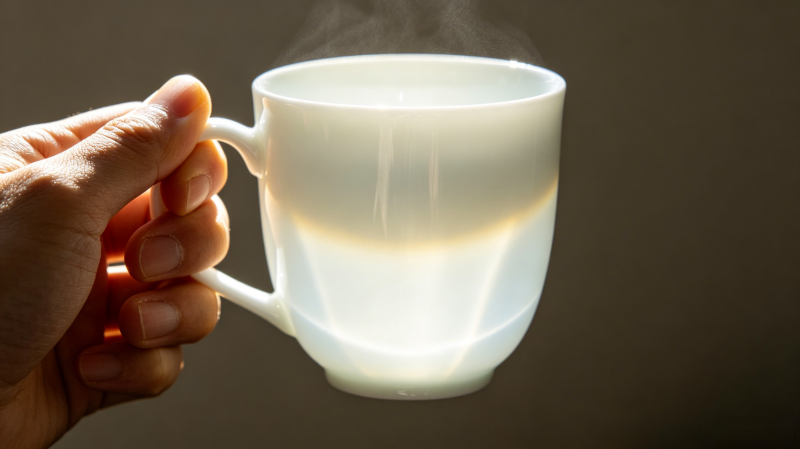
In my 15 years of manufacturing ceramic mugs for export, I've answered this question many times. It seems like a simple question about how light passes through a material. But for a professional buyer, it's much more than that. The answer tells you almost everything you need to know about the mug's material, quality, and price. It’s a simple test that can protect your investment and ensure you get exactly what you pay for. This isn't a physics lesson; it's a guide to making smarter purchasing decisions.
Why are most ceramic mugs opaque?
You see the term "ceramic mug" everywhere, but it's a broad category. You might be buying thick, heavy stoneware when you expect something more refined. Let's look at why opacity is the standard for most common mugs.
Most ceramic mugs are opaque because they are made from materials like stoneware or standard-grade porcelain. These dense clays completely block light. This makes the mugs very sturdy and cost-effective for everyday, high-volume use.
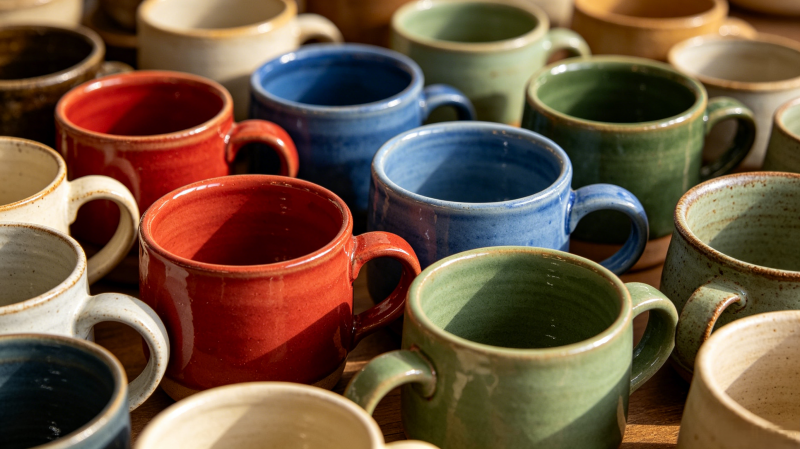
When we talk about the mugs you find in most diners, coffee shops, and promotional giveaways, we are usually talking about stoneware. Stoneware is the workhorse of the ceramic world. It's made from clay that has small impurities in it, which gives it a dense, earthy quality. We fire it at a relatively lower temperature, around 1200°C. The result is a thick, heavy, and very durable mug. By its very nature, it's completely opaque. Light cannot pass through it at all. This is a feature, not a flaw, for its intended use. Its main job is to be tough and affordable.
Then there is standard porcelain. While porcelain is made from more refined clay, the mugs you often see in mass-market retail are made with thick walls. We do this to increase durability and reduce breakage during shipping and daily use. This thickness makes them opaque, just like stoneware. So, even though the material is technically higher grade, the final product still blocks light. As a buyer, your job is to know what you're buying.
Material Breakdown: Opaque Mugs
| Feature | Stoneware Mugs | Mass-Market Porcelain Mugs |
|---|---|---|
| Material | Clay with natural impurities | More refined clay (kaolin) |
| Light Property | Completely Opaque | Opaque (due to wall thickness) |
| Key Benefit | Maximum Durability, Low Cost | Brighter white surface, good for decals |
| Common Use | Cafes, promotional giveaways, diners | Everyday restaurants, hotels, retail |
What makes a ceramic mug translucent?
You've likely heard that "bone china" is a premium product, but do you know why? You could be missing a high-value category for your more selective clients. Understanding translucency is the key to identifying truly high-end ceramic ware.
A ceramic mug becomes translucent when it is crafted from high-quality materials like bone china or specific high-grade porcelains. The thin but strong walls, achieved through skilled manufacturing and high-temperature firing, allow light to pass through, creating a distinctive, warm glow.
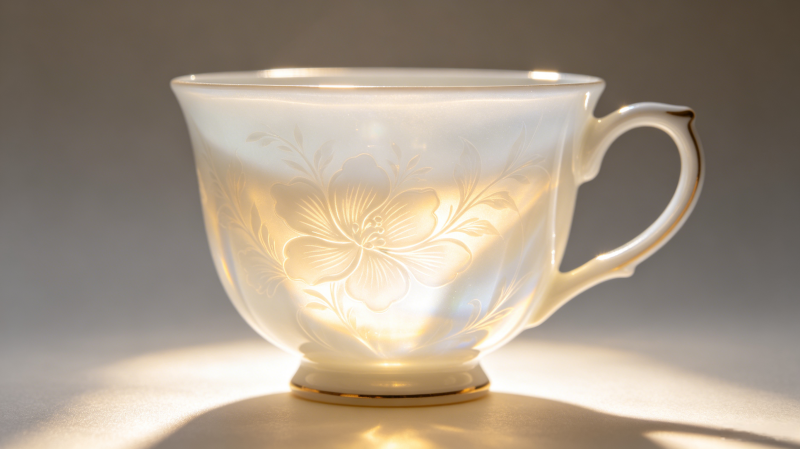
Translucency is not an accident; it is a feature of premium manufacturing. The star material here is bone china. For years, my factory has produced bone china, and the process is much more delicate than for stoneware. It's made from a special recipe containing bone ash, which makes it incredibly strong even when it's very thin. We fire it at very high temperatures, which vitrifies the material and creates that beautiful translucency. The final product is lightweight, surprisingly durable, and has a warm, milky-white color. When you hold it up to a light, you'll see a soft glow. This is the mark of true bone china.
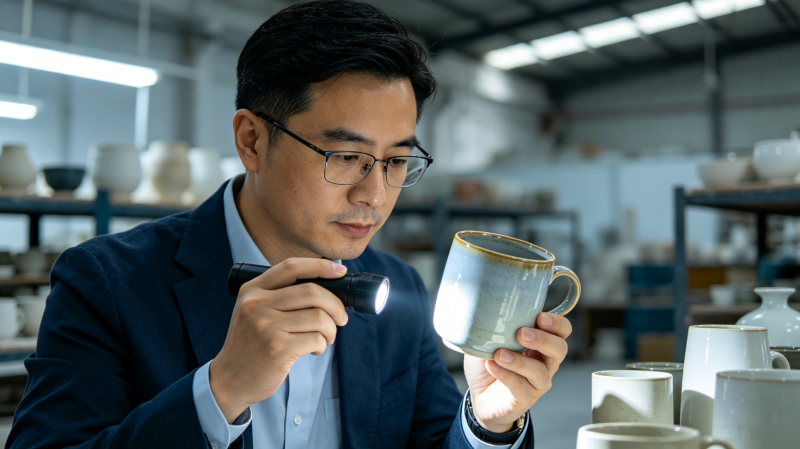
Another option is high-grade porcelain, sometimes called "New Bone China." It's a modern material designed to look like bone china without using animal bone ash. It can also be very translucent and offers a premium look. For buyers, it’s a great option that sits between standard porcelain and traditional bone china in terms of cost. The best part is that you can check for this quality yourself. I always tell my clients to do the "light test." Just hold the mug up to a window or use your phone's flashlight. If you can see the shadow of your fingers through the mug's wall, you have a translucent piece. It's a simple, foolproof quality check.
Material Breakdown: Translucent Mugs
| Feature | Bone China | High-Grade Porcelain (New Bone) |
|---|---|---|
| Key Ingredient | Cow Bone Ash (~40%) | Special mineral additives |
| Light Property | Highly Translucent | Translucent |
| Feel | Lightweight, very delicate | Lightweight, feels refined |
| Price Point | Premium | High |
| Buyer's Takeaway | Top-tier luxury, highest perceived value | Premium appearance, slightly lower cost |
Why should a buyer care about this distinction?
You might think the difference between opaque and translucent is just a minor detail. But this "minor detail" directly impacts your budget, product quality, and your supplier's trustworthiness. Learning to use this distinction is a powerful tool.
Buyers must care because this difference reveals the product's true quality, material makeup, and cost. It empowers you to verify a supplier's claims, avoid overpaying for standard goods, and perfectly match a product to your market's price expectations.
First and foremost, this knowledge helps you assess a supplier's honesty. This is a big one. If a supplier ever claims their ceramic mugs are "transparent," you should be cautious. A transparent object is something you can see through clearly, like glass. No ceramic is transparent. A supplier who uses this word is either uneducated about their own products or is intentionally misleading you. I once had a new buyer ask if we could make our mugs transparent. I took the time to explain the difference between opaque, translucent, and transparent. That conversation built immediate trust. A good partner will educate you.
Second, it helps you match the product to your market. Are you buying for a discount retail chain or a luxury hotel gift shop? Opaque stoneware is a perfect fit for the first. Translucent bone china is expected for the second. Knowing the difference stops you from buying a standard, opaque mug at a premium price. You can source the right product for the right customer, every time. Finally, this knowledge gives you power in negotiations. Translucency is a feature you pay for. It demands better materials and more skill. When a supplier shows you a translucent sample, you understand why the cost is higher. If the mug is opaque, you know it belongs in a lower price bracket.
Your Buyer's Cheat Sheet
| Mug Property | What It Tells You | Your Actionable Insight |
|---|---|---|
| Opaque | Standard material (stoneware or thick porcelain). Made for durability and cost-efficiency. | Verify it's priced as a standard item. This is your go-to for mass-market and promotional products. |
| Translucent | Premium material (bone china or high-grade porcelain). Indicates higher quality, craftsmanship, and cost. | Always perform the "light test" to confirm. Source this for your high-end markets and premium clients. |
| "Transparent" | This is a major red flag. It shows the supplier is misinformed or being dishonest. | Question the supplier's expertise and credibility. Proceed with extreme caution or find another partner. |
Conclusion
So, most ceramic mugs are opaque. Translucency is a mark of superior quality. Use this knowledge to buy smarter, verify your products, and choose the right manufacturing partner for your business.