Where Can I Buy Coffee Mugs With My Company Logo?
Struggling to find quality custom mugs? You worry about high costs and prints that fade. Sourcing directly from a Chinese manufacturer is the answer for your branding needs.
You can buy coffee mugs with your company logo directly from manufacturers in China, like us in Liling. This approach gives you better pricing, more customization options, and control over quality[^1]. The key is to understand how order quantity and printing methods affect the final cost and production.
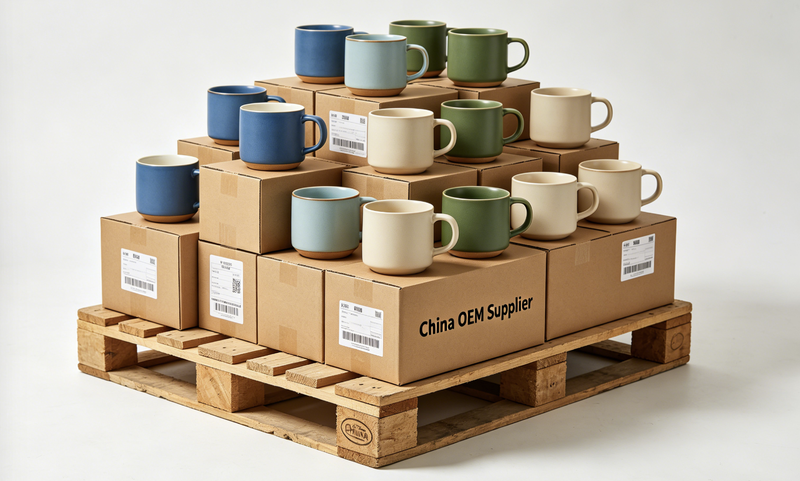
Sourcing from China seems like a great idea, but you probably have more questions. How does the order size affect the price? What are the different printing options available? I remember when I first started explaining this to a client from Germany; they were amazed at the possibilities. Let's break down everything you need to know to make the best decision for your business.
How Does Order Quantity Affect the Price of Custom Mugs?
Worried about your budget for custom mugs? Ordering the wrong quantity can be costly. Let's see how order size directly impacts your per-unit price to maximize your investment.
The rule is simple: the larger your order quantity, the lower the price per mug. This is because manufacturers spread fixed costs like mold setup, printing plate creation, and machine calibration[^2] over more units. Small orders have a much higher cost per piece due to these fixed expenses.
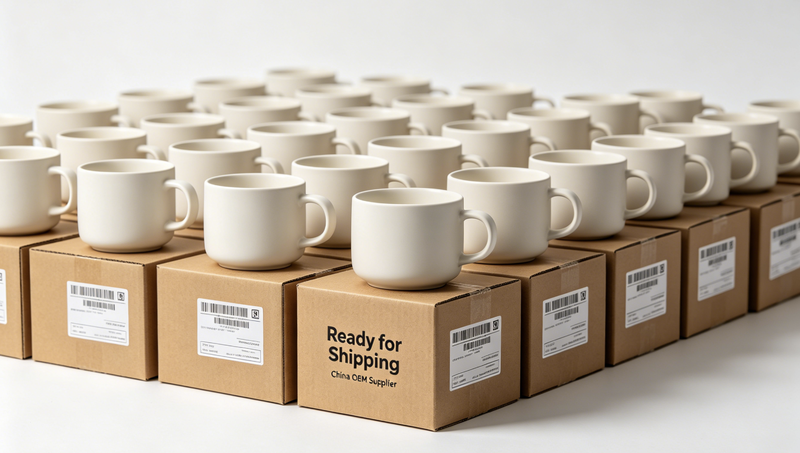
To give you a clearer picture, let's dive deeper into how this works on the factory floor. For over 15 years, I've seen clients save a lot of money by understanding this simple concept of economies of scale[^3]. It’s all about how we manage costs during a production run.
The Role of Fixed Costs
Every custom mug order has fixed costs. These are one-time expenses that don't change whether we produce 1,000 mugs or 10,000. This includes creating the printing plates for your logo, setting up the decal application line, and calibrating the kilns. If your order is small, say 1,000 mugs, these setup costs are divided by only 1,000 units, making each mug more expensive. But if you order 10,000 mugs, the same setup costs are divided by 10,000, drastically lowering the cost per mug.
Price Tiers in Manufacturing
Because of this, we operate with price tiers. I recall a wholesale client from the US who initially wanted only 1,000 mugs. After I showed them the price difference for an order of 5,000 units, they realized they could significantly increase their profit margin by ordering more. It's all about understanding the numbers.
Here’s a simple table to illustrate this:
| Order Quantity (Units) | Example Price Per Mug | Why the Price is Different |
|---|---|---|
| 1,000 - 3,000 | $2.50 | Fixed costs are spread over a small number of units, making each piece more expensive. |
| 3,001 - 5,000 | $1.80 | We gain efficiency and can purchase raw materials at a slightly better price. |
| 5,001 - 10,000 | $1.20 | Our production line hits its maximum efficiency. This is the sweet spot for many wholesalers. |
| 10,001+ | $0.95 | We get significant discounts on bulk raw materials and can streamline logistics, passing savings to you. |
This is why our factory is optimized for large-scale partners like supermarkets and wholesalers. Our entire process is built to handle volume, which is how we provide such competitive pricing.
What Customization Methods Affect the Minimum Order Quantity (MOQ)?
Overwhelmed by logo customization options? Choosing the wrong method can mean high minimum orders you can't meet or a logo that wears off. Understanding each process ensures you make the perfect choice.
Different customization methods have different Minimum Order Quantities (MOQs) because their setup processes vary in complexity and cost. Simple decal printing might have a lower MOQ than complex techniques like full-wrap printing or custom color glazing. The more intricate the setup, the higher the required MOQ.
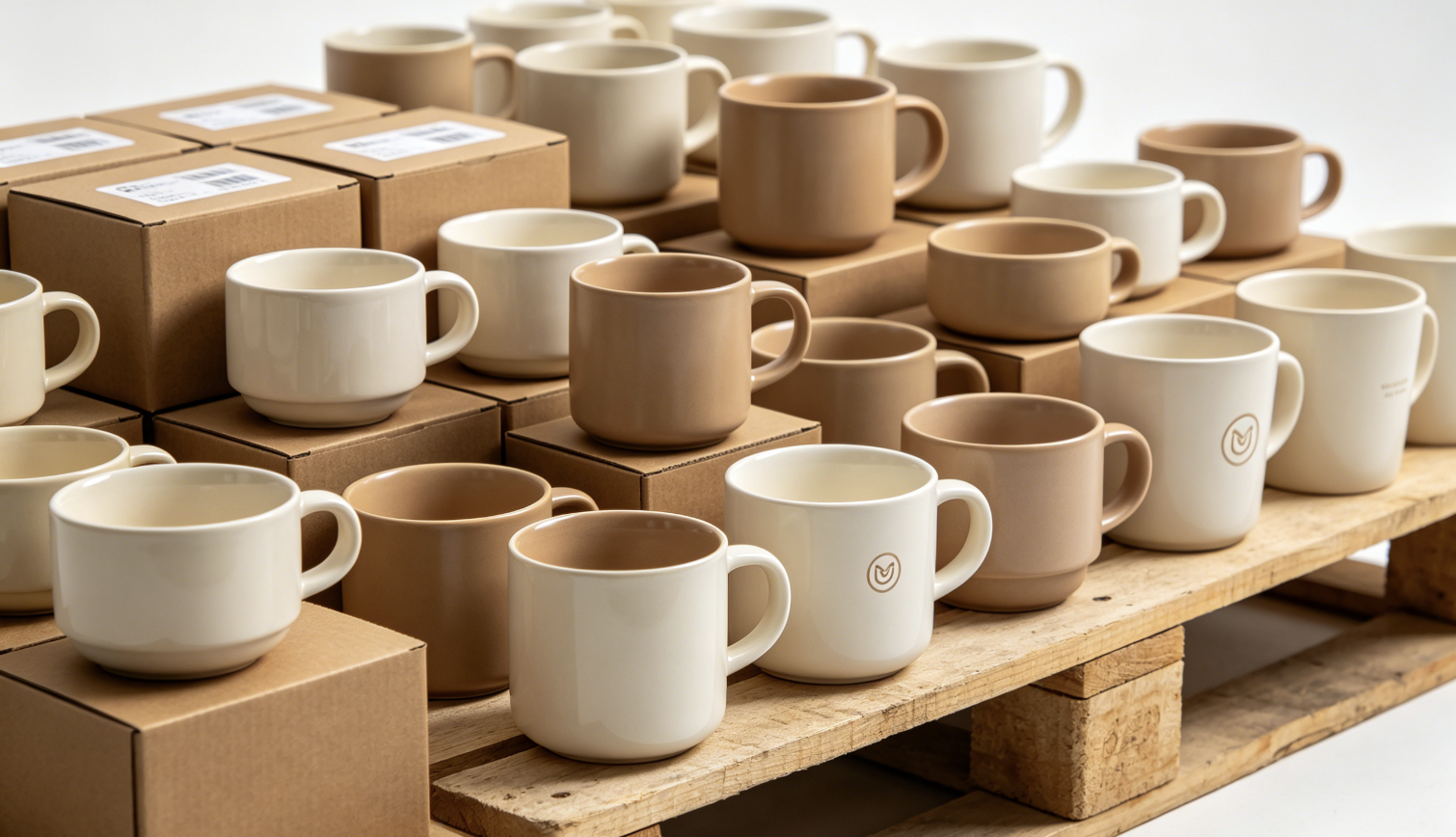
Choosing the right decoration for your mug is about balancing your design, your budget, and the order quantity. Each method has a unique process behind it, which directly influences the MOQ. As a manufacturer, our job is to guide you to the best option for your project. Let me explain the most common methods we use and why their MOQs are so different.
Understanding Different Processes
The most popular method is Decal Printing[^4]. This involves printing your logo onto special paper, applying it to the mug by hand, and then firing the mug in a kiln. This process makes the logo permanent and dishwasher-safe[^5]. Other methods include Screen Printing[^6], which is great for simple, one-color designs on large runs, and Custom Color Glazing, where we create a unique glaze to match your brand's exact Pantone color.
Comparing MOQs and Use Cases
The setup for each method requires a different level of investment in time and materials, which is why the MOQs vary. A few years back, a client wanted a full-wrap photographic image on 1,500 mugs. Fired decals were the perfect fit. For another client, a large supermarket chain needing 50,000 mugs with their simple one-color logo, screen printing was the most cost-effective solution. The key is matching the process to the project's scale and design.
This table breaks it down:
| Customization Method | Typical MOQ Range | Best For | Why the MOQ is Different |
|---|---|---|---|
| Decal Printing | 1,200 - 3,000 units | Complex, multi-color logos. It offers high-quality, durable, and vibrant results. | Creating high-resolution decal sheets is a significant upfront cost. This cost needs to be spread over a reasonable number of units to be economical. |
| Screen Printing | 3,000 - 5,000 units | Simple, one or two-color designs. It's extremely cost-effective for very large runs. | The setup for each color screen is labor-intensive. The process is only efficient for very large quantities of the same simple design. |
| Custom Color Glaze[^7] | 5,000+ units | Unique, solid-color mugs that match a brand's specific Pantone color for ultimate branding. | Formulating a new glaze and running a dedicated batch through the entire production line is a major operation that requires a large volume to be feasible. |
How Do I Find and Vet a Reliable Chinese Mug Manufacturer?
Nervous about sourcing from China? You hear stories of poor quality and communication issues. Using a simple checklist can help you find a reliable and professional manufacturing partner.
To find a reliable manufacturer, look for companies with extensive export experience and industry certifications like ISO9001 for quality management[^8] and BSCI for social compliance[^9]. Check their location; Liling, for instance, is a world-renowned ceramics hub[^10]. A professional website and clear communication are also good signs.
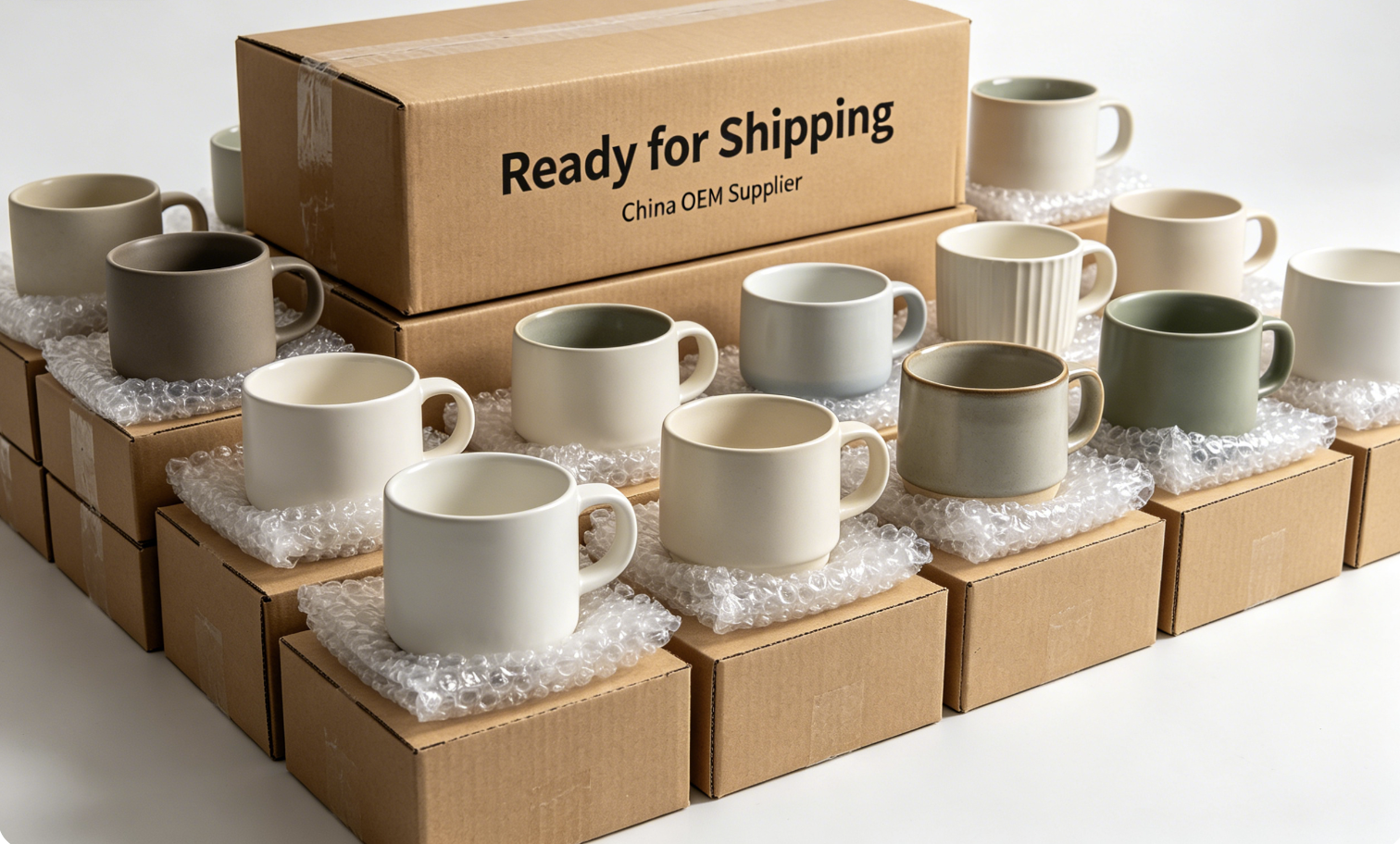
Finding a partner you can trust is the most important step. After all, they are responsible for your brand's physical product. I've built my business on transparency and trust, and I know what separates a good factory from a bad one. Here are the things you, as a buyer for a large retailer or wholesale business, should look for.
Key Credentials to Look For
Certifications are not just papers on a wall; they are proof of a factory's commitment. When you see ISO9001, it means the factory has a proven system for maintaining quality across every single mug. When you see BSCI, it means they treat their workers ethically, which is increasingly important for brand reputation in Western markets[^11]. Our 15 years of exporting to Europe, the Americas, and Asia mean we don't just have certifications; we have a deep understanding of the logistics, customs, and quality standards these markets demand.
A Vetting Checklist
Use this simple checklist when you evaluate potential partners. I made sure my own company ticks all these boxes because I know it's what serious buyers need.
| Vetting Step | What to Look For | Why It Matters |
|---|---|---|
| Check Certifications | ISO9001, BSCI, Sedex, etc. | This proves they meet international standards for quality and ethical practices. It significantly reduces your risk as a buyer. |
| Ask About Experience | How many years have they been exporting? To which countries? | A factory with 15+ years of export experience understands the quality expectations and logistical challenges of your market. |
| Review Their Website | Is it professional? Does it show the factory, the team, and the products? | A professional website is their digital storefront. It shows they are a serious, modern business that invests in communication. |
| Communicate Directly | Ask specific questions about MOQ, lead times, and customization options. | Their answers must be clear, direct, and professional. Slow, vague, or evasive responses are a major red flag. Clear communication is essential. |
| Request Samples | Always ask for a production sample with your logo on it.[^12] | This is the final test of their capability. It allows you to see, feel, and test the final product before committing to a large order. |
A great partner wants to build a long-term relationship. They will be happy to answer your questions and prove their value.
Conclusion
Buying custom logo mugs from a Chinese manufacturer is smart. Focus on order quantity to manage price, choose the right customization method, and carefully vet your supplier for a successful partnership.
[^1]: "Made in China 2025: Evaluating China's Performance", https://www.uscc.gov/research/made-china-2025-evaluating-chinas-performance. Sources from economic research institutions or international trade bodies often discuss China's role as a global manufacturing hub, attributing its competitive pricing to factors like economies of scale, specialized supply chains, and government support. Evidence role: general_support; source type: institution. Supports: The claim that China's manufacturing sector offers significant cost and production advantages.. Scope note: These sources provide general economic context rather than specific evidence about the custom mug industry. [^2]: "Pottery Manufacturing Running Costs: $223K Monthly Budget;", https://financialmodelslab.com/blogs/operating-costs/pottery-manufacturing?srsltid=AfmBOopjP9PVbHHDqKxEr4_K7vXgL3ymAOaLuvoqdhE3Au5cNtJSnGoU. Business and engineering resources explain that manufacturing processes involve fixed costs, such as tooling, machine setup, and calibration, which do not vary with the number of units produced. These costs must be amortized over the entire production run. Evidence role: mechanism; source type: education. Supports: The claim that certain manufacturing processes incur one-time setup (fixed) costs regardless of production volume.. Scope note: Sources will likely provide a general explanation of fixed costs rather than specific data on mug manufacturing. [^3]: "Economies of scale - Wikipedia", https://en.wikipedia.org/wiki/Economies_of_scale. Economic and business encyclopedias define economies of scale as the cost advantages that enterprises obtain due to their scale of operation, with cost per unit of output decreasing with increasing scale as fixed costs are spread out over more units of output. Evidence role: definition; source type: encyclopedia. Supports: The definition of economies of scale, where the cost per unit of production decreases as the volume of output increases.. [^4]: "[PDF] Lithographically Printed Ceramic Decals | Tamarind Institute", https://tamarind.unm.edu/wp-content/uploads/Alyssa-Ebinger-Lithographically-Printed-Ceramic-Decals.pdf. Industry resources on ceramic decoration describe decal printing as a process where designs are printed onto special paper, transferred to a ceramic surface, and then fired in a kiln at high temperatures, which fuses the design into the glaze. Evidence role: definition; source type: other. Supports: The description of the ceramic decal application and firing process.. [^5]: "Decals on heat-absorbing vessels: long-term durability? - Facebook", https://www.facebook.com/groups/157934882658565/posts/429413668844017/. Research in materials science and ceramics explains that during kiln firing, the decal's components, including inorganic pigments, fuse with the mug's glaze, creating a permanent, non-porous, and durable surface resistant to abrasion and detergents. Evidence role: mechanism; source type: research. Supports: The claim that kiln-firing makes ceramic decals durable and resistant to washing.. [^6]: "Benefits and limitations of three-dimensional printing technology for ...", https://pmc.ncbi.nlm.nih.gov/articles/PMC6131837/. Technical guides on industrial printing methods explain that screen printing on cylindrical or curved surfaces like mugs involves forcing ink through a mesh screen onto the object. The process is highly efficient for simple, single-color designs in large volumes but requires separate setups for each additional color. Evidence role: definition; source type: other. Supports: The process and application of screen printing for ceramic goods.. [^7]: "Color Design Decisions for Ceramic Products Based on ... - PMC", https://pmc.ncbi.nlm.nih.gov/articles/PMC9322515/. Ceramic engineering literature details the process of glaze formulation, which involves mixing metallic oxides and other chemicals to achieve specific colors. Matching a standardized system like Pantone requires precise measurement and testing, as the final color is affected by firing temperature and glaze chemistry. Evidence role: mechanism; source type: research. Supports: The claim that ceramic glazes can be formulated to match specific color standards like Pantone.. [^8]: "ISO 9001 explained", https://www.iso.org/home/insights-news/resources/iso-9001-explained.html. The International Organization for Standardization (ISO) defines ISO 9001 as the international standard that specifies requirements for a quality management system (QMS), helping organizations demonstrate their ability to consistently provide products and services that meet customer and regulatory requirements. Evidence role: definition; source type: institution. Supports: The definition and purpose of the ISO 9001 standard.. [^9]: "amfori BSCI - Business Social Compliance Initiative", https://www.amfori.org/amfori-bsci/. According to amfori, the organization that runs it, the Business Social Compliance Initiative (BSCI) is a system to help companies drive social compliance and improvements within the factories and farms in their global supply chains. It is based on a code of conduct that covers topics like fair remuneration and decent working hours. Evidence role: definition; source type: institution. Supports: The definition and purpose of the Business Social Compliance Initiative (BSCI).. [^10]: "Jingdezhen - Wikipedia", https://en.wikipedia.org/wiki/Jingdezhen. Historical and geographical sources recognize Liling, located in Hunan province, as one of China's primary 'porcelain capitals,' with a history of ceramic production stretching back centuries and a modern industry known for high-volume manufacturing and underglaze-colored porcelain. Evidence role: historical_context; source type: encyclopedia. Supports: The status of Liling as a major center for the ceramics industry.. [^11]: "Business Benefits and Impact of an Ethical Supply Chain", https://businessstories.sandiego.edu/business-benefits-and-impact-of-an-ethical-supply-chain. Market research and consumer surveys frequently show that a significant percentage of consumers, particularly in North America and Europe, are willing to pay more for products from brands with transparent and ethical supply chains, and that negative publicity about labor practices can damage brand reputation. Evidence role: statistic; source type: research. Supports: The claim that consumers in Western markets value ethical sourcing and that it impacts brand reputation.. [^12]: "Why Pre-Production Samples Are So Important For Buyers?", https://www.ipqcco.com/blog/pp-samples-why-pre-production-samples-are-so-important-for-buyers. International trade administration guides and supply chain management best practices emphasize the critical role of pre-production samples. Reviewing a sample allows the buyer to verify quality, materials, color, and overall execution, serving as a final quality gate before committing to a full production run. Evidence role: general_support; source type: government. Supports: The importance of obtaining and approving a production sample before authorizing mass production..