Are you confused by terms like stoneware, porcelain, and ceramic? Choosing the wrong material for your mugs can lead to high costs from breakage and unhappy customer returns.
The best material for a ceramic mug is either stoneware or porcelain, depending on your needs. The choice comes down to measurable data, not just names. Key factors are water absorption for durability and hygiene, chip resistance for longevity, and how decorations affect microwave or dishwasher safety.
You see the material names on a spec sheet, but it's hard to know what they mean for your business. It feels like a guess. But what if you could look at these materials the way we do in the factory? It's all about numbers that connect directly to your profits and customer satisfaction. Let's dig into the details that matter so you can make a choice that protects your bottom line.
Stoneware vs. Porcelain: What do the specs really mean?
You see "stoneware" and "porcelain" on quotes, but the technical specs look like a foreign language. Ignoring these numbers can mean you approve a mug that chips easily or absorbs odors.
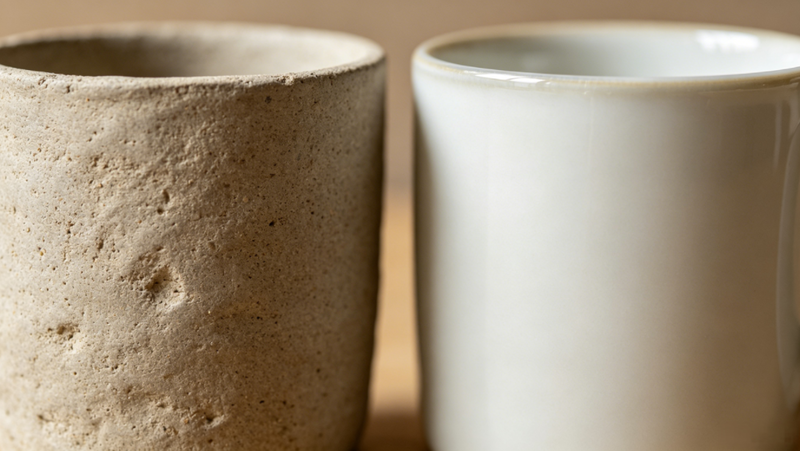
The key difference is in water absorption and density. Porcelain has very low water absorption (under 0.5%), making it dense and stain-resistant. Stoneware has slightly higher absorption (1-3%), which makes it tougher and more resistant to chipping from everyday bumps.
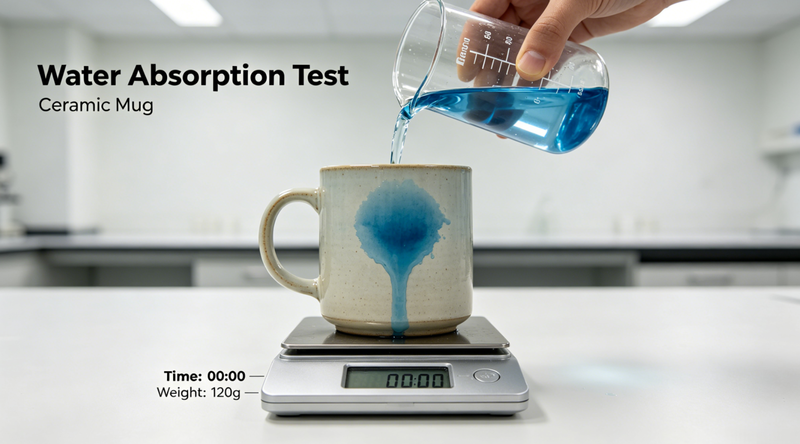
In my 15 years of making mugs, the question "what material is it?" always comes back to two things for our large-scale buyers: stoneware and porcelain. Forget bone china or other fancy names for a moment; these two are the workhorses for mass-market programs. From a factory standpoint, the difference is the clay recipe and the firing temperature. But for you, the buyer, it comes down to performance metrics that we test for every single batch. The most important one is water absorption. We test this by weighing a piece of a fired mug, boiling it in water for a few hours, and then weighing it again. The weight gain is the water absorption percentage.
Here’s how we look at it in our factory:
| Feature | Porcelain | Stoneware | What It Means for You |
|---|---|---|---|
| Water Absorption | < 0.5% (Our Standard) | 1-3% (Our Standard) | Lower absorption means less staining, no odors, and better hygiene. |
| Firing Temperature | High (~1300°C) | Medium (~1200°C) | Affects the final density and how well the glaze fits the body. |
| Density | High | Medium | A denser body feels more premium and is harder to scratch. |
| Glaze Fit | Excellent | Good | A better glaze fit prevents "crazing" (tiny cracks in the glaze) over the mug's life. |
I remember a client who chose a cheaper stoneware mug from another supplier to save a few cents per unit. Six months later, their customers complained about coffee stains that wouldn't wash out and a funny smell. That's a classic sign of high water absorption. A good mug shouldn't be a sponge.
Which mug material means fewer breaks and returns?
Nothing eats into profits like breakage, whether it's in the shipping container or on a customer's kitchen floor. A high rate of returns for chips and cracks can quickly damage your brand's reputation for quality.
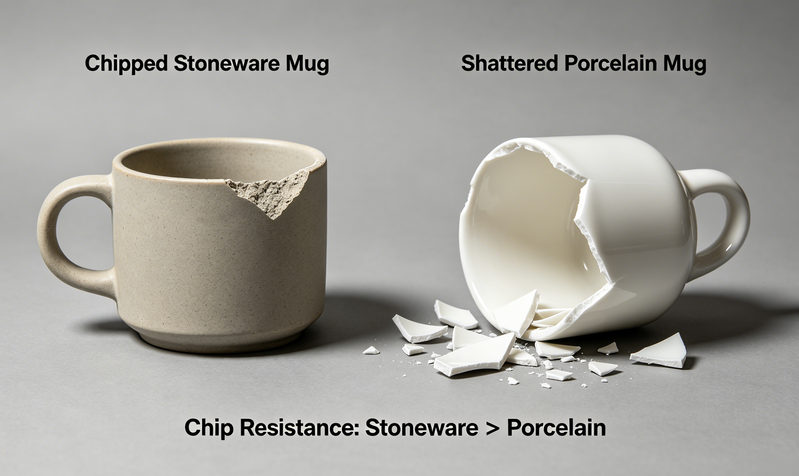
It’s a trade-off. Porcelain is harder, so it resists scratches well, but it can be brittle and may shatter if dropped. Stoneware is generally tougher, meaning it’s more resistant to chipping, especially around the rim, which is a major source of customer complaints.
Let's talk about toughness versus hardness. Think of porcelain as being like glass. It's very hard, so it’s difficult to scratch with a spoon. But if you give it a sharp knock or drop it, it can shatter. Stoneware, because it’s fired at a slightly lower temperature and has a different composition, has a body that is less brittle. It can absorb more impact. This makes it more "tough" and resistant to getting those frustrating chips on the rim or handle.
In our quality control department, we don't guess. We test. For example, we perform an edge-chip resistance test where a pendulum with a steel ball strikes the rim of the mug with a specific force. We have pass/fail criteria based on whether it chips and how big the chip is. This test directly simulates a mug getting knocked against a faucet or another dish in the sink. I had a supermarket client who was developing an "everyday value" line of mugs. They were worried about breakage. We ran a side-by-side test for them. The porcelain mug shattered when dropped on the floor. The stoneware mug just got a small chip on the base. They chose the stoneware, and their return rate for breakage has stayed under 1% ever since. This is why you see so many stoneware mugs in busy cafes and restaurants—they are built to survive constant use.
Are higher-fired mugs always safer for microwaves and dishwashers?
You have to label your mugs as "microwave safe" and "dishwasher safe" with 100% confidence. Getting this wrong can lead to angry customers, ruined products, and even safety recalls that cost a fortune.
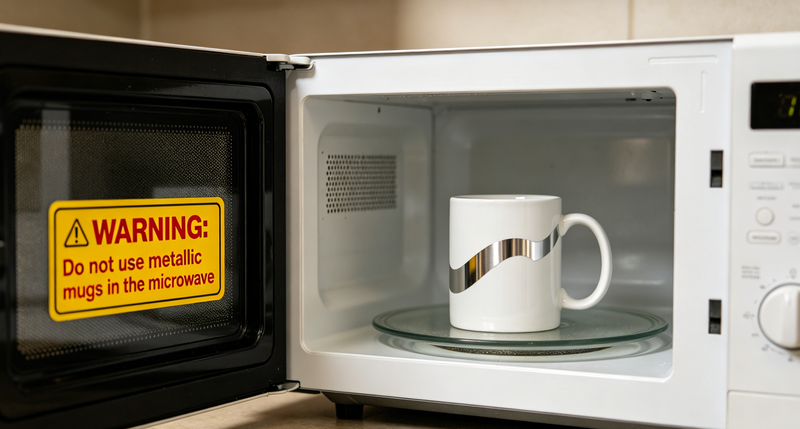
No. Safety is not about firing temperature. Heavy metal safety (lead and cadmium) comes from the glaze formula and decorations. Microwave and dishwasher safety is also determined almost entirely by the decoration, not the ceramic mug body itself. Any decoration with metal, like a gold rim, is never microwave safe.
Let's clear up a big myth: "higher firing temperature equals a safer mug." While it's true that proper firing is essential to mature the glaze, the real source of safety is the composition of the glaze and any decals applied on top. A poorly formulated glaze can leach heavy metals like lead and cadmium no matter how hot it was fired. This is non-negotiable for us. We send every new glaze and decal combination to a third-party lab. They perform a leach test, typically following standards like FDA CPG 7117.07 or California Prop 65. They soak the mug in an acid solution for 24 hours and then measure what, if anything, came out into the solution. The lab report gives us a clear "Pass" or "Fail," and that report is your proof of compliance.
Microwave and dishwasher safety is a different issue. The stoneware or porcelain body itself is completely safe in both. The weak link is the decoration.
| Decoration Type | Microwave Safe? | Dishwasher Safe? | The Reason Why |
|---|---|---|---|
| Underglaze / In-glaze | Yes | Yes | The design is safely sealed under the final clear glaze layer. |
| Standard On-glaze Decal | Yes | Top rack recommended | The design sits on the glaze. It can fade after many wash cycles (we test for 250+ cycles). |
| Metallic / Gold Decal | NO | Hand wash ONLY | The metal will spark and arc in the microwave. The finish is very delicate and will be destroyed by a dishwasher. |
A new buyer once pushed hard for a gold-rimmed mug to be labeled "dishwasher safe." I had to be direct. I pulled the test report from a similar project. It showed the gold finish starting to flake off after just 50 wash cycles. We explained that this would lead to a flood of complaints. They finally agreed to label it "Hand Wash Only," saving themselves a massive headache down the line.
How do I calculate the true cost of a ceramic mug order?
You receive a quote with a unit price, but you have enough experience to know that's not the whole story. Hidden costs from production rejects, shipping damage, and customer returns can turn a "cheap" order into a very expensive mistake.
The true cost is the unit price plus all the costs of poor quality. You must factor in the factory's production yield, potential transit breakage, and the expected rate of retail returns. A slightly more expensive but higher-quality mug is often far cheaper in the long run.
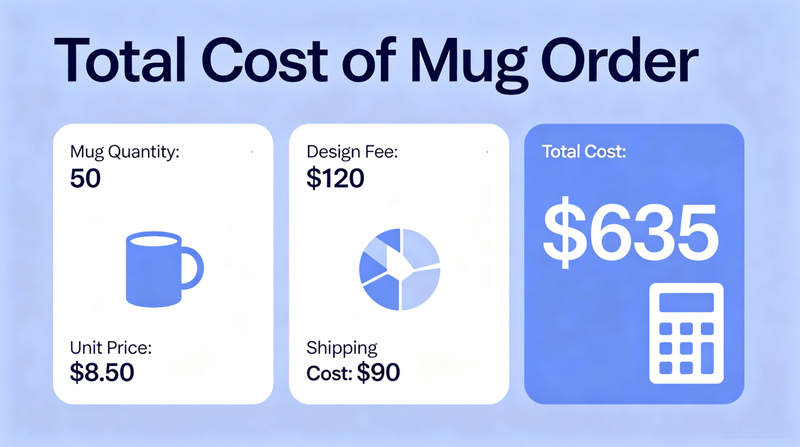
When you look at a price list, you're only seeing the beginning of the story. To get the full picture, you have to think like we do about the entire process, from production to your customer's kitchen.
- Unit Cost: Porcelain is often slightly more expensive. It requires purer raw materials and is fired at a higher temperature, which uses more energy.
- Factory Yield & Consistency: Porcelain can be more difficult to manufacture perfectly. It has a higher tendency to warp during firing. If our factory's reject rate goes up on a batch, that cost has to be factored into the price of the good units. Stoneware is generally more forgiving, which means better consistency, especially on large orders with specific colors.
- Downstream Costs (Your Costs): This is where a cheap mug gets expensive for you.
- QA Rejects at the Factory: If your third-party inspector has to fail 10% of the shipment due to glaze pits or color mismatch, you've just paid for 10% more product than you can sell.
- Transit Breakage: As we discussed, this connects back to material toughness and, of course, proper packaging. A 2% breakage rate in transit is a direct loss.
- Retail Returns: This is the biggest one. A mug returned for a chip, a stain, a faded design, or a melted gold rim costs you the price of the product, the logistics of the return, and damages your brand's reputation.
Our most successful partners use a simple framework. For a high-end, boxed gift mug where a premium, lightweight feel is critical, porcelain is a great choice. For a high-volume, everyday mug for a supermarket, a durable, chip-resistant stoneware almost always provides the best total value. Start by defining your customer and your retail price point. Then, we can recommend the right material and the exact QC tests needed to guarantee performance and protect your investment.
Conclusion
Choosing the right mug material isn't about picking a name you like. It's about matching measurable specs like water absorption and toughness to your business needs to lower your total cost.