Choosing a printing method for your mugs feels complicated. A wrong choice wastes money and can result in a product that doesn't last, damaging your brand's reputation.
Screen printing is best for simple, durable designs on large orders, while decal printing excels with complex, full-color images on smaller runs. The right method depends entirely on your design complexity, durability needs, order quantity, and budget.
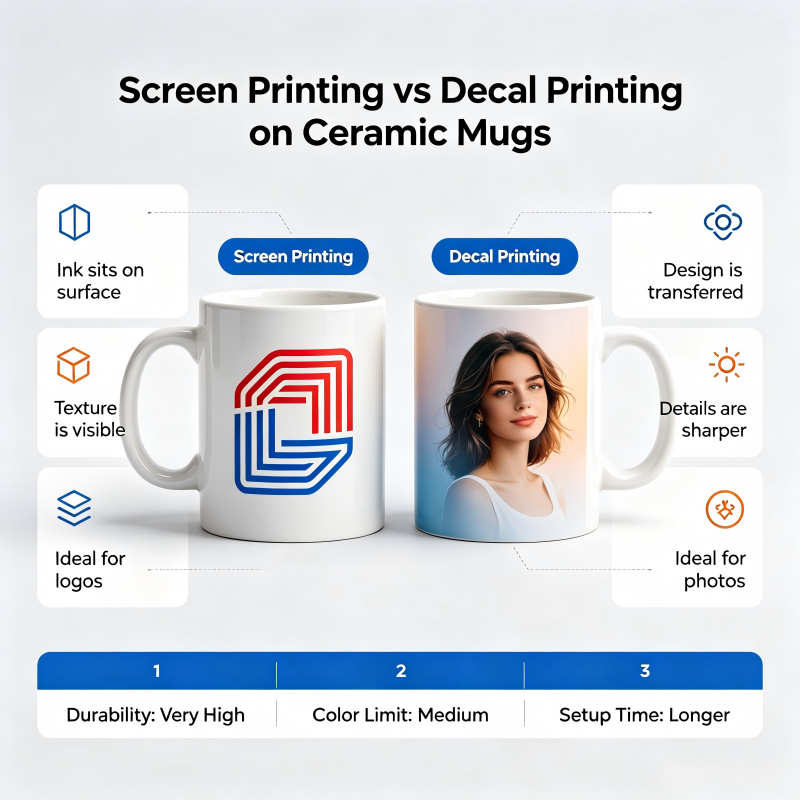
A common question I hear from new buyers is, "Which printing method is better?" After 15 years of exporting ceramic mugs, I can tell you this is the wrong question to ask. The real question is, "Which method aligns with my specific business goals?" Choosing correctly is a decision about managing your budget and risks. Let's break down how we help our clients make the smart choice for their brand, starting with the most important factor: your design.
How Does Your Design Complexity Affect the Printing Choice?
You have a beautiful, complex design ready for your mugs. But you worry it won't transfer correctly and will lose its detail. Let's see which method brings intricate artwork to life perfectly.
Decal printing is the superior choice for photorealistic images, gradients, and designs with many colors. Screen printing is best for simple logos and text with a limited number of solid colors.
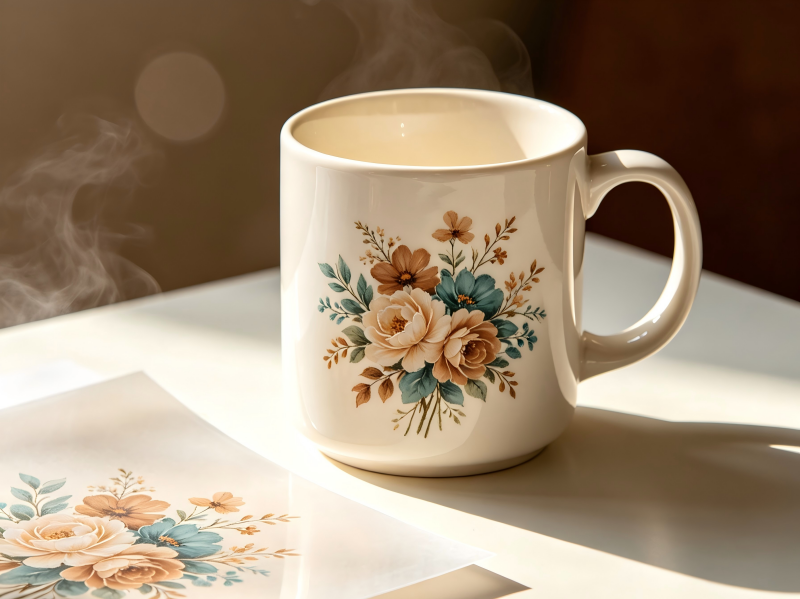
The best way to understand the difference is to think about how each process works. Decal printing is like applying a high-tech temporary tattoo to a mug. We print your design in full color—including photos and gradients—onto special decal paper. Our workers then carefully apply this decal to the mug by hand before it's fired in a kiln. This process allows for incredible detail and an unlimited color palette.
Screen printing, on the other hand, works by pushing ink through a mesh screen directly onto the mug's surface. Each color requires its own separate screen. This makes it perfect for bold, simple graphics like a company logo or a line of text. However, the costs add up quickly with each new color. It's not suitable for photographic images or designs with smooth color transitions.
Here is a simple breakdown:
| Feature | Screen Printing | Decal Printing |
|---|---|---|
| Best For | Simple logos, text | Photos, gradients, complex art |
| Color Count | 1-4 solid colors is ideal | Unlimited colors (CMYK) |
| Gradients | Not possible | Yes, perfect for smooth blends |
| Setup Process | One screen per color | Digital file printed on paper |
From a business perspective, a brand with an iconic, two-color logo will find screen printing to be very efficient and cost-effective. An e-commerce seller who features artwork from different artists will need the high-fidelity reproduction that only decals can provide.
Which Printing Method is More Durable and Dishwasher-Safe?
You need mugs that will last for years, even in a busy cafe. Fading or scratching logos can damage your brand’s reputation and lead to unhappy customers. Here’s how to choose the print that endures daily use.
High-temperature screen printing is generally more durable and dishwasher-safe because the ink fuses into the mug’s glaze. Decals are also strong, but can be more susceptible to abrasion from heavy scrubbing or harsh detergents over time.
The secret to durability lies in the firing temperature. When we screen print a mug, we can use special inks that are fired at over 800°C. At this temperature, the ceramic glaze softens, and the ink literally becomes a part of the mug's surface. It's extremely resistant to scratching, fading, and industrial dishwashers. This is the method we recommend for high-use environments like restaurants and coffee shops.
Decals are applied over the finished glaze and then fired at a lower temperature to bake the design onto the surface. The result is a durable finish that is perfectly safe for home dishwashers and normal use. However, because the design sits on top of the glaze rather than inside it, it may show wear over many years of heavy use or if abrasive sponges are used.
In my experience, the first question we always ask a client is about the intended use. For a promotional giveaway mug that might be used a few times, standard decal durability is more than enough. For a European retail client who wants to sell a premium product that lasts a decade, we almost always guide them toward high-temperature screen printing to guarantee that longevity and protect their brand image.
How Do Order Volume and Budget Impact Your Decision?
You need to order custom mugs but have a strict budget to follow. The price per mug can change drastically with different methods, and you need the best value. Let's uncover how to get the most for your money based on order size.
Screen printing has high initial setup costs but a very low per-unit price on large orders (typically 1000+ units). Decals have low setup costs, making them more affordable for smaller orders with complex designs.
Let's look at the costs. With screen printing, there are upfront charges for creating the screens (one for each color) and setting up the machinery. These are one-time fees. Once the machine is running, it can print mugs very quickly, so the cost per mug becomes very low. This is why it’s so economical for large volumes. The more you order, the more that setup cost is spread out, drastically reducing your per-unit price.
Decal printing works differently. The main costs are printing the decal sheets and the manual labor to apply them to each mug. There are minimal "setup" fees, which is great for small batches. Whether you order 100 or 1,000 mugs, the cost to print and apply each decal remains relatively consistent. The price per mug doesn't drop as dramatically on large orders compared to screen printing.
Here's a guide to help you decide:
| Order Scenario | Best Printing Method | Why? |
|---|---|---|
| 5,000 mugs, 2-color logo | Screen Printing | Huge savings on per-unit cost. |
| 150 mugs, full-color photo | Decal Printing | Avoids high setup fees for a small run. |
| 1,000 mugs, 8-color design | Decal Printing | Screen printing setup for 8 colors would be too expensive. |
This is a critical business decision. As a wholesaler ordering mugs for a large promotional event, screen printing will maximize your budget. As an online store testing a new design with a small batch of 100 mugs, decals allow you to launch without a huge financial risk.
What Are the Differences in Look and Feel?
You want your mug to reflect your brand's high quality. The final finish of the print can feel cheap or premium, so you need to choose wisely. Let's explore the aesthetic differences to ensure your mug looks and feels right.
Screen printing can have a slightly raised, tactile texture. Decals provide a very smooth, seamless finish that looks fully integrated into the mug’s surface, as if it were printed under the glaze.
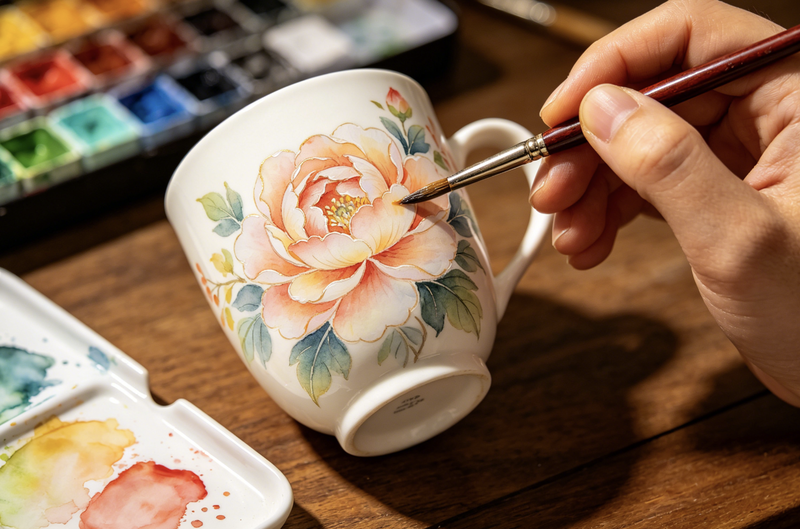
The final aesthetic is a subtle but important detail. With screen printing, the ink is applied as a layer on top of the glaze. Even after firing, you can often feel the edge of the design with your fingernail. This isn't a sign of low quality—in fact, some brands prefer this slightly textured feel because it gives the product a more classic, handcrafted impression. It feels substantial.
Decals, on the other hand, are made from an incredibly thin film. During firing, this film essentially melts into the mug's glaze, creating a completely smooth surface. It's often difficult to feel where the design begins and ends. This seamless finish looks sleek and modern, and it's perfect for designs that are meant to look like part of the mug itself.
We often provide samples of both types to our clients, especially those in the South American and European retail markets. For them, tactile quality is a huge part of the customer experience. A brand selling rustic, artisan coffee might love the feel of a screen print. A tech company giving away branded mugs at a conference will likely prefer the clean, modern finish of a decal. It all comes back to matching the product to your brand identity.
Conclusion
The best choice between screen printing and decals is not about which is better. It is a strategic decision based on your design, durability needs, budget, and desired brand feel.