You're sourcing thousands of ceramic mugs and need to guarantee they're safe. A wrong choice could lead to returns and damage your brand. Understanding key risk factors is essential.
A ceramic mug is only microwave safe if it is made from the right materials and processes. Safety is not automatic. The key is to verify that the mug has no metallic parts, the glaze is non-toxic, and the ceramic body is not porous. For a business, this requires supplier verification.
As a manufacturer with over 15 years of export experience, I get this question a lot from sourcing managers at large wholesalers and supermarkets. They aren't just asking for themselves; they're responsible for the safety of thousands of end-users. The simple answer is that the word "ceramic" itself doesn't guarantee safety. It's a broad category. The real question isn't if ceramic mugs are safe, but how you, as a professional buyer, can tell the safe ones from the unsafe ones. Let's break down the specific details you need to check to protect your investment and your customers.
What makes a ceramic mug unsafe for the microwave?
You see a beautiful mug with a shiny gold trim, perfect for your market. But you wonder if that detail could be a hidden liability that sparks customer complaints.
The main dangers in a ceramic mug are metallic decorations that cause sparks, certain colored glazes that can leach chemicals like lead, and porous clay bodies that absorb water and can crack or explode when heated. Each represents a different sourcing risk you must manage.
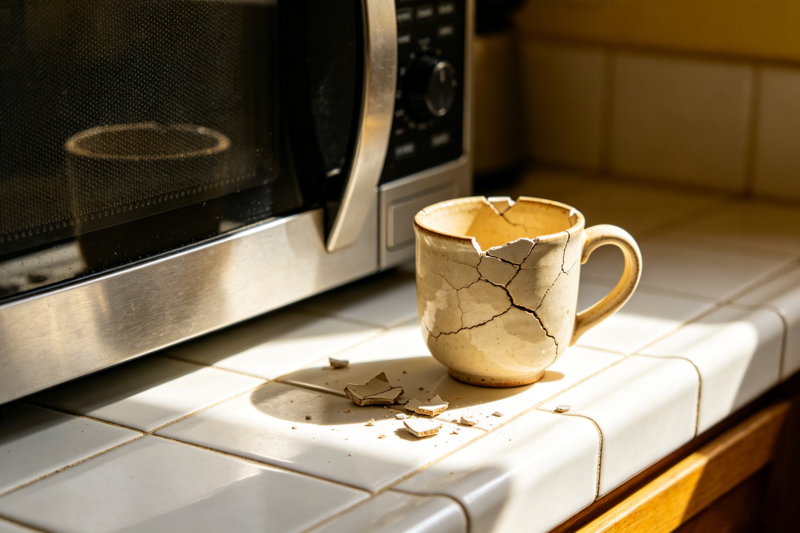
When a client asks us for a mug with a gold rim for a hotel chain, we have to have a serious conversation. That shiny detail looks premium, but it makes the mug completely unsafe for microwave use. This is just one of the three main risks you need to assess.
The Obvious Risk: Metallic Decorations
The most immediate danger comes from any metal on the mug. This includes gold, silver, or platinum trim, as well as metallic or luster glazes. Metal reflects microwaves, which will cause sparking. This can damage the inside of the microwave and create hot spots on the mug, potentially causing it to crack. For any B2B buyer, any mug with metallic elements should be automatically disqualified for microwave use.
The Hidden Risk: Glaze Composition
For plain-colored mugs, the risk moves to the glaze. Brightly colored glazes, especially reds, oranges, and yellows, can be a red flag if you are sourcing from a low-cost, unverified supplier. These colors can be achieved with "overglaze" decorations that are fired at a low temperature. If not made correctly, they can leach heavy metals like lead and cadmium. The safer option is "underglaze" decoration, where the design is applied before the final clear glaze, sealing it completely. Specifying underglaze is a key step in de-risking your supply chain.
The Structural Risk: Ceramic Porosity
The mug's body itself can be a hazard. Low-fired, porous ceramics like earthenware can absorb small amounts of water. When microwaved, this trapped water turns to steam and expands rapidly. This pressure can cause the mug to crack or even explode. High-fired materials like stoneware and porcelain are much less porous (more vitrified) and therefore inherently safer for microwave use.
| Risk Factor | What to Look For | Why It's Unsafe |
|---|---|---|
| Metallic Trim | Gold, silver, or shiny luster | Sparks, can damage the microwave, or cause the mug to crack. |
| Bright Glazes | Vibrant reds and oranges on low-cost items | May leach lead/cadmium if it's a poor-quality overglaze. |
| Porous Body | Coarse texture, lightweight for its size | Absorbs water, which turns to steam and can break the mug. |
How can a buyer differentiate a safe mug from an unsafe one?
You're looking at two similar white mugs from different suppliers with different prices. How do you know if the cheaper one cuts corners on safety? A visual check is not enough.
Look for a "Microwave Safe" symbol on the bottom of the mug. Check carefully for any metallic paint or trim. A safe mug should feel smooth and be fully sealed under a clear glaze. Be cautious of very bright, low-cost mugs without supplier verification.
In my experience, the difference between a reliable product and a liability often comes down to small details that are easy to miss. But once you know what to look for, you can start to develop an eye for quality and safety. It goes beyond just the price tag. Here are the practical steps you can take when you have a sample in your hands.
The Bottom Stamp: Your First Clue
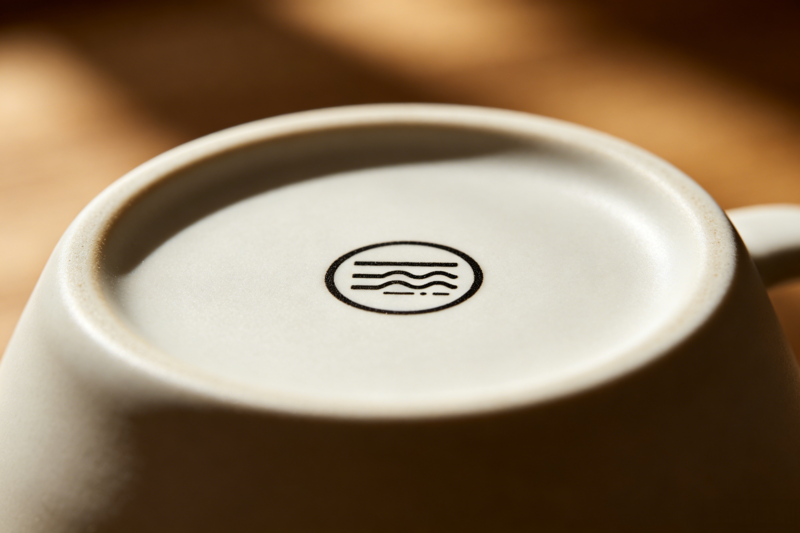
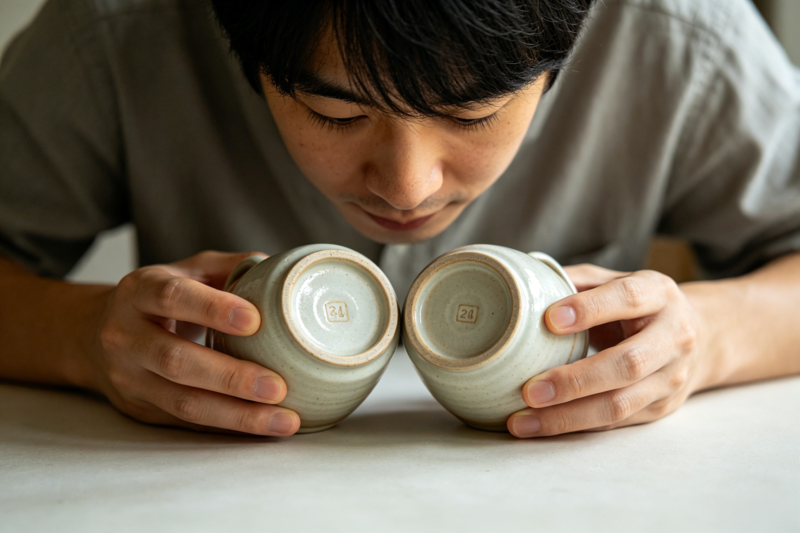
Flip the mug over. The base is the first place to look for information. Many manufacturers will print or emboss symbols indicating a mug's properties. Look for a symbol of waves, which typically means "Microwave Safe." You might also see a "Dishwasher Safe" symbol. While this stamp is a good sign, for a large commercial order, it should be treated as a claim that needs to be backed up by documentation, not as the final proof.
Visual and Tactile Inspection
Run your fingers over the entire surface of the mug, including any colored decorations. Underglaze designs are sealed beneath a final layer of clear glaze, so the entire surface will feel perfectly smooth. If you can feel a raised or textured edge around a design, it might be a lower-quality overglaze that requires further scrutiny for chemical safety. Of course, visually scan for any metallic sheen, no matter how faint.
Understanding the Material Type
With time, you can learn to feel the difference between ceramic types. High-fired porcelain and stoneware, the safest options, feel dense and solid. When we produce mugs for large supermarket chains, they always specify high-fired stoneware. This is because its low porosity is critical for both microwave safety and long-term durability against chips and cracks in a dishwasher. Earthenware, on the other hand, is often lighter and feels more coarse or chalky if any part of it is unglazed. This signals a higher risk of water absorption.
How can you verify mug safety for a large B2B order?
You're about to sign off on a huge order for thousands of mugs. A single safety failure could trigger a costly product recall and damage your business relationship with your retail partners.
A three-step verification process eliminates guesswork and protects your business. You need written confirmation in spec sheets, supporting lab reports, and a final check of a pre-production sample. This is the only way to source with confidence.

For a single mug, a visual check might be enough. For an order of 50,000 mugs, it's not. Your responsibility as a buyer is to create a paper trail that proves you did your due diligence. As a BSCI and ISO9001 certified manufacturer, providing this documentation is a standard part of our business. Here is the process every professional buyer should follow.
Step 1: The Product Specification Sheet
This document is your contract with the manufacturer. It should list all the product's attributes, including materials, dimensions, and capabilities. Make sure it explicitly states "Microwave Safe." If a supplier is hesitant to put this in writing, consider it a major red flag. This written confirmation is our promise to you, and it's your first layer of protection.
Step 2: Requesting Compliance Documentation
For any food-contact item, you must request material safety reports. A professional factory will have these ready. For mugs sold in the United States, this means proof of FDA compliance and testing for lead and cadmium to meet standards like California Proposition 65. For Europe, it involves compliance with Regulation (EC) No 1935/2004. Asking for these documents quickly separates experienced, reliable manufacturers from those who may not have robust quality control systems.
Step 3: The Pre-Production Sample (PPS)
Never skip this step. The PPS is a sample of the exact mug that will be mass-produced. It's your final chance to approve everything. You can physically test it in a microwave (always with water inside) and confirm it matches the spec sheet and your quality standards. This final physical check ensures that what you approved on paper is what will arrive in your warehouse.
| Verification Step | What It Is | Why It Matters |
|---|---|---|
| 1. Spec Sheet Confirmation | A written statement from the supplier. | Provides a contractual guarantee of the product's features. |
| 2. Compliance Reports | Lab test results for lead, cadmium, etc. | Offers objective proof of material safety and legal compliance. |
| 3. Pre-Production Sample | A final sample before mass production. | Allows for physical testing and final approval of all details. |
Conclusion
Ultimately, ensuring a ceramic mug is microwave safe is not about guesswork. It's about a clear sourcing process: identifying risks, inspecting samples, and demanding verification from your manufacturing partner.